


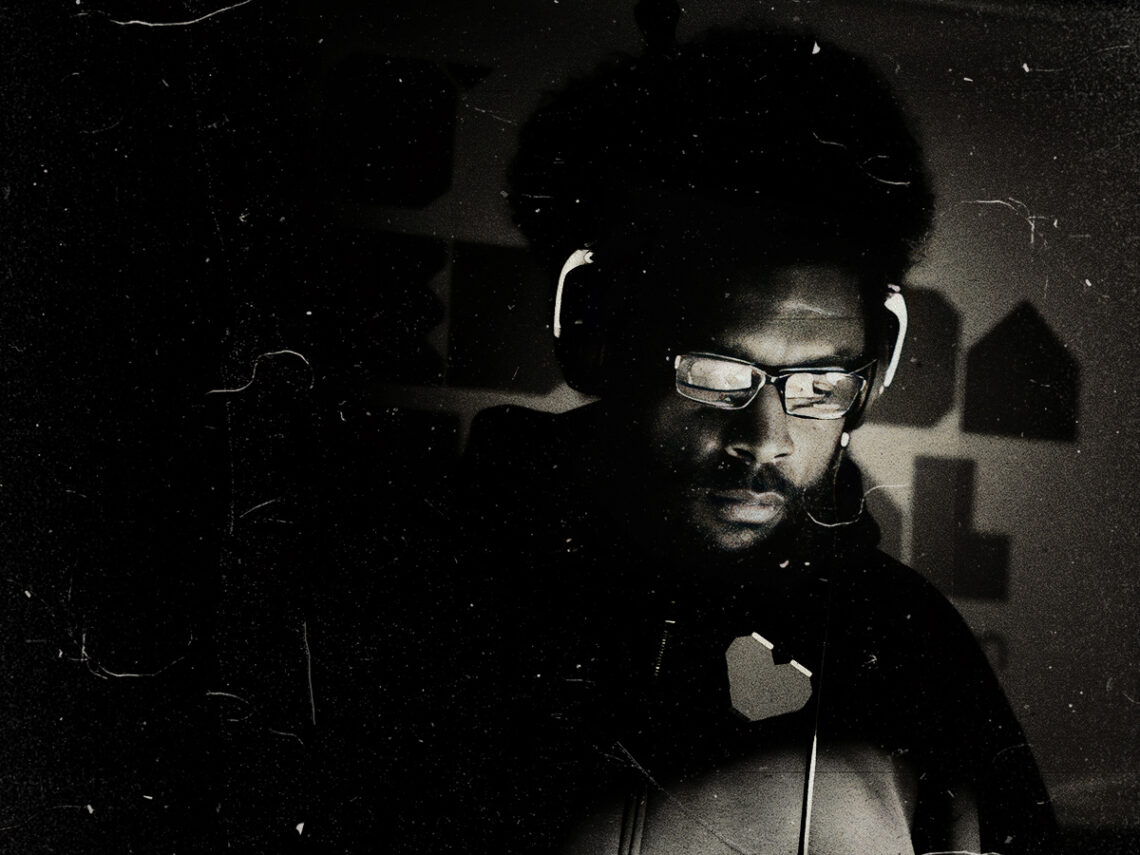
How a Roots show became Questlove’s audition to play with D’Angelo: “I got you motherfucker”

Over the past three decades, Questlove has quietly cemented himself as one of music’s most important artists. While his public role as drummer of The Roots has helped spearhead shifts in neo-soul and hip-hop, he’s played more the understated role of session musician on key contemporary records.
Arguably the most iconic would be D’Angelo’s 2000 album Voodoo. An album which Rick Rubin described as “absolutely perfect”. While hosting his Broken Record podcast alongside Malcolm Gladwell, Rubin told Questlove that the record was “the first time I can remember listening through to an album wishing I had something to do with it because it was so good. It was just like ‘oh my god this everything I want an album to be’.”
Following on from the already acclaimed Brown Sugar, Voodoo is widely considered D’Angelo’s magnum opus for its instrumental execution. It was a record that began the “soulquarian” movement that was born from New York’s Electric Lady Studios, with records from artists like Erykah Badu, Slum Village and J Dilla.
A large part of this success was due to the rhythmic contributions of Questlove to the record. But his inclusion on the record came at the peril of a show The Roots were playing during the 1996 Soul Train awards. On his episode of Broken Record, he told Rubin and Gladwell: “I met D’Angelo and Erykah Badu coincidentally on April Fools 1996, I’m on tour with The Fugees”.
“By this point, The Roots had become such a well-oiled machine live,” he said, “And I remember getting on my drum set and seeing, at the time, I didn’t know who Erykah was, so I assumed that was his girlfriend, but I knew D’Angelo’s silhouette”.
While at that time, D’Angelo had only released his debut album Brown Sugar, his silhouette was one of instant recognition; such was the impact of that debut record. In a decade that saw the rapid commercialisation of R&B, Brown Sugar showcased an artist who blended classic soul sensibilities with more modern rhythm sections. Pairing that with an open and earnest lyrical approach, the record had thrust D’Angelo forward as the most nuanced artist in the genre.
“And I remembered that I dismissively talked myself out of playing Brown Sugar, his previous album” Questlove recalled. “Because at that time I was just like ‘ugh’ soul singers in the ‘90s whatever. Like nothing about soul, singing had moved me from any ‘90s offering.”
Questlove has made no bones about his love for soul icons from the ‘70s and cited Sly and The Family Stone and Otis Redding as examples of a more nuanced style of soul music that was yet to be replicated in the 1990s. He added: “But then I got Brown Sugar, and I was like, ‘Oh my god, this guy could be the one’ and so I’d been trying to figure out how to get back in his good graces so I could be there for round two”.
It was at this point Questlove explained his decision to sabotage The Roots’ show in pursuit of D’Angelo’s attention. “So when I saw D’Angelo I decided to call an audible and basically have a conversation with just him, which meant I was now about to throw my entire band off.”
On Brown Sugar, D’Angelo played with beat timings and often delivered his vocal melodies behind the beat, which is something that became a signature feature on Voodoo come the emergence of Questlove. But while he dragged the beat on certain songs to impress D’Angelo, Questlove kept upping the ante in order to secure his spot at the foot of the drums on his next record.
He continued: “I’m now saying, ‘Right, I’m going to do this very obscure Prince drum roll and see if he gets it’. So I’m doing the Prince drum roll instead, and my band is looking at me. But the only person who mattered to me in the room that night was him, and when he heard that intro, he stood at attention.” He added, “And when I see him, it was like, ‘yeah, I got you motherfucker’”.
As the pair locked eyes across a crowded room, a musical bond was forged and the seed of a future classic record was sewn. Still to this day, Voodoo acts as a blueprint for the ways in which a neo-soul record can be cohesively weaved from track to track. While D’Angelo proves himself to be a stunning vocalist on the record, it’s a masterclass in groove and despite not having credits on the front cover, proves to be Questlove’s finest hour.
