


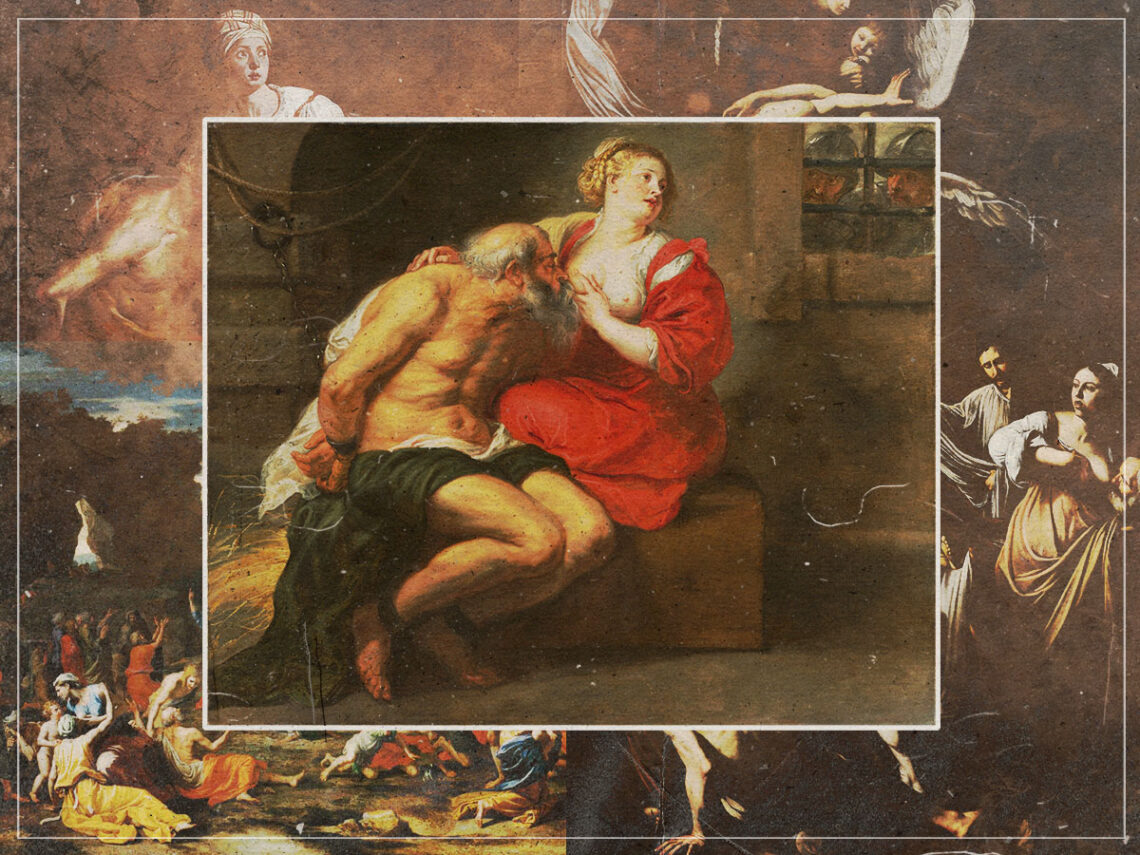
Roman Charity: Breastfeeding as a revolutionary act in art

Historically, art has always venerated the doting mother. We see it in the anguish of Michelangelo’s Pietà and the exhausted gaze of Dorothea Lange’s Migrant Mother, the way the weight of responsibility hangs off of these women. In Paleo-Christian art, this gave rise to a saintly breastfeeding motif, focusing exclusively on the Virgin Mary, with depictions of mother and child weaving their way into the Roman catacombs as early as the 3rd Century.
What these images did was make the ordinary holy. Breastmilk became the lifeblood that sustained generations, removed from its wholly natural context into something far grander. It became an elixir of sustenance, a testament to a mother’s love and bodily devotion to her child. However, the Renaissance era saw a decline in these images, largely due to the Council of Trent banning the nudity of sacred figures in art, so the loss of Mary’s naked breast in its iconography gave artists rise to explore other stories from archaic mythology.
Roman Charity was a natural extension of the cultural fascination with feminine sacrifice. It’s a Roman exemplary tale of filial piety, the virtue of showing unerring love and respect for one’s parents. The Roman Charity story takes many forms, but the basic premise is a woman secretly breastfeeds her own parent, who is improvised and sentenced to death by starvation. Her devotion will always lead to their freedom.
In some iterations, the authorities will free the parent because they are so moved by her selfless act, and in others, the prisoner surviving without food for months was seen as an intervention from God, so they are spared in accordance with his will. It’s noteworthy that although the art of this period moved away from overtly religious imagery of Mary, breastfeeding, in a sense, became a quasi-religious act.
The story was first recorded by ancient Roman historian Valerius Maximus. Although modern reactions to the act naturally cloud its reception, it was considered a noble act worthy of honour, with paintings and terracotta statues excavated from Pompeii showing its commonplace depiction. The simple act of breastfeeding was continually marvelled at in Roman times, not only in Roman Charity artworks but in the depiction of the Etruscan myth, where Juno breastfed the adult Hercules.
In all its various depictions in art history, the image is intended to be seen as a horrific act against nature, but rather, an example of the most natural, innate instinct – to love and care for your family. But the fact remains it’s a daughter breastfeeding a parent, and the squeamish attitude to this is often translated in the daughter’s outward gaze. She is willing to sustain her suffering parents – but cannot look on as it happens.
Although some images featured a mother and daughter, the cross-gendered version is the most sustained image throughout history. In Europe in the fifteenth century, bronze medals, oil paintings and statues were all discovered consistently depicting the story.
In the late sixteenth century, German artists would paint the daughter in the same way they did Cleopatra and Salome. She was powerful, imposing, and often painted wearing a veil or headwrap, again in a nod to her saintly figure. The works of Hans Sebald Beham, Peter Paul Rubens, Charles Mellin and countless other classical artists in sustaining the Roman Charity story are an almost uncomfortable testament to female sacrifice and how the base instinct to nurture and provide transcends social taboo.
