


The rom-com Roger Ebert hated: “Can’t have sex in a family picture”

When Roger Ebert hated a movie, his scathing fucking reviews were always incredibly entertaining to read, even if you didn’t agree with his opinion. The man was a wordsmith, after all.
Having said that, even if Ebert was incandescent with rage after watching a goddamn disastrous film, most of the famed Chicago Sun-Times critic’s reviews would still stay within his standard format.
He was a pro, and he didn’t need any fancy gimmicks to truly eviscerate a film in style; he just knew his way around a put-down. I’m thinking in particular about his eloquent lambasting of Michael Bay’s Armageddon (“an assault on the eyes, the ears, the brain, common sense, and the human desire to be entertained”) or his withering take on Last Rites (“the work of people deficient in taste, judgment, reason, tact, morality, and common sense”).
Every now and again, though, Ebert would behold a film so egregious that it would unleash something within him. Suddenly, he would become a critical renegade who wanted to – nay, needed to – express himself in a much more formally elaborate manner. Take, for instance, when he watched the lame-brained 1994 romcom Milk Money, starring Melanie Griffith as a prostitute with a heart of gold who is enlisted by a 12-year-old to shack up with his widower father, played by Ed Harris.
Of course, this only occurs after said kid and his pals pay Griffith more than a hundred dollars in spare change to show them her boobs. Hence, the title ‘Milk Money‘.
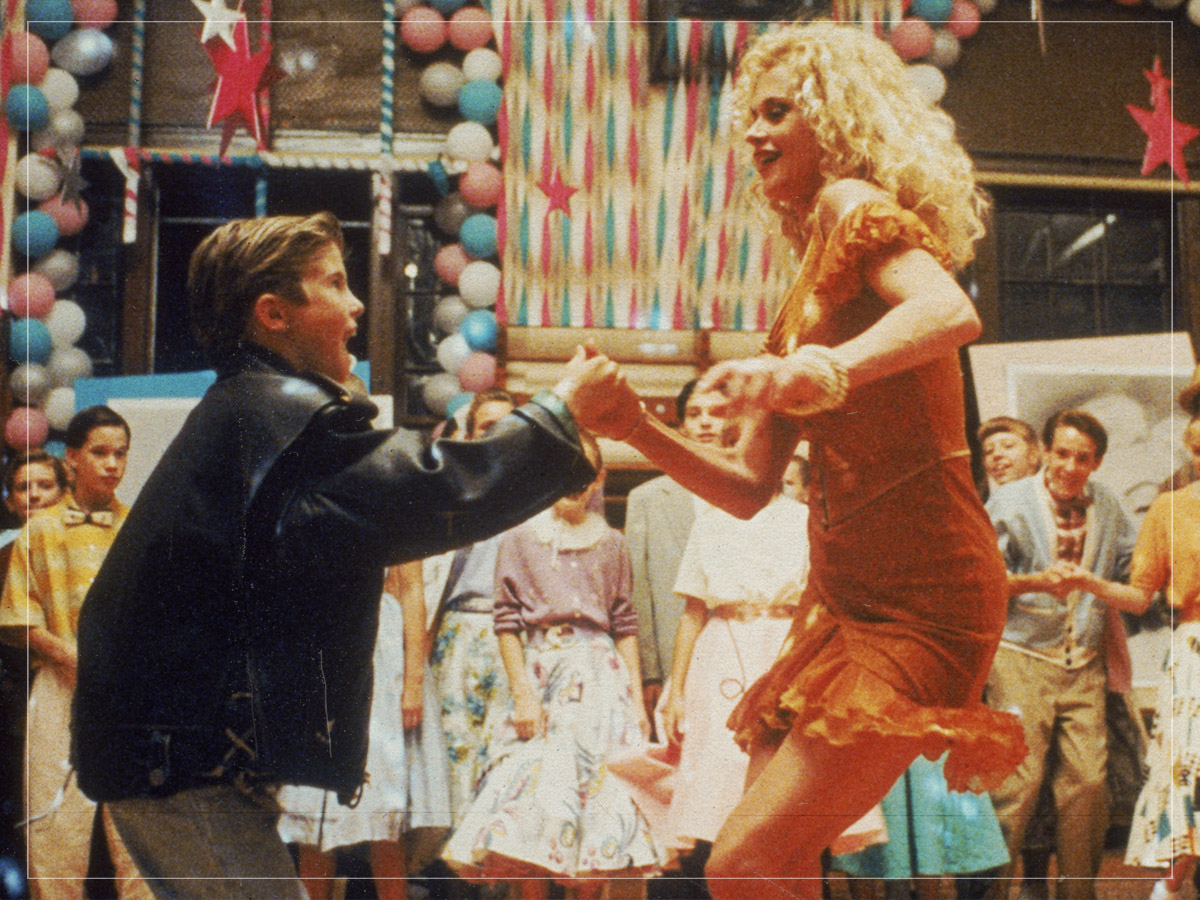
In fact, Ebert was so incensed by the morally deficient film, which seemed entirely unsure of the audience it was aiming for, that he wrote his review from the perspective of two idiotic studio executives talking about the crime against cinema they’d just concocted. “So, what’s the premise?” asks Studio Executive A, to which the similarly braindead Studio Executive B replies, “We got kids, we got sex, we got romance, all in a family picture.” Aghast, Executive A exclaims, “Can’t have sex in a family picture,” to which Executive B assures him, “Depends. Nobody actually has sex.” He does, however, reveal that the boys do see Griffith’s breasts, but because it’s still a good old-fashioned family film, the audience only sees it from behind.
As he gets further into his fictional conversation, Ebert’s skewering of the thinking behind Hollywood decision-making becomes sharper and sharper. He takes the film to task for presenting Harris’ character as so stupid and blinded by lust that he doesn’t realise Griffith’s character is a prostitute, even when the entire town is gossiping about it behind his back. Then, he accuses the execs of throwing a goddamn cockamamie ecology subplot into the story, with Harris fighting to save the local wetlands from an evil land developer, purely because that might trick people into thinking this is a worthwhile, serious picture.
Of course, by the end of the movie, this ecology theme doesn’t really amount to fucking anything, and it’s not highlighted at all in any of the trailers or promotional materials. Never worry, though, because the craven, vacuous studio execs don’t actually believe in saving the environment; they just needed a veil of respectability for their truly dismal movie.
“Let me just say, from the point of view of the ultimate significance of this picture, the message-for-the-family-audience sort of thing, the wetlands are what this picture is all about,” the wildly insincere Executive B claims.
“Saving the wetlands,” Executive A nods in agreement. “A good cause.” Cue both of them subsequently agreeing to focus the entire ad campaign on Griffith’s assets, and Ebert awarding the entire debacle a one-star rating.
