


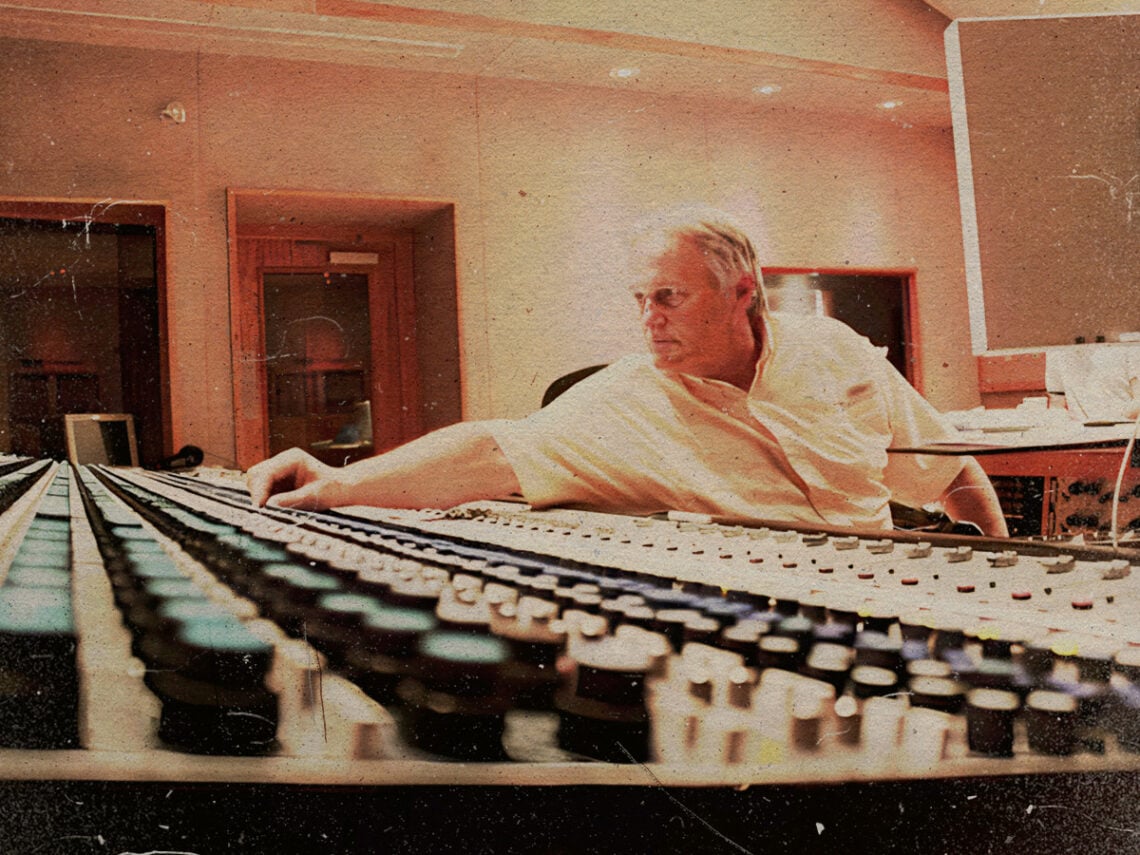
Roger Nichols: the nuclear operator pivotal to Steely Dan

Some people are just born technically gifted. Rodger Nichols, longtime Steely Dan engineer, was one such person. As a child, he was already learning how to navigate using the stars and a sextant, going on to making his own reflective telescope by grinding down a mirror by hand, and report on the Mrkos comet at school. As was the case for his entire career, his love of science and technology always intersected with music, and he wound up designing and building his own stereo to record his neighbourhood friends, one of whom happened to be Frank Zappa.
This connection to music reared its head again when he attended Oregon State University to study nuclear physics. He went on to become a nuclear operator at the San Onofre Nuclear Generating Station. They called it SONGS for short. He then went on to create his own recording studio, Quantum Studios, in 1965, recording for future stars like Karen Carpenter and Larry Carlton. Eventually, Nichols struck up a relationship with Gary Katz, which led him to Walter Becker and Donald Fagen. At the time, they were working at ABC as songwriters, and both bonded with Nichols over a shared priority for crisp, high-quality audio.
Nichols was asked to engineer their first record album in 1972, and he would wind up working with Katz, Becker and Fagen in recording the first, Steely Dan record. Their want to take full advantage of the technology available was a shared aim, with Nichols claiming they were “all perfectionists” in the studio. “It wasn’t a drag for me to do things over and over until it was perfect,” he once admitted. “It would have driven a lot of other engineers up the wall. In my own way, I’m just as crazy as they are.”
Nichols was considered such an important figure, that when Becker and Fagen went into the studio to record Can’t Buy a Thrill, it was universally agreed he had to be there. But the 1972 recording clashed with his summer holiday, so they postponed it until he returned, much to the annoyance of the ABC president, who had already put a lot of money behind the burgeoning band.
“We finished [the album] in six months, which was quick for them,” recalled Nichols. “But even then, their acceptance level was way above everyone else’s. They never had the attitude of ‘It’s getting late that’s good enough’, or ‘No one else will notice’. Everything had to be as near perfect as technically and humanly possible.” The album did well upon release, generating two hit singles, and from then on, Nichols was involved in the engineering of every Steely Dan album.
The demand for technical perfection meant Nichols was in high demand, and was eventually dubbed “The Immortal”. As he explained in a 1993 interview in Metal Leg, the Steely Dan Magazine, the workload was immense. “They were trying to kill me,” he joked. “I was working on a Johnny Winter session on the weekends, with Steve Barri all day and with Steely Dan all night, so they had me going 24 hours a day. They tried running me into the ground, but it didn’t work.”
There was one crucial moment at Cherokee Studios that resulted in him being stuck with the nickname. “Two of the tape machines were grounded improperly and I touched both of the machines, and everything shorted out,” he said. “The face plate on one of the machines was completely melted, but I didn’t feel a thing.”
