


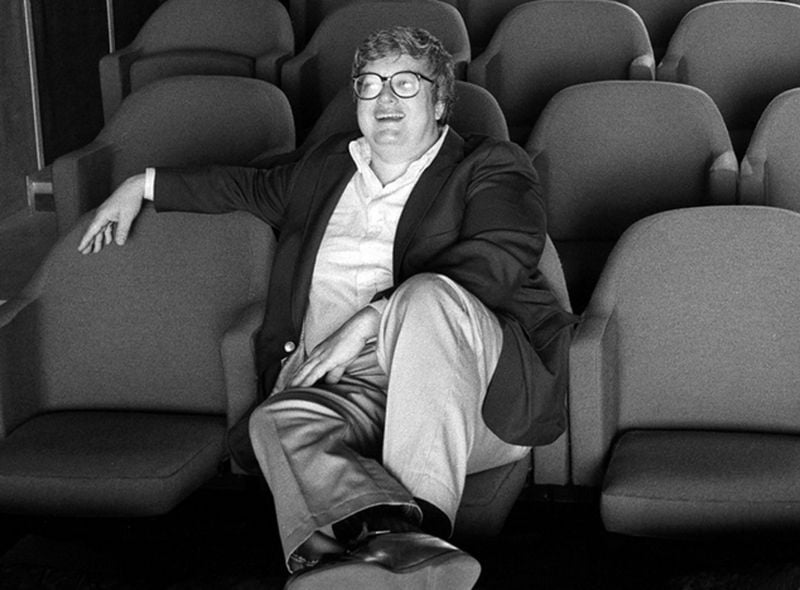
Roger Ebert claimed ‘Home Alone 3’ was better than the originals

The late Roger Ebert was a notoriously hard taskmaster. After all, he did not become the most eminent film critic for wishy-washy takes. He made his name getting into the nitty gritty at the heart of a movie and wasn’t afraid to take actors, auteurs and author crew members to task over what he perceived were glaring faults in their projects.
On the other hand, Ebert was also distinguished for his ability to champion titles that were either unconventional or downright underdogs. For instance, his support for 1967’s Bonnie and Clyde had a defining hand in changing how audiences approached cinema, with the project later celebrated as a “rallying cry” of the counterculture. The period also helped to engender the emergence of the New Hollywood Movement, the renaissance of American filmmaking.
A true individualist, Ebert was acutely aware that it was the responsibility of a critic to watch every possible second of cinema that could make their craft more substantial. He relayed this message to budding writers when given a chance, instructing them to explore out of their comfort zone and push their industry further. Naturally, this standpoint led to him watching a great multitude of feature films, with his accounts ranging from the glowing to the damning.
Although Ebert had a problem with many films, two surprising titles particularly irked him: the first two Home Alone instalments. Both were written by the respected John Hughes and directed by Chris Columbus and became established festive classics. Launching the career of child actor Macaulay Culkin, and boasting a stellar cast, the pair of Christmas comedies are deemed nothing less than iconic.
In what might be the most controversial take of his career, in December 1997, Ebert reviewed the third film in the franchise, Home Alone 3. Met with mixed reviews, owing to the absence of Macaulay Culkin, Chris Columbus, and composer John Williams, many fans of the original duo detest this entry and the one that followed it. Customarily though, Ebert was not in the majority. He went as far as to claim that the third effort of Home Alone trumped the first two in every sense.
At the inception of his account, he wrote: “Call me hard-hearted, call me cynical, but please don’t call me if they make Home Alone 3. These words, from my review of Home Alone 2, now have to be eaten. To my astonishment, I liked the third Home Alone movie better than the first two; I’m even going so far as to recommend it, although not to grownups unless they are having a very silly day. This movie follows the exact formula of the first two, but is funnier and gentler, has a real charmer for a hero, and provides splendid wish fulfilment and escapism for kids in, say, the lower grades.”
Concluding, Ebert said: “So, OK. I know the formula, and so does the movie (written, like the first two, by John Hughes). Forewarned and forearmed as I was, why did I actually like Home Alone 3? It was partly because of little Alex Linz, who has a genuinely sweet smile on his face as he watches his traps demolish the bad guys. I don’t know if he’ll have a career like his predecessor, Macaulay Culkin (for his sake, I sort of hope not), but he has the same glint in his eye.”
Ebert adds: “And the booby traps, while painful, are funnier this time. Sure, people fall down dumbwaiters and through floors, and get hit on the head with dumbbells and flower pots, and end up in the frozen swimming pool, but Raja Gosnell’s direction sidesteps the painfulness and makes it OK. The stunts at the end are more slapstick and less special effects. And the result is either more entertaining than in the first two films, or I was having a very silly day.”
It sounds like Roger Ebert had a very silly day, indeed.
