


Roger Deakins on his life story, a legendary career, and the future of cinema: “I’ve had such a good run”

Even those with a passing knowledge of cinema should know who Roger Deakins is. After all, he’s a two-time Academy Award winner, 16-time nominee, five-time Bafta winner, and a knight of the realm.
He’s also widely regarded and constantly celebrated as one of the greatest and most influential cinematographers of all time, not to mention a frequent collaborator of the Coen brothers, Denis Villeneuve, and Sam Mendes, who lensed some of the most acclaimed and iconic movies ever made.
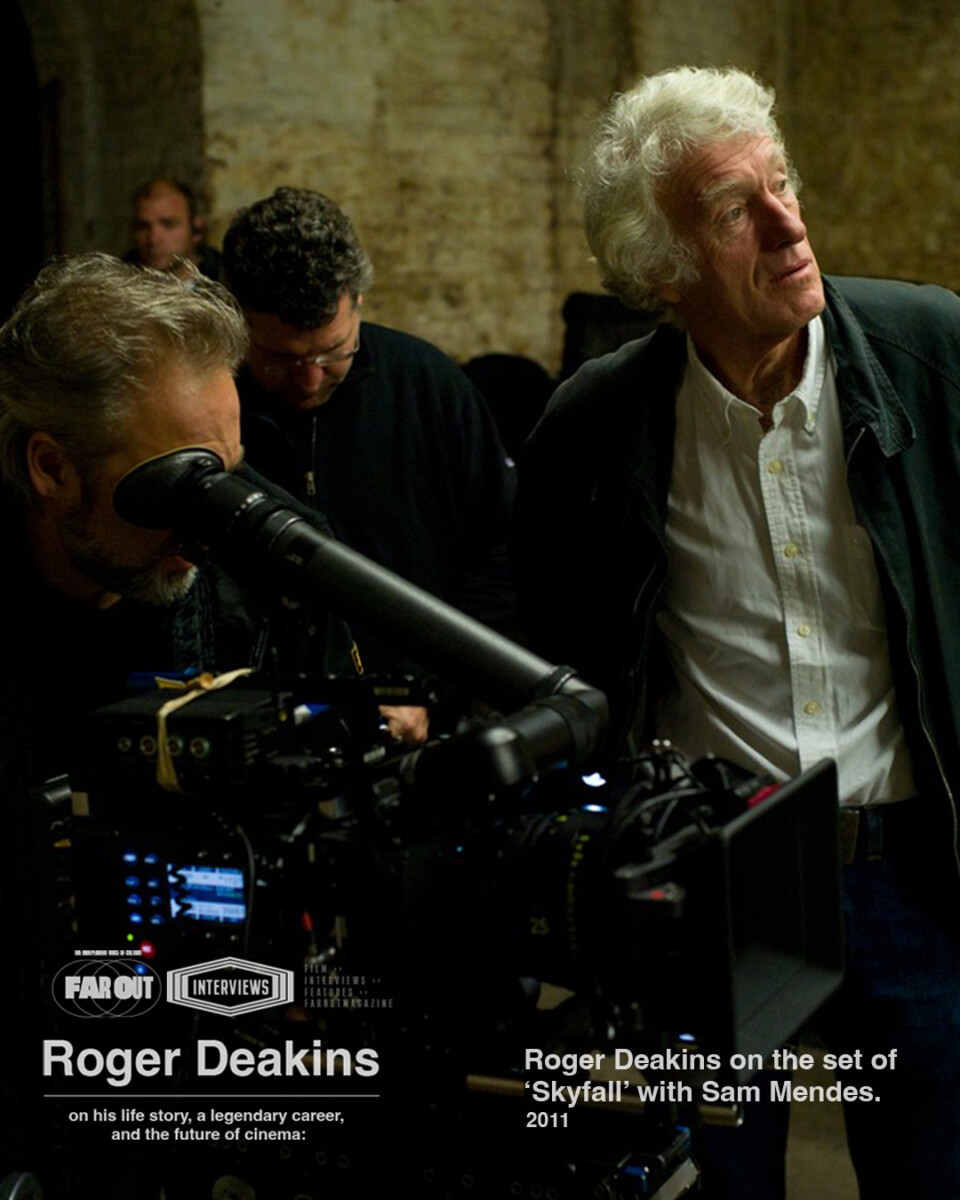
Other directors he’s worked with include Martin Scorsese, M Night Shyamalan, Bob Rafelson, and Andrew Niccol, while a select few of his choice credits cover The Shawshank Redemption, Ron Howard’s ‘Best Picture’ winner A Beautiful Mind, Sid and Nancy, the Coens’ Big Lebowski, their ‘Best Picture’ winner No Country for Old Men, and Skyfall.
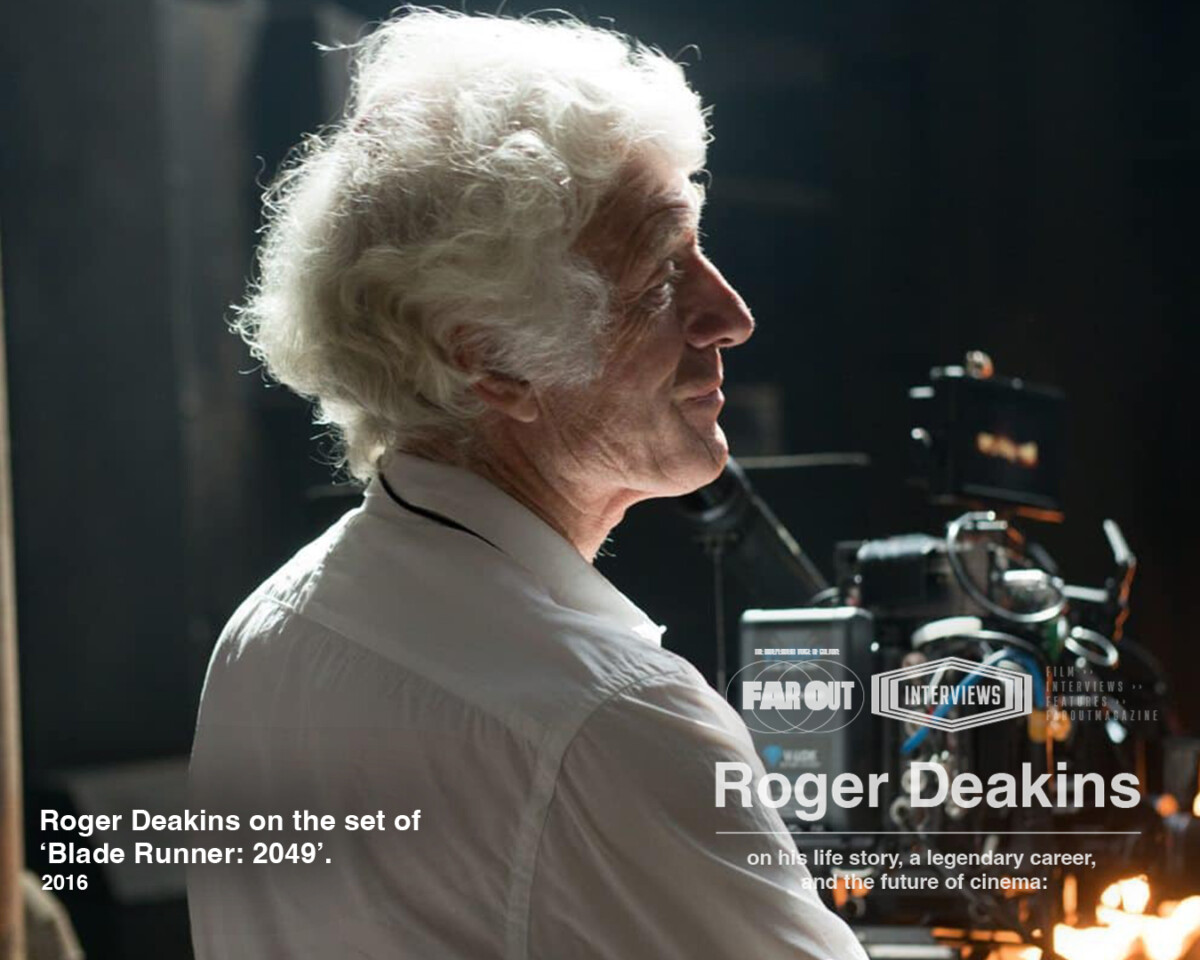
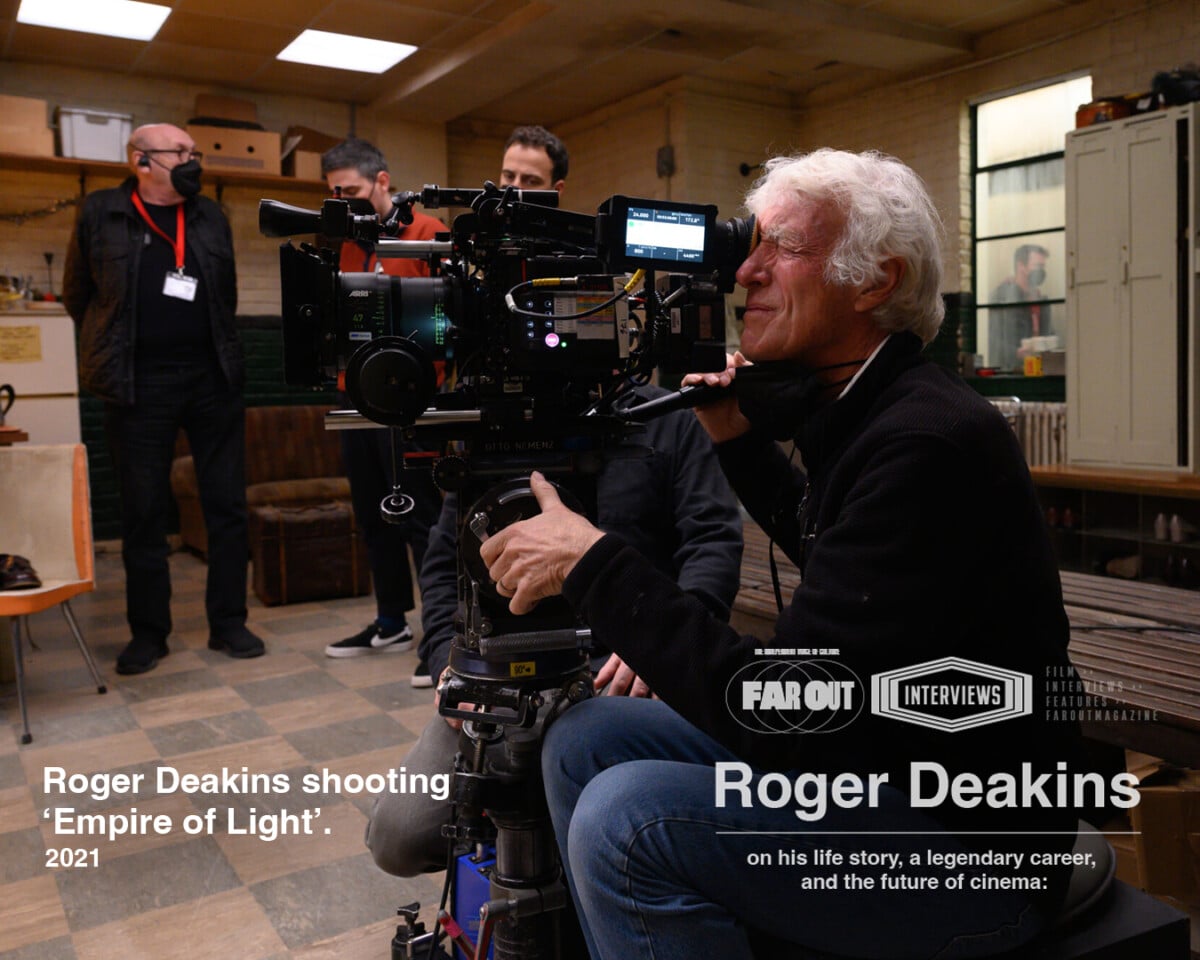
After 14 consecutive unsuccessful Oscar nominations, Deakins claimed two in a row for Villeneuve’s Blade Runner 2049 and Mendes’ 1917, respectively. Since then, he’s only shot one feature, the latter’s 2022 drama, Empire of Light, but it’s not as if he’s been resting on his laurels.
A keen photographer, he’s displayed exhibitions of his work, hosts the successful Team Deakins podcast alongside his wife, business and creative partner, James Ellis Deakins, and offers his knowledge and expertise to whoever wants or needs it, whether aspiring cinematographers or established names.
He’s also written a memoir, Reflections: On Cinematography, which combines the winding tale of Deakins’ life story and rise from Torquay to the summit of Hollywood with insights, anecdotes, and technical details that cover his entire career, combining the personal with the professional to offer a trip down memory lane that’s one part autobiography, and one part… not quite ‘how-to’, but ‘this is how I did it, and there’s no reason why you can’t, too’.
To coincide with the book’s release in February 2026, Deakins joined Far Out for a wide-ranging and career-spanning conversation that covers everything from his humble (and nervous) beginnings in the 1970s, right up until not just the present day, but the potential future of cinema as we know it.
Whenever a well-known figure in their chosen profession decides to write a memoir, the obvious thing to wonder is always, ‘Why now?’. Based on how long his top-level career in the industry has been, it’s reasonable to assume that Deakins has been getting pestered for a while now, but it turned out that this was the first time.
“It was!” he maintained. “So it was kind of, ‘Yeah, why not?’ It wasn’t coming from us. We’d done a photo book [Byways: Photographs by Roger A Deakins] a few years ago, but we hadn’t really intended to do anything like this.” A recurring theme of the Team Deakins podcast is that their guests answer the question, “How did you get to where you are today?” and Reflections puts the shoe on the other foot for a change.
“It’s funny, it was partly that when the publisher [Cassell] approached us, we said, ‘Well, we don’t want to do a tell-all,'” he explained. “But it could be something that people ask us: ‘How do you start?’ But then I thought it would also be good to be, not a technical manual, but, you know, an amalgamation of a memoir and technical challenges. Lots of things: anecdotes, a bit of this, a bit of that.”
“Yeah, and it kind of shows people that there’s no one path,” James added, with Roger acknowledging that it was “really important” to showcase his circuitous route to legendary status, which covered rejections, firings, art school, music videos, and documentaries before he’d managed to make a name for himself.
Not that splitting the book between the personal and professional sides of his life was by design, though. If anything, Deakins was unsure of how to approach writing about his decades-long journey from studying graphic design and having his first film school application turned down to becoming one of the all-time greats in his field.
“It’s interesting, because the first thing is, ‘What is the publisher expecting?'” he pondered. “And I think the publisher might have been expecting more of a tell-all, but it wasn’t something that we would want to do particularly, right? I mean, when we first thought about it, we imagined that it would be about technical challenges as much as the memoir.”
“Their idea, going with that, was, ‘Let’s just talk about five films, the big films; Shawshank Redemption, Skyfall, that kind of thing,” James elaborated. “Instead of, to us, we’re so used to making stories. What’s the story going through it all?” Even at that, there were several bones of contention to overcome.
“They weren’t that keen on me putting in anything about my documentary experience; they didn’t see the relevance,” Deakins shared. “But, I mean, that was completely wrong to me. The point was that your life is made up of a lot of different elements, and that’s what I wanted to sort of embrace, really.”
Once he started writing it and found his groove, as the book “expanded in not only wordage, but physical size,” the cinematographer was free to go as in-depth as he felt necessary. The visual side of the memoir had been part of the plan from the beginning, with Deakins finding some of those images easier to acquire than others, especially when it came to stills from specific movies.
“For years, we, but mainly James, has been helping me run a website that answers people’s questions, and we discuss filmmaking, usually technical aspects of filmmaking,” he proffered. “And a lot of those diagrams have been up on that website for many years. So it was a matter of amalgamating them all together, and we also felt, if we’re talking about the lighting, to have frames from the movie that illustrate the lighting was very important.”
“That was actually the complicated part,” Deakins continued. “Getting permissions for all of those images was tough. That was the hardest thing, not that I did it! James tells me that, but that was really painful getting permissions, because it wasn’t just the studios that had to sign off. Sometimes it was the actors who were in the frames. I mean, it’s a weird process!”
In taking that trip through the ups, downs, highs, and lows of his career, Deakins pored over the films he’d worked on in the past. Despite his credentials, he still struggled to distance himself from them. “Anytime I think of anything I’ve done, I think I could do it better, I could do it differently,” he confessed.
If anything, his memory was almost too good. “It wasn’t so much a matter of delving into it as actually cutting down that experience into something that was, albeit long, still manageable. I mean, the book could have been twice as long,” with James confirming that at one point, it was.
“I would ramble on about my documentary experience and my life and everything, and it was very interesting, and it was very painful to take things out,” which is probably one of the biggest issues for anyone tasked to cover their entire life and career in a few hundred pages. “It’s probably better for it, some of it, some of it I really regret taking out. But on the other hand, what do you do?”
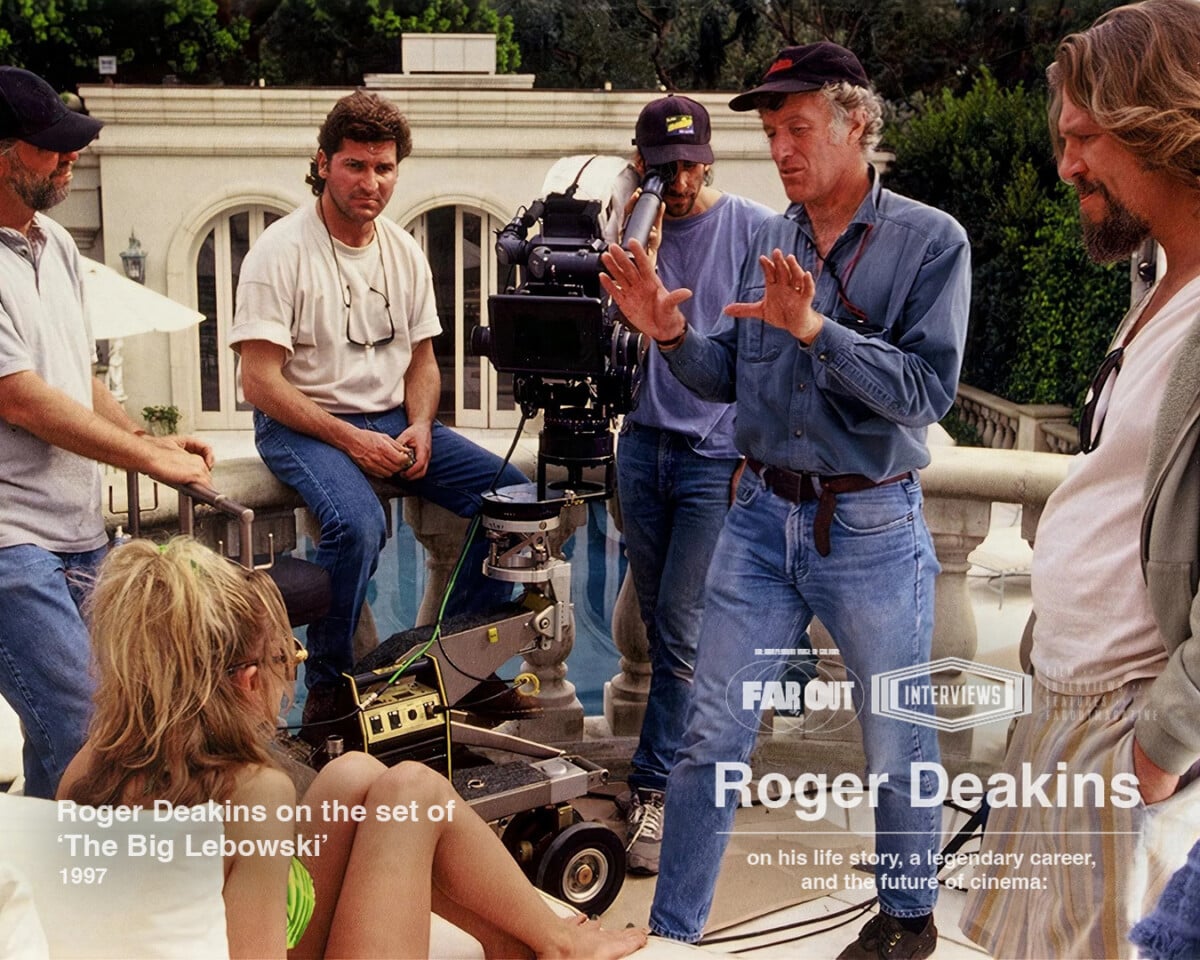
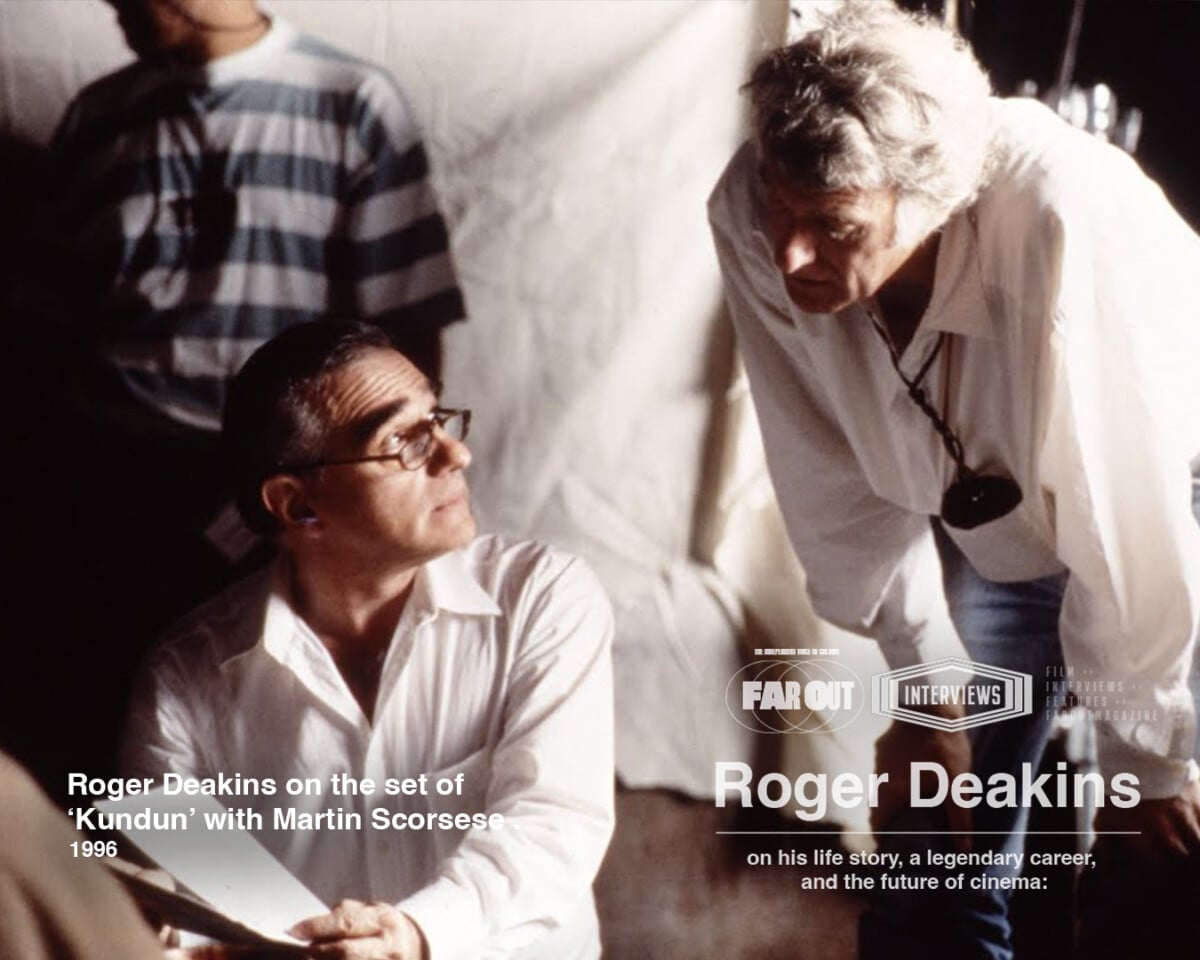
That doesn’t mean it isn’t overflowing with fascinating details, like when Deakins revealed that on his very first day as a cinematographer on his very first feature, Chris Boger’s 1977 picture, Cruel Passion, he was so nervous that he found himself looking around for “a secluded place to throw up”. Even now, those nerves still linger on day one.
“They got a little bit better over the years!” he quipped. “It depends on the circumstances, because I find if I go on a set, and I don’t know people, I’m very nervous. I’m still very nervous, not that I’ve shot anything for a while, but I have always been a nervous person. I think that’s part of it, really. You want things to be right, so you’re nervous about it.”
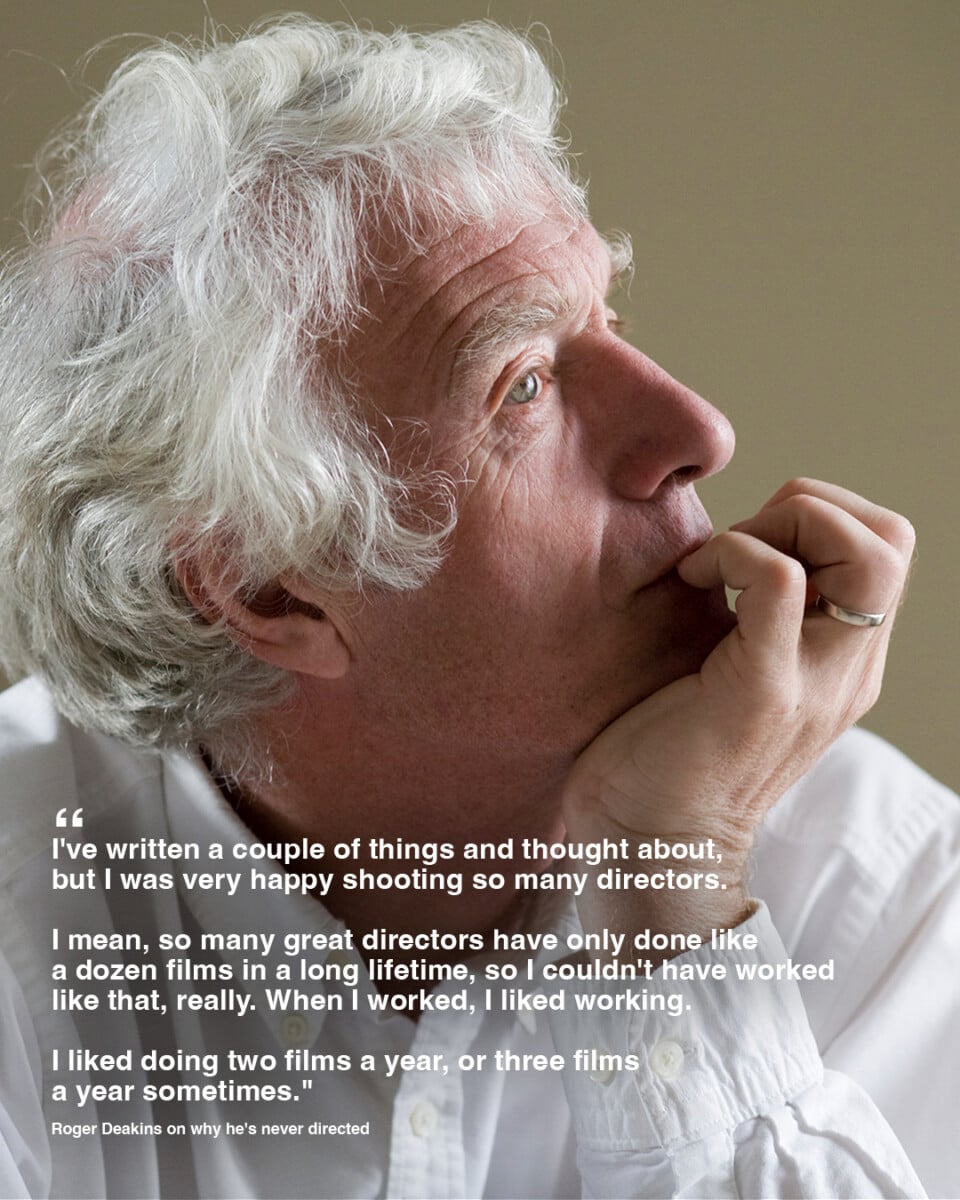
History is littered with cinematographers who became directors, ranging from Nicolas Roeg and Barry Sonnenfeld to Jan de Bont and Zhang Yimou, to name but four. And yet, Deakins hasn’t directed anything since his student days, and it’s an itch he’s never really felt the need to scratch.
“I’ve written a couple of things and thought about, but I was very happy shooting so many directors,” he said. “I mean, so many great directors have only done like a dozen films in a long lifetime, so I couldn’t have worked like that, really. When I worked, I liked working. I liked doing two films a year, or three films a year sometimes.”
One of the lesser-known entries in his back catalogue is Michael Apted’s 1992 neo-western, Thunderheart, starring Val Kilmer as an FBI agent dispatched to investigate a spate of murders on a Native American reservation. Not for Deakins, though, since that was when he met the film’s script supervisor, James Ellis, and they were married by the end of 1991.
“That was a really interesting point in my life, really, because I’d recently moved to the States just to see how I could get on in Hollywood,” he reflected. “And, like, two films later, I meet James, and it was like my whole life was changing quite dramatically in that sort of year or two.”
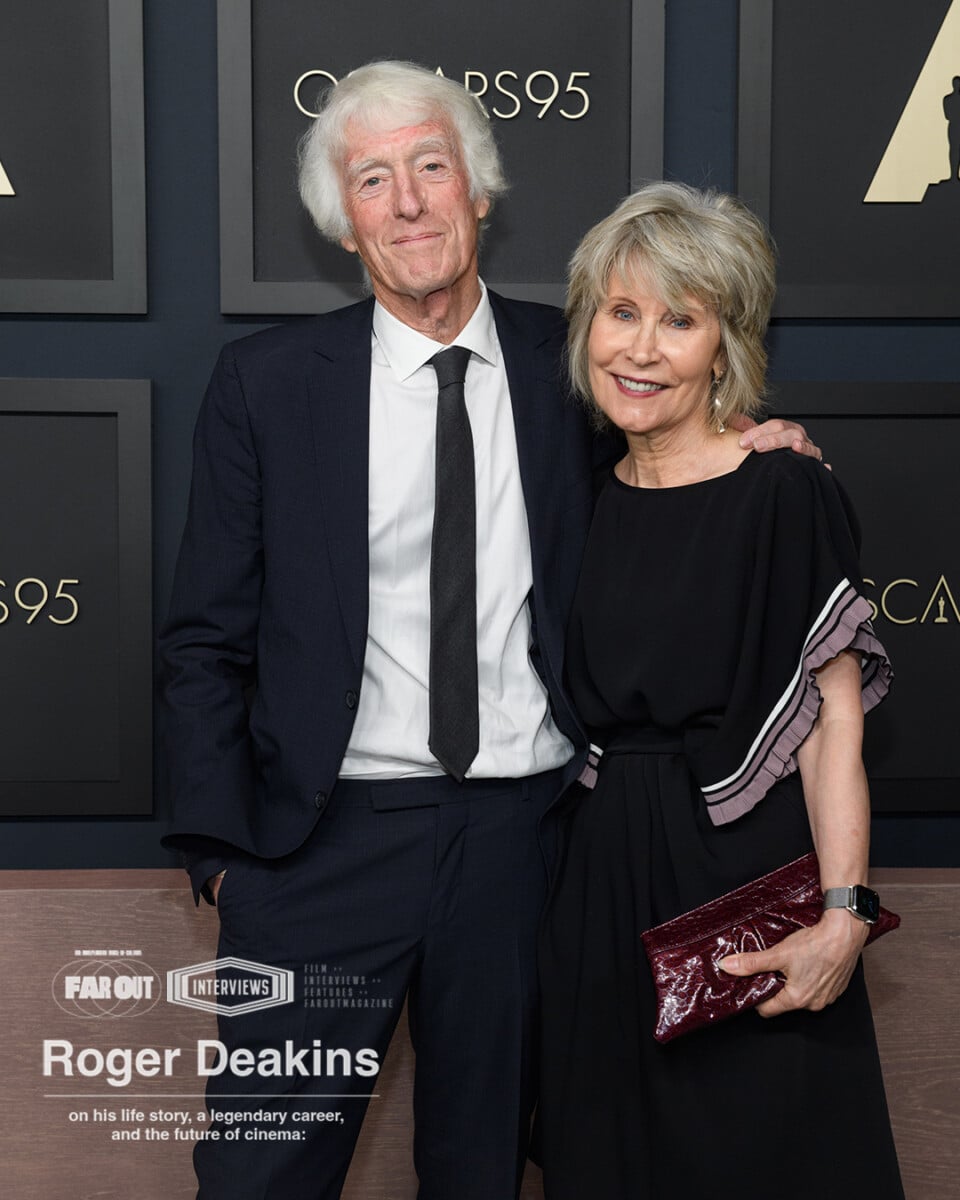
“We were married for a year, and Roger turned to me and said, ‘Huh? I guess I live in America now,'” James remembered. “Well, I’m still not sure of it,” he countered. “I’m still very split between America and the UK.” Since then, Team Deakins has been virtually inseparable, both on set and off.
They’ve got an established working method and have done, for a long time, but seeing as he specifically mentions Villeneuve as being one of the filmmakers who “immediately understood” the way they collaborate, it’s fair to have a guess and suggest that some other directors did not.
“It’s just a different way, and it’s not their fault,” James clarified. “They’re not used to it, but, within a few weeks, they kind of get it.” Taking over, Deakins reiterated how important her role has become not just for him as a cinematographer, but for his entire team and the productions they work on.
“It becomes very obvious how much James knows, how important, how much she offers to a production,” he surmised. “But they also really like it as a conduit to you,” she interjected. “Because they’ll come to me, because you’re all wrapped up in something, and say, ‘James, don’t let him do this, do that.'”
“Other people don’t like it because she’s my protector! Some people don’t like that!”
Roger Deakins
“It was really interesting, actually, because on one film, James was still working as a script supervisor, and the director had offered the job for the whole film, but the producer vetoed it because she didn’t like the idea of a couple, a married couple, working together on the same film,” he recalled. “Towards the end of the film, James actually came on and took the place of the script supervisor, who had to leave, and the producer said, ‘Oh.’ She realised how wrong she was. But that’s the kind of inbuilt prejudice against people in a relationship working on a movie.”
Along similar lines, then, having worked with a lot of different directors in a lot of different genres and on a lot of different types of movies, Deakins is an adaptable DP, to say the least. Only to a point, though, since he isn’t willing to compromise his tried and tested approach, regardless of who he could potentially be working with.
“Well, you have to adapt to a point,” he ruminated. “I’ve been a little choosy, really. There’s a certain way I like to work, and so, there are certain directors I would never get on with. So one’s very wary of working with somebody you don’t know, and making sure you find you have a relationship with them that suits both of you, but that’s just that’s the trick of any relationship within a film.”
Another surprising revelation from the book is that many of the techniques and setups that Deakins used on some of his most famous movies were either improvised or last-minute decisions made out of necessity. In an ideal world, he’d love to have everything meticulously laid out in advance, but he also knows the importance of those moments that foster creativity and ingenuity.
“Bob Rafelson said to me once, ‘Beware if some producer said you can have anything you want, because you just won’t try, you won’t have anything to push against, you stifle your imagination, in a way'” which are words that have stuck with him ever since. “I think he’s absolutely right. I think you always want to try doing something that’s probably not attainable with the time and the money and the resources you have, but that’s the nature of what you’re trying to do.”
“I think that’s also a really important part of the book,” James said. “That people who study cinematography, perhaps think, ‘Oh, well, I’ll do it this way, this way,’ but they have to realise that when you’re shooting, you run against realities all the time. You get there, and the location has changed, and it’s not what you thought. And you have to think on your feet, and you can come up with great things, but you have to accept the fact that this is going to happen.”
It’s a sentiment that Deakins absolutely concurs with. “I think that’s actually the joy of the process,” he outlined. “If it was all about making a storyboard, doing a drawing, and then just making that shot come alive on set, it would be pretty boring, I think. The idea that things change, the idea that ideas come on a set from anybody that can be on a set, and you react to things around you.”
“You react to the actors or the location, and that’s what’s really interesting; there’s no formula. It’s not just producing something by rote.”
Roger Deakins
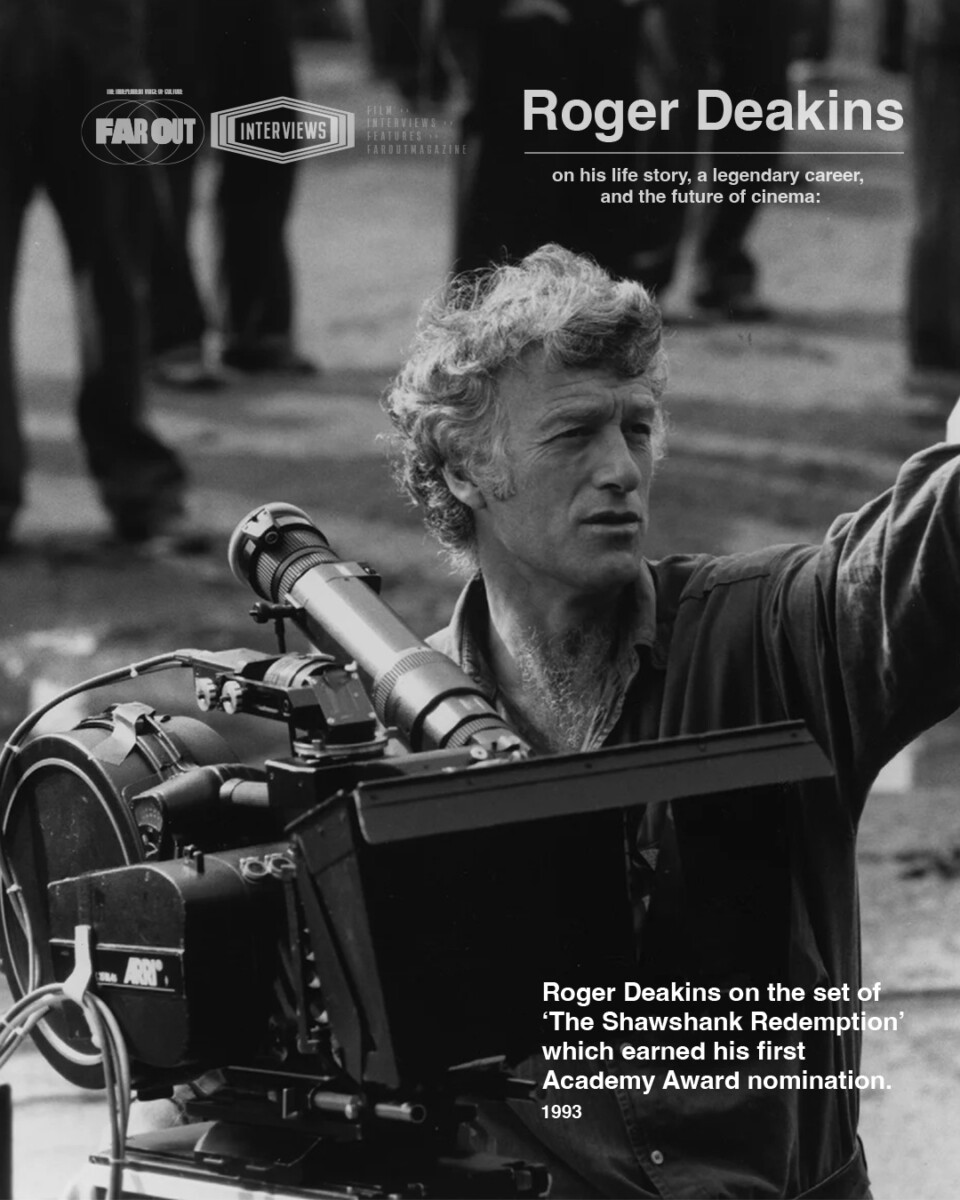
Incredibly self-deprecatingly, Deakins puts much of his success down to luck, but he has a point. His agent told him that Barton Fink “wasn’t the right project,” but he became a Coen brothers regular. On his second film with Joel and Ethan, The Hudsucker Proxy, he worked with Tim Robbins, who personally recommended him for The Shawshank Redemption, which earned the cinematographer his first Oscar nomination.
“It’s a lot of luck that’s brought me sitting here talking to you!” he replied, doubling down. “It’s a lot of luck you have, but then you ride your luck, you see what the path might be, and you take a chance on something. And, you know, sometimes it fails. I failed miserably, making some decisions. But you leave yourself open to new possibilities.”
He noted how that was “especially true for me working on documentaries,” or when he first decided to try his luck in America, and he did alright out of it in the long run. Deakins certainly benefitted from the domino effect, and one of the last ones to topple came when he finally claimed his maiden Oscar after going zero-for-13, not that he values his career or his contributions to the medium by the number of trophies he’s won.
“People would come up to me in the end and say, ‘Oh, I’m so sorry you didn’t win,'” he smirked. “You lost? You lost? Well, I’ve never lost anything. I did honestly smile at it, because it’s really not why you’re doing it. It shouldn’t be, and it wasn’t for me, for sure. Yes, it was very nice to go onstage at that point in my career and see all the people in the audience, many of whom I knew or worked with at least, and they were all so happy for me, and I was happy. I’m not saying that I wasn’t enjoying it, but it didn’t really matter to me during my career, it really didn’t.”
Deakins’ book takes a somewhat existential turn during its epilogue, where he mentions the shift from film to digital in the same breath as the advent of AI. It’s been a while since he wrote it, and it’s only become more prevalent and a bigger talking point, so where does he stand on the situation as of now?
“I don’t know,” came the honest answer. “I think the question’s still moot; ‘What’s going to happen?’ It’s very interesting that this year and coming to next year, how many films are shooting back on film, on emulsion, and they’re shooting IMAX or VistaVision or whatever, it’s very interesting where the film industry is going.”
“It’s kind of hard to have an opinion until you know how it’s going to be used,” James expounded. “There are certain things that it’s really great for, the rotoscoping and everything, the painstaking step-by-step sets, that’s great. But we talked with a production designer who had to use it in something that he was doing to create backgrounds. And he would say, ‘I’d like a big building like this’, and it just gave him a big ‘H’! It was just an odd thing.”
Stepping in, Deakins pointed to the one kind of production he simply isn’t interested in working on. “We were offered work on a film a while ago that was like, going to be five or six months on a green screen stage with a virtual background, but it was all in basically this one set, and it was just like, ‘No, no, please!'”
“I really enjoy being on a location with a group of people, and you’re there, you’re in this place, trying to make a film, it’s real, and you’re reacting to things,” he explained. “Technically, it’s interesting, maybe for a day or two, but not for, like, a whole movie. I wouldn’t really want to do that.”
In an analogy that doesn’t make much sense at first glance, Deakins subsequently compared the ongoing shift in the industry to booze: “The beer in England used to be like, what was it? It was like Double Diamond, these terrible beers.” It sounds odd, but the deeper he got into his comparison, the more it started to make sense.
“Real ale was disappearing, and then suddenly this, what was it, CAMRY, or something, came along, and now our local pub in Devon has like, three or four different real ales!” he exclaimed. “Wonderful beers, but they’re sort of a niche. It’s kind of a niche market, really. And I think film’s going to be that. It’s going to survive, but in that sort of sense of it being, yeah, a niche market really.”
A word that comes up a few times in Reflections, for better or worse, is “filmic.” Deakins was rejected from the National Film School in 1971 because he was told his photography wasn’t “filmic” enough. Fast forward more than half a century, and has he finally understood the meaning of the word that’s remained undefinable since long before his career in the industry even began?
“I’ve got no idea!” he replied, which was to be expected, really. “You referenced it, because when I went to find out why I didn’t get into the National Film School, the principal, Colin Young, said my images weren’t filmic. I had no idea what he meant by that!”
“Don’t you think what filmic is, is when you’re using what’s unique to film versus a novel, for instance, to tell the story?” James inquired. “So when you’re doing it without dialogue, but the choice of framing tells you that this person’s upset or whatever. That, to me, is filmic.”
“Or when the juxtaposition of images in a frame is actually telling you a story that is not just there on the page, in the dialogue, or whatever. I feel that’s what ‘filmic’ is,” Deakins pontificated, perhaps finally mastering its definition after all these years. “That’s why I think my still photography is quite filmic, actually! But I’m not sure what other people feel about it. It’s a very odd word, really.”
And he wasn’t done there, either. “I think ‘filmic’ is something that moves you through its use of images and sound and juxtaposition of images, whether within the frame or through cutting. To me, Andrei Tarkovsky’s films are totally filmic because he’s using the whole medium in a very special way, how it can be used.” The question remains unanswered, and it’s open to interpretation, so it was time to move on.
As mentioned, Deakins hasn’t lensed a movie since Empire of Light, although he’s remained busy through other creative and artistic avenues. With that in mind, what would it take for someone, anyone, whether he’s worked with them before or not, to successfully enlist his services as a cinematographer in 2026?
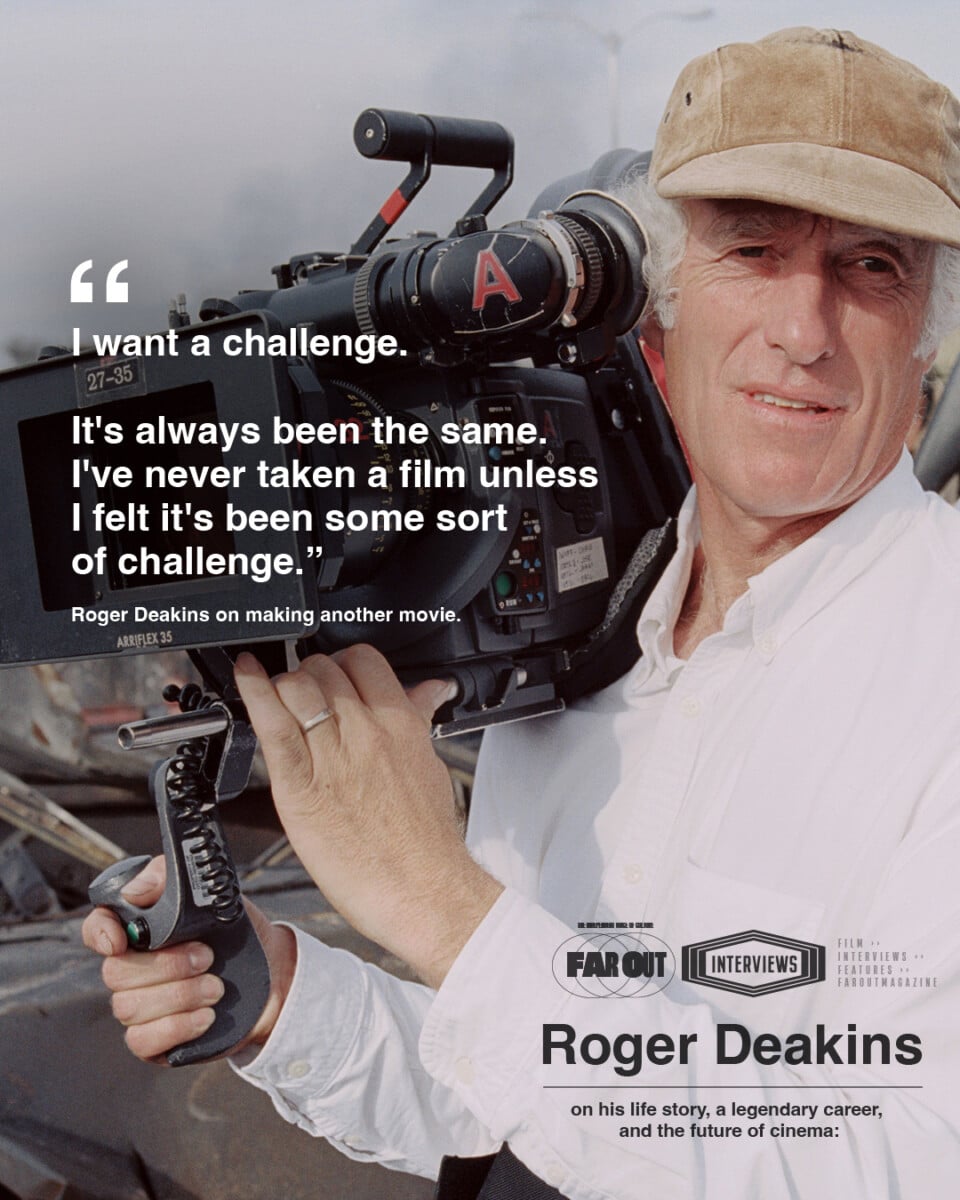
“I don’t really know,” he thought for a moment. “I mean, I want a challenge. It’s always been the same. I’ve never taken a film unless I felt it’s been some sort of challenge, and felt that the director is very passionate about the project, and obviously, a story that speaks to me. That’s a hard combination these days. I mean, there’s plenty of cinematographers out there that are really brilliant. There’s a lot of competition!”
“I’ve had such a good run, I don’t feel the pressure to carry on. But, say, if the right project came along and somebody really wanted us to work on it, then we’d be there, for sure.”
Roger Deakins
While the book doesn’t have the time or the page count to go through every single thing that Deakins has worked on, there are a couple of titles that didn’t get an ample mention that he looks back on especially fondly as being either underrated, unsung, or overlooked gems in his filmography.
“One of the first films I ever worked on was with Mike Radford, it was called Another Time, Another Place; I mentioned it briefly,” he suggested. “I think The Man Who Wasn’t There,” James recommended, and Deakins agreed, with a caveat. “That was in the book, though. There wasn’t a lot about Another Time, Another Place. There’s a few, but it’s just so weird why some films are successful, and others are not.”
Since Deakins is one of the industry’s greatest-ever cinematographers, who better to ask about the industry’s greatest-ever cinematography? Far Out quizzed the DP on which names or titles stand out in his mind as being shining examples of the profession he’s called home, and he began with a declaration that should be the mantra of anyone out there aspiring to follow in his footsteps.
“Cinematography needs to fit in so it doesn’t stand out,” he stated. “I mean, there’s so many films. We mentioned Andrei Tarkovsky. I think anything he did in Russia, anyway, I would say, is exceptional. The way he was using, or the way the cinematographers he worked with were using the medium and exploring the possibilities of it.”
“I tended to love certain cinematographers because of the breadth and the variety of what they did,” Deakins continued, and he ended with a nod, a wink, and a flourish. “Obviously, Conrad Hall, James Wong Howe, Henri Decaë. There’s many, many cinematographers whose work I would say is… filmic!”
Keeping the focus behind the camera, there’s one director that he would have loved to work with, were it not for the unfortunate fact that they’d died several years before he got his foot in the door. “I would love to work with Jean-Pierre Melville,” Deakins revealed. “But I’m sure it would have been hell, because I hear he was really difficult!”
“I just find his work extraordinary,” he concluded. “We were watching one of his films the other night. Again, I could watch his films 24 hours a day. Really extraordinary filmmaker.” From extraordinary filmmakers to unexpected trivia, we ended our deep dive with Team Deakins by revisiting his very first trip to the United States.
Why? Because, as far-fetched and unbelievable as it may sound, given his position as one of Hollywood’s most esteemed veterans and awards-laden cinematographers, Deakins’ first Stateside visit was for work; not just any old job, though, but lensing the music video for Marvin Gaye’s 1982 classic, ‘Sexual Healing’.
“Yeah, that was really odd, because it was meant to be shooting in London, and then suddenly, Marvin Gaye’s grandmother, I think, was ill,” he recalled. “One of his relations was ill, and he had to shoot in LA. Suddenly, we were on a plane to LA, and I’d never been there before, but that was more about the experience. LA, it was crazy. I was with a camera assistant who had been here a lot, so he decided to show me LA, which is an experience!”
From Torquay to Marvin Gaye via the Coen brothers, the Academy Awards, and Andrei Tarkovsky; just like Deakins’ professional journey, it seems fair to say that his career-long conversation with Far Out also took some unexpected detours along the way.
