


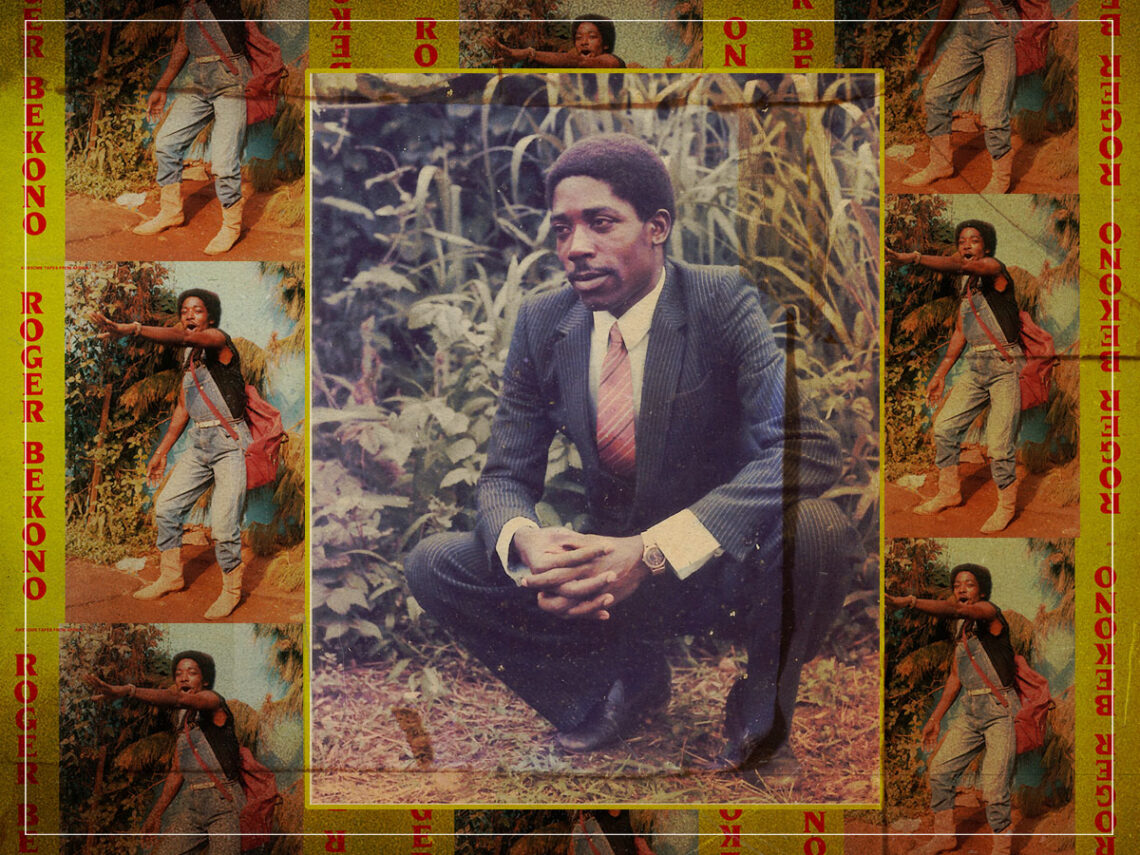
Roger Bekono: the master of Cameroonian bikutsi music

When Paul Simon’s Rhythm of the Saints hit the shelves in 1990, it marked an important step forward in the popularising of so-called ‘World Music’. A chief player on that album was singer and guitarist Vincent Nguini, an artist who epitomised the Cameroonian music known as bikutsi. Rhythm of the Saints brought the bikutsi sound to the world stage. Still, to fully understand its ethos and influence, we need to look to Roger Bekono, an extraordinary talent who lived and breathed this enticing genre and remains one of its greatest ever exponents.
Bekono was born in June 1954 in the small town of Atéga, Cameroon. As a young boy, he needed to walk two and a half miles to school each day. At home, he was expected to undertake numerous domestic chores. With little time left to indulge in children’s games, Bekono entertained himself by singing while he worked or walked. Aged seven, he joined the choir at the local Catholic Church. His mother, Scolastique Essama, strove hard to give her son the best education she could manage.
At age 14, Bekono was able to migrate 30 miles west to Cameroon’s capital city, Yaoundé. Situated in the central plains of the country, with a population of 2.8million, the city offered possibilities undreamt of in Atéga. Bekono moved in with his uncle and continued with his studies. During this time, he absorbed a number of influences, chief among them the great South African musician Mariam Makeba. Crucially, through discotheques and movies, Bekono also grew to appreciate artists as diverse as Edith Piaf, Michael Jackson, French ballad singer Michel Sardou, and Elvis Presley.
In his early 20s, Bekono made the fateful choice to quit studying and pursue life as a full-time musician. In Cameroon during that era, this was a bold move. Professional musicians were regarded as wild dropouts, and with no copyright system in place, it was considered impossible to make a decent living this way. Nevertheless, Bekono’s family eventually accepted his decision. His stepfather gifted the young man a tape recorder and a classical guitar, and Bekono took his first steps along the road to fulfilling his dream.
He began honing his craft in small clubs and cabaret spots. Singing in his native language, Ewondo, his initial songs blended French Chansons and Afro-Cuban Rumba. Gradually, he became drawn to a dance sound and then emerged from the streets. Bikutsi music, as it became known, fused traditional Cameroonian rhythms with a smart, urban pop vibe. It developed in and around Yaoundé, and Bekono found himself at its heart. Alongside peers such as Messi Martin and Les Têtes Brûlées, he played a major role in shaping its form and future.
Translating literally as ‘beat the earth’, Bikutsi grew from established traditions among the Beti, or Ewondo, people. Characterised by a fast tempo and driving, subtly swaying rhythm, Bikutsi features bright electric guitars that mimic the sound of the balafon—a gourd-resonated xylophone. The music’s thumping drums do a similar job of emulating the foot-stomping dances that regularly accompany traditional celebrations and events.
Towards the end of 1985, Bekono released his first solo album, Oget Mongi. Its lead single, ‘Ngon Nnam’, took the capital by storm, earning heavy rotation on the city’s radio stations. A delightful upbeat number, it proved perfect for the baptisms, communions and weddings which fill the end of year calendar in Cameroon. Bekono was quickly hailed as leading light in what has come to be viewed as the golden age of Bikutsi.
Invited to perform all over the country, such as Bekono’s stock at this time he was selected to write and compose for Pope John Paul II’s first-ever visit to Cameroon. This was a major event for a predominantly Catholic population. The Pope’s visit coincided with the introduction of television to the region, and Bekono’s music enjoyed unprecedented publicity, propelling him to an even higher level of fame.
Bekono had bucked the trend and found financial success. Now happily married, he released a second highly successful album, Assiko 100,000 Watts, in 1987. Jolie Poupée followed in 1989, a record which saw Bekono further refine and polish his sound. It remains his best-selling release and was hugely influential across Cameroon and beyond. In 1994, he returned with another highly ambitious solo record, working with a fresh generation of Bikutsi stars on the double album Ding Ma / Makeu Aluck.
On the eve of that album’s release, a dispute arose between Bekono and the record’s producer, the influential figure known as Mr Ebanga. Unable to come to an agreement on a marketing strategy, thousands of cassettes remained gathering dust on warehouse shelves. Years dragged by. Psychologically broken through the loss of what was to be his magnum opus, Bekono’s health deteriorated. Still nurturing ambitions to release one final album, he eventually succumbed to a long illness, passing in September 2016 at the age of 62. Media tributes poured in from across the African continent, paying homage to one of its brightest stars who played a vital role in the development of a truly remarkable sound.
