


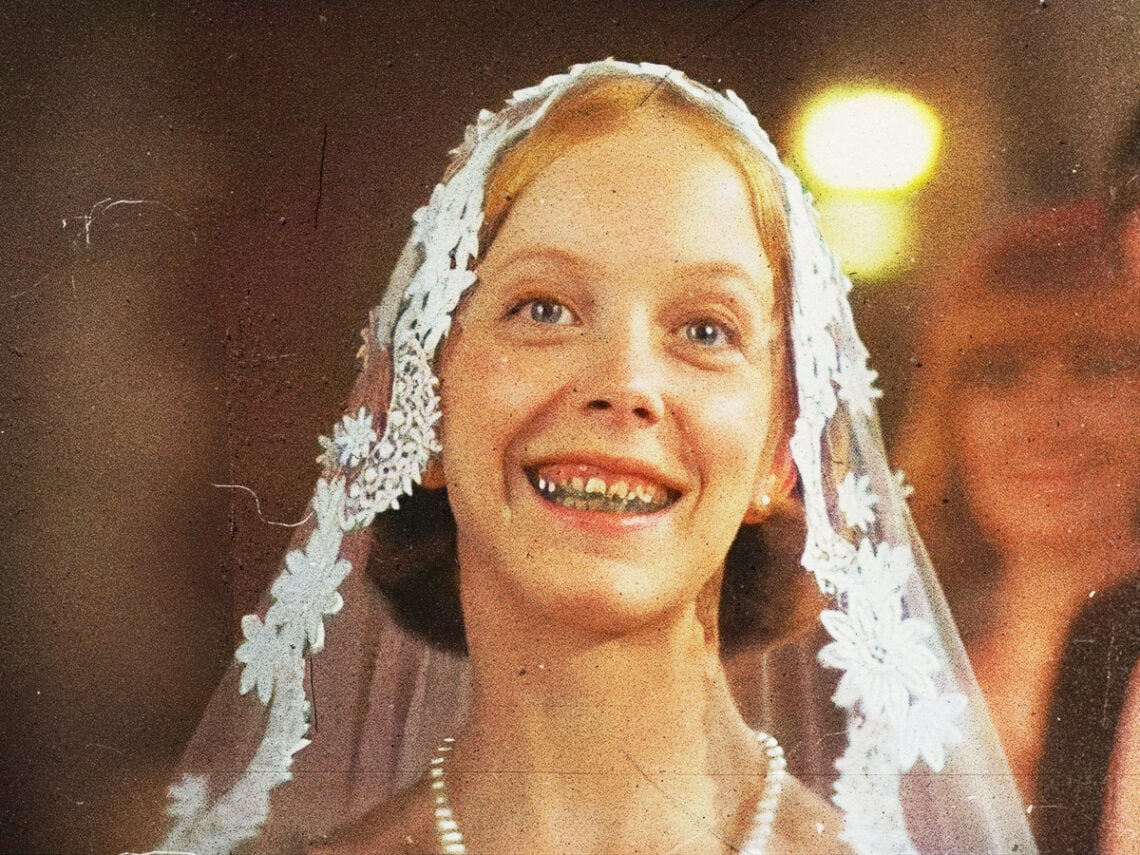
Robert Altman – ‘A Wedding’

A Wedding opens, somewhat predictably, with a wedding. You see the bride and groom, the different rows of families in the pews of the church. The clergyman officiates the matrimony, and the ring bearer presents the wedding bands. But, such is the nature of this type of Robert Altman film, you don’t really comprehend this until at least half an hour later.
This could be an incredibly frustrating thing. For those not partial to this particular branch of the director’s filmography, they will be in for an excruciating two hours and five minutes. Save for one ‘dramatic’ moment in the beginning, in which the grandmother of the groom passes away in the mansion adjacent to the church – which is in itself played more or less as a gag – there is practically zero in the way of linear, direct, purposeful plot.
But for those who loved Nashville, which came three years earlier, they will savour every frame of A Wedding and, when the credits roll, be sad that there isn’t a half-hour more. The opening depiction of the wedding is so sprawling in its coverage of everyone that it includes the wedding photographer, the security guards, and a cable news trio consisting of the presenter, cameraman and sound recordist, indicating the wealth and status of the family. Altman gives them all equal screen time, and in terms of composition within the frame, he refuses to single out anyone. For the majority of the movie, people are shown amongst people, dozens, if not hundreds of them.
Loosely, A Wedding follows the union of two families; the vastly wealthy Corelli’s, a staple of the Chicagoan upper-class, and the Brenner’s, a southern family looked down upon for their ‘new rich’ status which is credited to them for acquiring wealth through business rather than generations of inheritance. You could say that at the centre of it is Dino Corelli and Muffin Brenner, the newlyweds bringing the two clans together, but that would be disingenuous: there is no centre to the film. A Wedding is all-centre, or rather you could say it is all peripheral; a simmering and swirling spectacle of overlapping stories, characters and dialogue.
Of course, things happen. There is a storm midway through that forces everyone to take solace in the basement, which has been turned by Corelli Sr into an exact replica of his favourite trattoria in Rome. A deeply problematic revelation occurs, spread like gossip throughout the party. A hilariously inappropriate painting of the young bride is unveiled, prompting outrage and dissent amongst the guests. All these things, however, are brought together in a rich and vibrant mosaic. When Altman is at his best, his films are all about the texture, and the result is exquisite. Every muffled clink of champagne glasses or squeal of a playing child contributes to a lavish soundscape that is complemented by stunning lighting and cinematography, which frames the loosely unfolding narrative like a mediaeval tapestry.
The experience is also deeply rewarding. One way to view it is simply to let it wash over you, enjoying the sights and sounds along the way. If you pay attention, however, you notice that the film isn’t completely chaotic; Altman does things with purpose, plants set-ups and stages encounters between the family that pay off in a small but fulfilling way along the way. When the families are sat during the ceremony, for instance, you can spot amongst a sea of faces one man laying his eyes on a woman for the first time. When this man declares his passionate love for the stranger later in the film, it doesn’t come quite as out of the blue as it first appears.
In the same way that it takes half an hour to realise who is getting married, it takes a further hour before you truly understand who everyone is and what their dynamics are with each other. Because the cast is so vast and eclectic, you sometimes see moments with what you assume is just an extra or a minor character who serves just that one scene. You gradually come to realise that there are no extras; everyone you see has their own little story unfolding. By the end of the film, before it culminates in what could barely be described as a climax, there is an incredibly satisfying feeling of knowing the intricate connections between everyone.
By the time A Wedding was released in 1978, Altman had been churning out films at an absurdly prolific rate. He had released ten films already, and the decade wasn’t even over, clocking in multiple films a year. The director would continue to make films into the 2000s before his death in 2006, and over the course of his 35-movie-filmography, he experimented with every genre under the sun and played around with different movie-making techniques.
The 1970s represents a particularly golden era for Altman, where his signature brand of cinema is best represented. Specifically, the style he honed consisted of two main elements: an enormous cast of characters, often none of them major stars, and a distinct style of capturing dialogue which involved multiple soundtracks being mixed in real-time. This recording of sound was utterly innovative, literally pioneered by Altman, and to this day, many filmmakers still struggle to replicate the effect.
You might think that having already given us M.A.S.H, McCabe & Mrs Miller, California Split and Nashville, Altman would have worn this approach to filmmaking out. Instead, A Wedding represents the very pinnacle of the director’s talents: a staggering and colossal achievement that demonstrates a mastery over casting, direction, staging and everything in between.
