


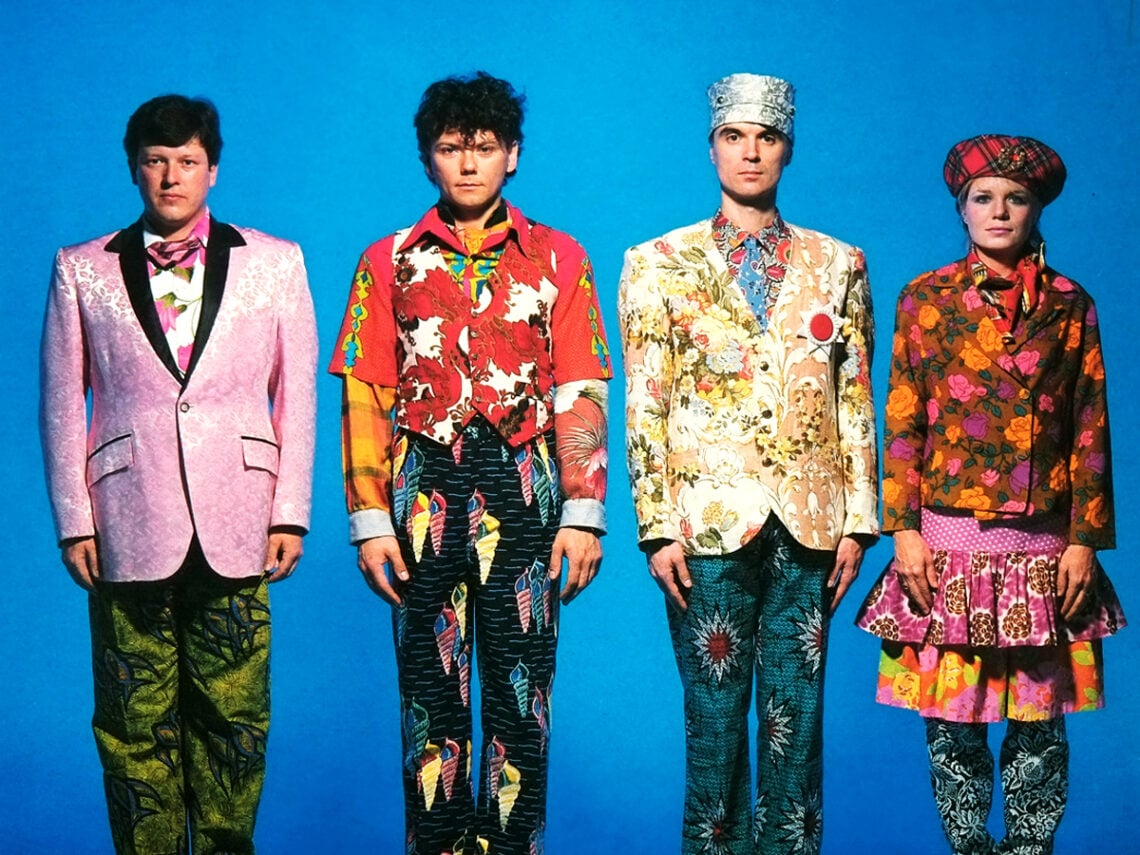
‘Road to Nowhere’: Why the Talking Heads classic feels even more relevant today than in 1985

When David Byrne thought the world was invariably coming to an end some 40 years ago, he decided to confront that stark state of affairs in, frankly, the only way he knew how—by turning to music. The result was the Talking Heads classic ‘Road to Nowhere’, a joyously raucous ode to existentialism that marries comedy, tragedy, pathos, and fun for the ultimate blueprint of life.
It’s perhaps mostly why the song has not aged and feels as fresh and relevant in 2025 as it did in 1985. We can shroud a depressing lens on that all we want, but has the world ever not felt like it was on the brink of collapse? However, even as we find ourselves once again in the midst of the darkest of days, there’s something ironically optimistic in the message that ‘Road to Nowhere’ presents.
Byrne himself summed it up best when he said in the liner notes for the band’s 1992 greatest hits album, Once in a Lifetime: The Best of Talking Heads: “I wanted to write a song that presented a resigned, even joyful look at doom.” It seems oxymoronic, an impossible feat, but nevertheless, the frontman proved that heart could be found even in the bleakest backdrops. Plus, it was characteristically taking the notion of death by the horns in the shiniest way that only the new wave knew how.
In that vein, he continued: “At our deaths and at the apocalypse… [always looming, folks]. I think it succeeded. The front bit, the white gospel choir, is kind of tacked on ’cause I didn’t think the rest of the song was enough… I mean, it was only two chords. So, out of embarrassment or shame, I wrote an intro section that had a couple more in it.”
But that gospel addition is the perfect summation of the universality at the song’s core, proclaiming that “We’re not little children/ And we know what we want/ And the future is certain/ Give us time to work it out.” What makes it so suited is the oozing sense of bravado—really, everyone is scared like a child, no one knows what they want, the future is decidedly not certain, and how exactly do we unravel that mess? Yet, in a perverted way, it’s also oddly comforting because despite the world running around and losing its mind, we know it’s all happened before.
Put it this way, if the ongoing ultimatum of decades really does transpire and the world finally meets its fated end in the next few years, we can bow out with one epic circus party thrown by the Talking Heads because they were right all along. But somehow, the blissful ignorance encouraged by ‘Road to Nowhere’ embodies the notion that we’re constantly on the edge of some catastrophic unknown, but we always manage to scrape through. So, even faced with the current situations that plague the planet, we might just be able to do it again.
Call it delusion or blinding optimism, but ‘Road to Nowhere’ is the epitome of riding a rollercoaster where your adrenaline is telling you that you might not make it out alive before your instinct kicks, letting you know that everything will ultimately be alright. It’s the same thing as when Byrne asks, “Would you like to come along?”—your instant answer is no, but maybe, there’s just a small inkling that it might lead to the next big adventure.
