


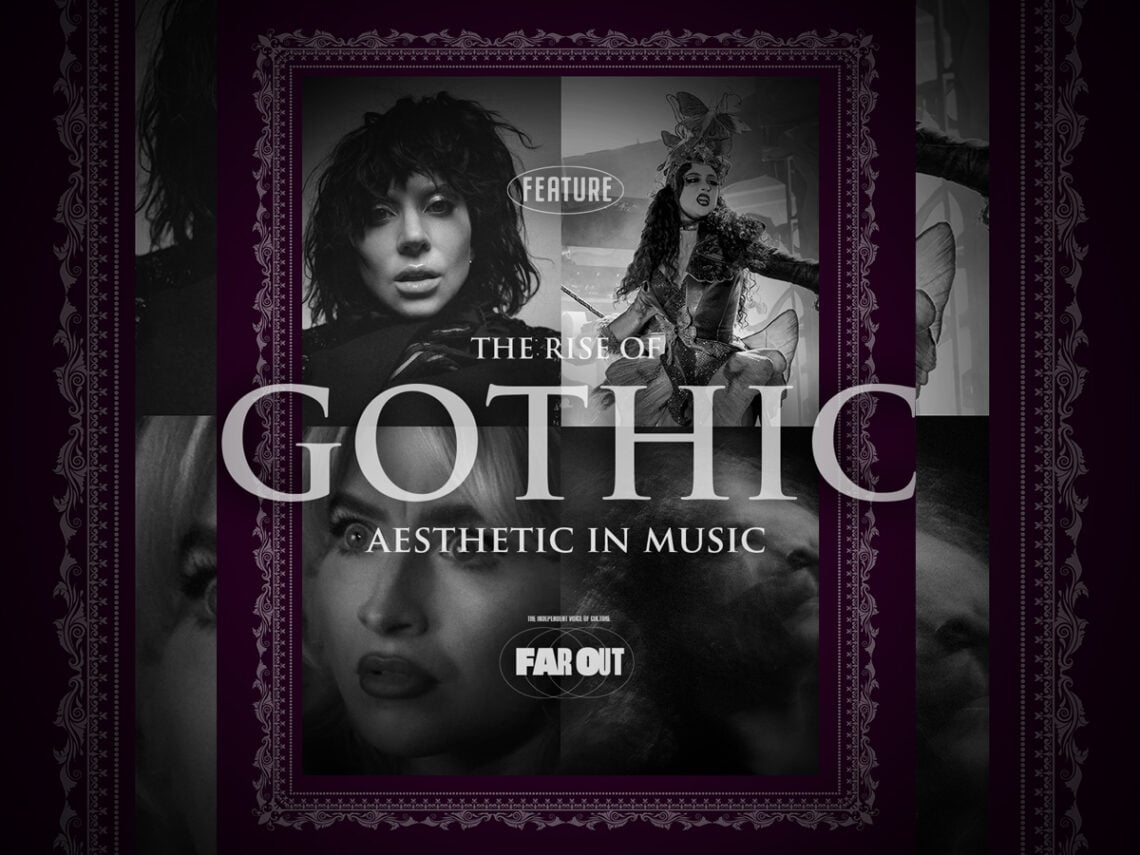
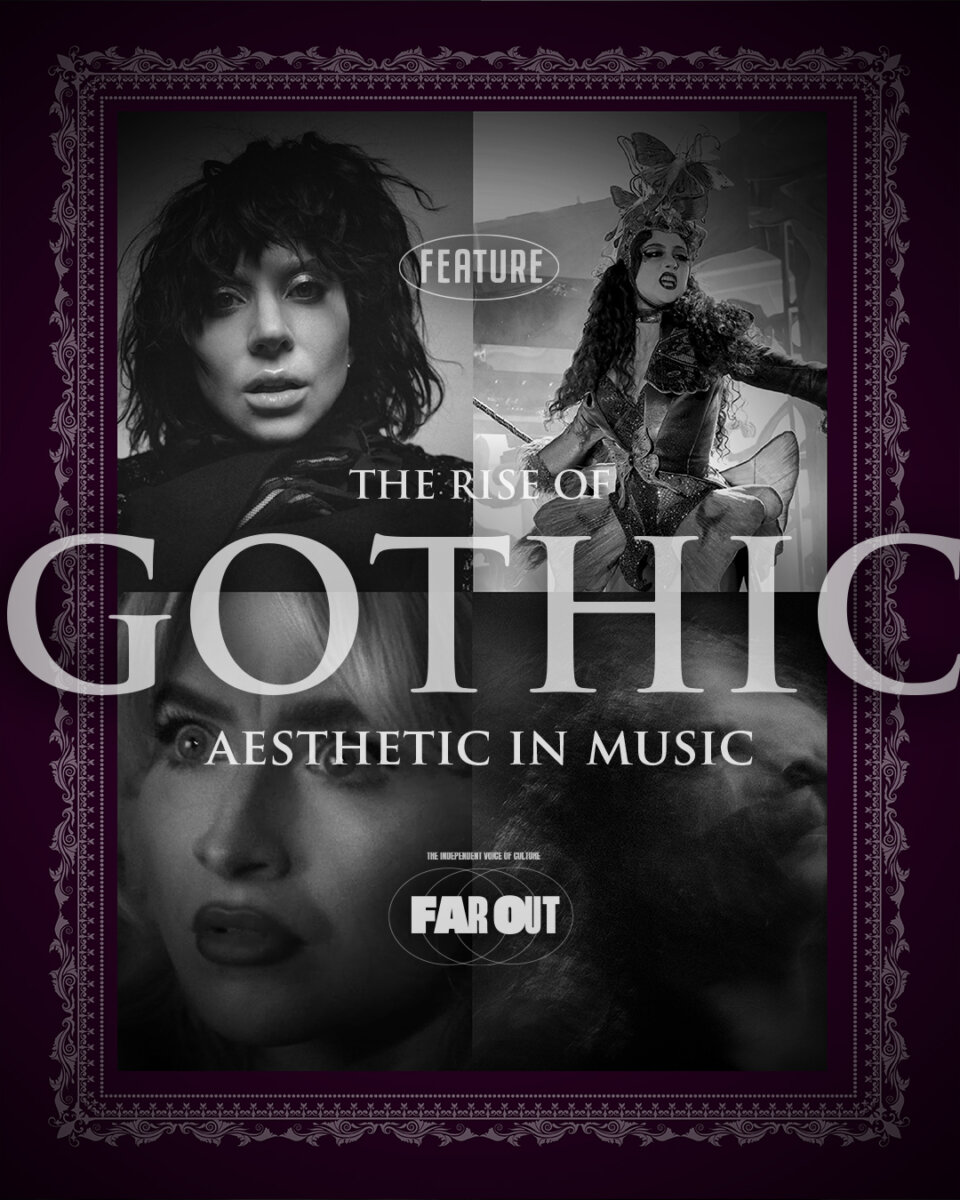
The rise of the gothic aesthetic in music and what it says about modern times

“My life in goth served as a kind of communal reverse meditation,” The Cure‘s Lol Tolhurst wrote in Goth: A History. “By exploring the darkness of books, films, music, and paintings together, we escaped for a brief moment to better understand the place we all found ourselves in time and space. We kept floating but now (were) a little more liberated.”
By Tulhurt’s logic, goth is a response to a political crisis. A way to feel a little lighter when everything feels heavy – a complicated reflection that looks dark and yet feels anything but. In fashion, we’ve seen the opposite tropes take pride of place: it’s all about minimalism and quiet luxury. But in music, we’ve seen an opposition rise that takes on the complete opposite, repurposing goth as a tool for artistic expression.
This is by no means a new thing. For decades, music has stood in opposition against the cultural climate, with sounds, aesthetics and general attitudes that mirror the times. An artist’s duty is to reflect to times, as Nina Simone once said. And with that comes new movements that resist whatever struggles people are currently facing. The most obvious case was the pop resurgence of the 1980s against several societal crises.
When this happened again in the 2000s and 2010s, they called it recession pop. It was effectively pop’s response to the financial crisis, mainly in the US, where hedonism and sexual liberation took centre stage to push the idea of freedom and defiance when the world is in ruins. When we look back, it’s clear why: when people are broke, they gain a “fuck it” attitude, celebrating the end of the world the only way they know how: by embracing the chaos.
Back then, most of what these singers did was create over-stimulated spectacles to clash with the dreary societal landscape. These were mostly sugary, over-the-top pop hooks that provided the perfect clubbing soundtrack. But these weren’t necessarily gothic. Rather, they emulated the partying mindset to get people to forget about their troubles. Cut to now, we’ve seen a shift where we have all of those things appearing again, but also something darker beneath the surface.
To call something “gothic”, we’d have to look at some of its more commonly accepted definitions. People are pretty precious over what that entails, rightfully so. But that’s why it’s important to say that here, in these cases, goth isn’t necessarily always about regurgitating the aesthetic in an obvious way, but taking on ‘dark’ stories and fragments of gothic tropes to create modern, well-considered narratives in music campaigns and music videos.
And in these cases, therefore, this means taking the familiar parts we already know from older, more established players like The Cure, Bauhaus, Siouxsie and the Banshees and Nick Cave and all their themes of loss, violence, existential darkness, disillusionment, isolation, placed alongside themes of the complete opposite – love, romance, joy, fun, and most important of them all, escape.
An obvious example is Lady Gaga’s Tim Burton-directed music video for ‘The Dead Dance’. We’re perhaps less affected by Gaga’s antics at this point because strangeness is expected wherever she goes. But leaning into this part of her artistry taps into a broader trend that draws people in with quirky aesthetics that also hinge on something darker. It’s the same for Ariana Grande’s ‘Hampstead’, in which we see a Frankenstein-like narrative play out with Grande playing the patchwork modelled monster.
Sabrina Carpenter’s ‘Tears’ draws heavily on The Rocky Horror Picture Show, providing a space where flamboyant queer culture combines with eerie country noir. She kills her boyfriend at the end, because “someone has to die every video”. All of these examples aren’t typically gothic, but they play on familiar gothic fantasy to pull at something deeper, maybe our desensitised minds when it comes to violence in a world that is overwhelmingly violent.
Provocation is a common thread across Carpenter’s Man’s Best Friend. And themes of death, as we see in her videos and more generally with other artists, serve as a way to make light of something many of us have intense anxieties about at the moment. Other gothic parts, like a sense of foreboding, also represent a kind of intensity we feel politically, only used in this scenario for more trivialised means. In Grande’s ‘Hampstead’, for instance, we’re not appalled by Grande’s stitches but endeared by the broader romantic fantasy element.

Gaga’s ‘The Dead Dance’ is fun, even as we face the uncanny in Burton’s creepy VFX dolls. Even Chappell Roan’s ‘The Subway’ has a gritty realism that also somehow feels glossy, fitting with the theme of loss and isolation and the more accessible pop hook. But it’s appealing because it’s real. We don’t cower away from Carpenter fatally throwing her heeled shoe at her boyfriend, because we’re safe inside the knowledge that it’s fiction.
It’s OK for us to watch and enjoy because there’s also artistic value and humour in it, in a way that feels honest about the way the world is right now. It mirrors the heaviness of collective trauma without any of the lingering heartache. But this isn’t new. People have loved those glossy gothic tropes since forever; the only difference is that now it’s having a real moment in pop music. Again.
But again, that makes sense, too, when you look at how troubling times call for deeper messages that reflect the times while simultaneously offering escape. As Tolhurst put it, that’s what it’s all about. You might have noticed a lot of these tropes coming up more often – but just look at the world around you. There are so many contradictions and things to feel confused about that this is coming up in musical art, too.
Which is also why the appeal of goth is hard to put into words. That’s the point. Why do we search out the very things that keep us up at night, themes of death and trauma, however subtle, in art we consume? Because it’s a complicated kind of escape that, again, feels safe. And it’s comforting, too. As Tolhurst said, embracing gothic aesthetics is a fixation with “all those things that we don’t really, as a culture, like to look at straightaway — death, darkness.”
“It sounds paradoxical, but it’s life-affirming,” he added. “We don’t have to be so afraid.”
