


‘Riceboy Sleeps’ Review: Anthony Shim delivers a moving family drama

The expressive and moving immigration family drama Riceboy Sleeps enjoyed its world premiere at the Toronto International Film Festival, an event in which it took the festival’s Platform Prize, an award that honours excellence in directing – well deserved, in this case. The film reveals the assured skill and clear voice of a filmmaker who has hit his stride. This second feature by Anthony Shim tells the simple but engaging story of a young widow and her son, who leave South Korea to make a life in western Canada in the 1990s.
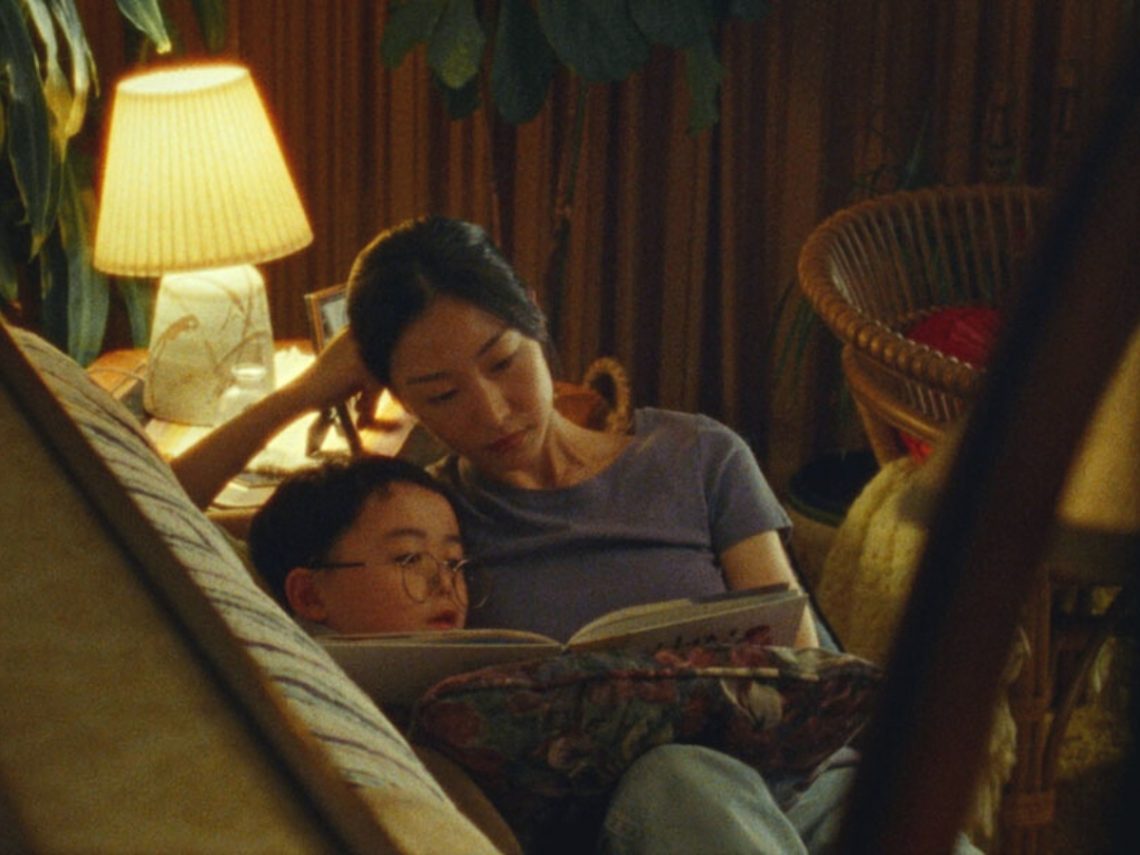
Newly arrived Korean immigrant So-Young Kim (Choi Seung-Yoon) struggles to establish herself in her new home in Canada and make a decent life for her little boy, Dong-Hyun. She works in a factory where only a few others speak her language, but she is determined, adaptable, and able to make friends. The primary focus is on her son’s experience, however. Placed in primary school at age six, he is deeply uncomfortable. He is a small, shy child who speaks almost no English, and this invites bullying. Classmates make fun of his accent, the unfamiliar Korean food he brings for lunch, his appearance, and his name. Even his teacher is uneasy with the sole Asian student in the class; she asks Mrs Kim to provide him with an unofficial English name that would be less unnatural and easier to pronounce. The childhood scenes are filmed with sensitivity and compassion and adept camera work that allows viewers to all but share the boy’s experiences.
When we fast-forward to 1999, the boy dealt with the situation by assimilating. The teenage Dong-Hyun (Ethan Hwang) has adopted the language, customs, and clothing of his peers. Even more, in his determination to belong, he has bleached his hair blonde and wears blue contact lenses. Outwardly fitting in with his white friends, he still struggles with identity, an issue that is not helped by the fact that his mother refuses to tell him anything about his late father. He is still more confused and ambivalent when his mother begins seeing a man named Simon (played by the director), born in South Korea but adopted and raised in Canada, who is both more comfortably westernised than Dong-Hyun, and more at ease with his Korean heritage.
Director Anthony Shim, speaking at the TIFF screening, admitted that the script was “inspired and influenced by my experiences growing up in Vancouver.” Shim’s family immigrated from South Korea to Canada when he was eight, and as the sole Asian child in his primary school, he was “treated like an alien” at times. He recalls that he grew up watching movies but never saw a character that represented him or his life experiences. Like the character in his feature, Shim also went to great lengths to adapt and be accepted. The director calls the film “semi-autobiographical”, noting that the plot details do not represent his life, but the main character’s “journey of discovering his own identity” is close to his own experience.
This self-discovery takes place in the film’s second half, which involves Dong-Hyun, his mother, and Simon making a trip back to Mrs Kim’s home village in Korea, where they experience an unforgettable, beautifully portrayed encounter with everything that had been a blank space in the boy’s life: family, ancestry, culture, his past (including his own father), and identity. It is also an intense experience for his mother, who has had no contact with her former in-laws since leaving Korea. The entire trip is shown realistically but with vaguely magical overtones, the simple surroundings and straightforward meetings coloured by Dong-Hyun’s experience of them as an enormous personal breakthrough. It is an experience that also breaks down longstanding barriers between the boy and his mother. The entire, extended act is handled with the greatest sensitivity, using everything from the smallest gesture to the grandest landscape to silently express significance and feeling.
Director Shim describes the difficulties in making a film set in two countries, despite having less than generous financing as a relative newcomer to filmmaking. The scenes on location in Korea were essential, however, and Shim notes that they were filmed close to the homes of his own Korean relatives. Expanding to Korea also allowed for the casting of talented actress Choi Seung-Yoon, who had never acted in a film before this one (she was a dancer rather than an actor), but whose audition tape left no doubt that she was made to play Mrs Kim. She brings a reserved, peaceful energy to the role, which is a nice contrast to her son’s agitation.
The difficulty of adapting to a new place and culture is brought out effectively with without fanfare, from the more subtle forms of bullying at school to the casual disrespect Mrs Kim sometimes encounters at work to the painful moment when a character receiving a serious medical diagnosis must look the terminology up in an English-Korean dictionary. It is a story that has seldom been told on film by immigrants themselves and from their own perspectives. At the film’s premiere, Shim spoke briefly about the longstanding resistance in the film industry to films centred on non-white characters, which he allows has improved marginally, calling the situation “better, but not great”. He considers luck the main factor in getting this film made. Compelling storytelling such as Shim’s might well have an impact and open doors in future.
Incidentally, there’s the matter of the title, which is notably the same as the 2009 debut album by Jonsi & Alex. Shim explained that he likes to choose an artist or album as background while writing and listened to the ambient music album Riceboy Sleeps while writing the film script. He not only found that the music fits the story perfectly and began to meld in his mind with the script, but he also used the term ‘riceboy’ as one of the slurs thrown as Dong-Hyun in school. The director obtained rights to the title before the film’s release.
