


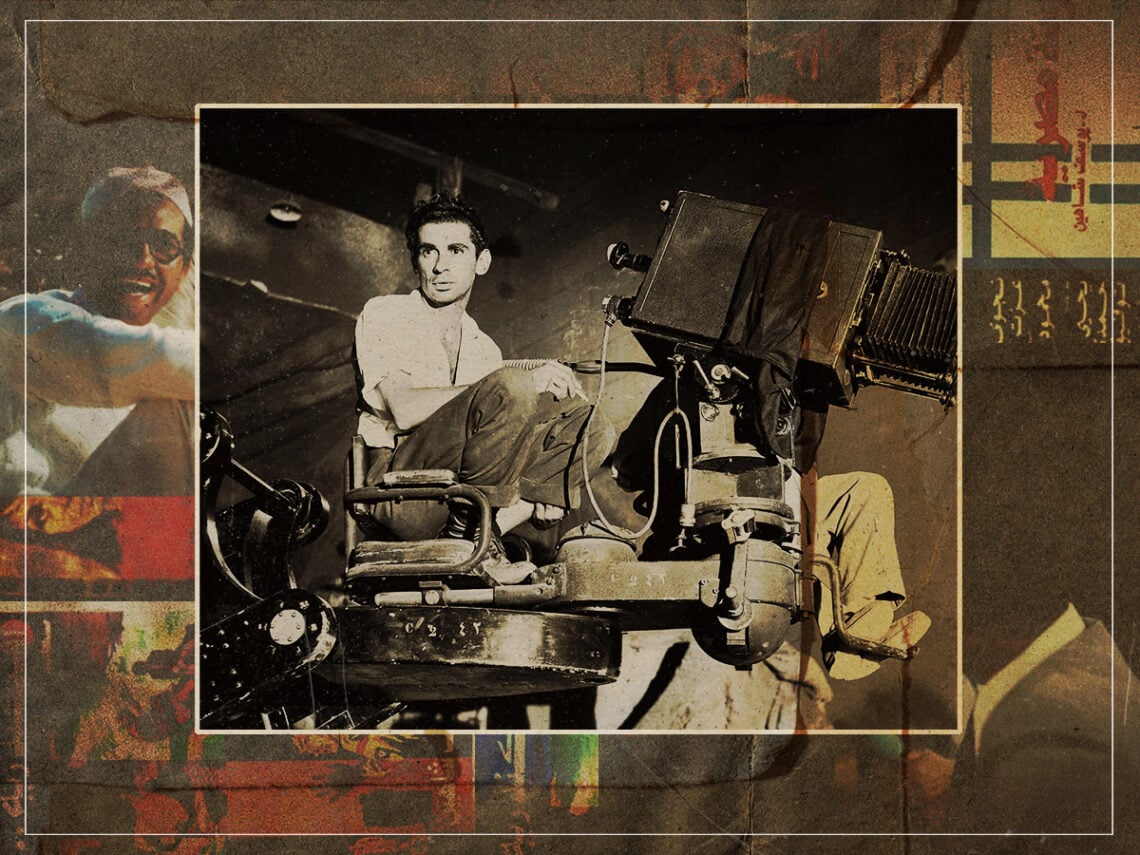
Youssef Chahine: the revolutionary artistry of Egypt’s most famous filmmaker

Cinema hasn’t given rise to many names that could justifiably and inarguably be described as genuine revolutionaries, but Youssef Chahine was comfortably among them after becoming one of the most respected and acclaimed auteurs of his era.
That’s all the more impressive, considering African cinema was hardly treated as a major concern on a global level when he first exploded onto the scene years into his career in the late 1950s with the breakthrough neorealist masterpiece Cairo Station. He was fully deserving of the lofty ‘Father of Egyptian Cinema’ moniker that was bestowed upon him.
The Alexandria-born filmmaker gained international attention and widespread acclaim at a time when very few of his peers saw their work making a lasting impression outside of their own continent. His penchant for playing against the conventional rules of Egypt’s typical output marked him out as both a force to be reckoned with and a figure prone to the odd bout of controversy.
Incorporating openly LGBTQ+ themes and iconography into his work when it was far from the norm in world cinema, never mind Egypt, Chahine’s liberal political views, and scathing indictments of corrupt officials. They featured battles against the restrictive nature of Egyptian cinema at large, tackling social and societal taboos, and occasional depictions of jarring on-screen violence could, on occasion, ruffle plenty of feathers.
That’s precisely why he was such a breath of fresh air, though, with Egyptian cinema being prone to melodrama more often than not. Chahine was hardly against it, in fairness, but he balanced it by injecting his features with personality, cutting insights, sensitivities, and complexities. His movies weren’t just reflective of who he was as a filmmaker. They were also indicative of the country they were made in and equally symbolic of the underlying feeling in the nation when he made them.
1969’s The Land took place three decades previously and focused on the plight of farmers struggling against their water supply being cut in half. They put their trust in the wrong people to offer them assistance, and the message was hardly subtle. At the end of the day, those in power can’t break the spirit of people who stand together regardless of how much their lives are impacted, and it spoke to a generation.
The aforementioned Cairo Station balanced relevant social commentary with Hollywood-style thrills, but it ended up being banned in Egypt for years for taking a progressive stance on post-colonialism and pre-marital sex. 1976’s The Return of the Prodigal Son took a musical approach to its obviously biblical allegories in telling the story of a son returning home to his family after failing to carve out a life for himself in the big city.
Alexandria… Why? and An Egyptian Story saw him going full Fellini as Chahine looked inwards for a pair of semi-autobiographical stories that merged the personal with the political to act as two halves of the same tale. The former charted his early life before the latter presented a not-so-fictional self-obsessed, chain-smoking, radical filmmaker named Yehia Choukry Mourad as its protagonist.
Chahine actively embraced melodrama but made a point of reflecting its tropes in his own image. Like the majority of his works, they were loaded with passion, expression, and creativity, but using a populist backdrop was often the easiest way of folding his preferred politically charged and socially conscious framework into films that had the greatest potential to reach a wide audience.
It’s clear that Hollywood was another huge influence, with his musicals and romantic comedies carrying more than a touch of Tinseltown’s ‘Golden Age’ about them. Whether that was the sweeping backdrops and epic landscapes, immersive cinematography, or brazen displays of emotion, his films were distinctly Egyptian but regularly evocative of the conveyor belt of American classics that emerged around the same time.
Chahine was prone to the odd bout of self-indulgence, but so was every auteur at one stage or another. He remains a towering figure in not just local but international cinema, and he never showed any intention of backing down in the face of repeated criticisms that the undercurrents of his oeuvre hit much closer to home than many people on all rungs of the ladder would have appreciated.
