


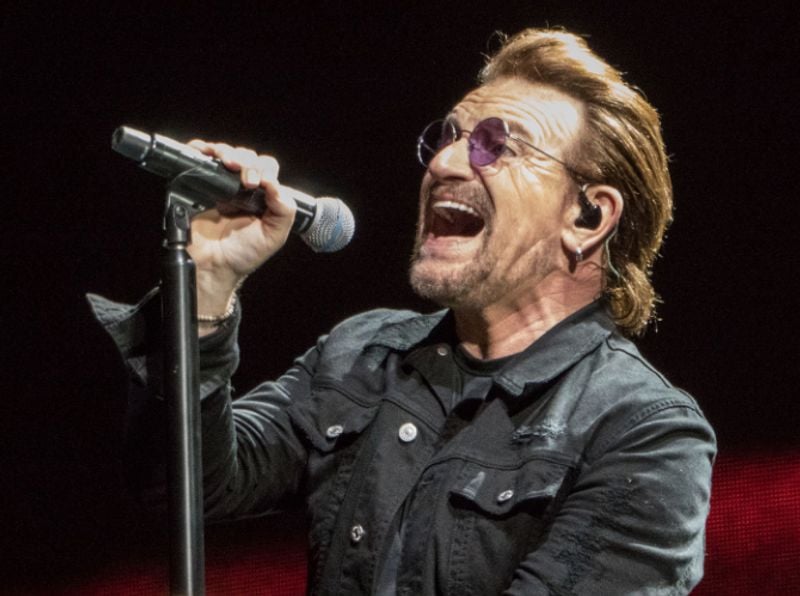
Revisiting the time when U2 went to Sarajevo

In 1993, U2 were approached by an aid worker and future documentary filmmaker named Bill Carter with an idea. Carter was on the front lines of the Bosnian war, centred around the country’s capital city of Sarajevo, and had managed to interview Bono to bring the country’s victims to his attention. Bono was moved by the stories of survival and wished to perform in Bosnia, but Carter knew that U2 would be in too much danger in the violent heart of an international conflict.
Instead, Carter recommended doing satellite transmissions directly from the country that would air during the band’s concerts. U2 had recently upgraded their stage show into the high-tech ‘Zoo TV Tour’, so link-ups would become an easy addition to the show. It seemed like the perfect way to get the world’s attention and focus on the atrocities inflicted upon the Bosnian people.
The only problem was that Carter was about three years too late. U2 weren’t the politically conscious band they were in the 1980s, having embraced irony and indulgence for their most recent album, Achtung Baby. ‘Zoo TV’ was about the excess and ridiculousness of rock stardom, a direct satirisation of the band’s previous “bleeding heart” ethos. Bono was still focused on global issues, but U2 were no longer the right vehicle to bring attention to those issues.
That didn’t stop the band from agreeing with Carter’s idea. During the European leg of the ‘Zoo TV Tour’, interviews with Carter and local Bosnians about the situation on the ground were included as a part of the live show. Reactions to the interviews were polarised: while U2 had undeniably brought additional attention to the dire situation of the Bosnian war, they were also doing it in the middle of a rock and roll spectacle meant to take the piss out of their preachy ideological past. During one of the band’s appearances at Wembley Stadium, Bono was even criticised mid-concert by one of the interviewees, insisting that they were going just to exploit them and return to his concert.
But Bono didn’t give up on the situation. He was bound and determined to play in Bosnia, especially after hearing that pop music had a source of hope among natives. Bono helped produce Carter’s documentary on the war, Miss Sarajevo, and wrote a song of the same name based on a beauty pageant that occurred in the middle of the war-torn city.
By 1995, the Bosnian war had officially ended. U2’s next tour was the ‘PopMart Tour’ in support of their 1997 album Pop, and they made sure to include Sarajevo as a stop. The planning was difficult – the logistical snafus and exorbitant costs meant that the band were set to incur a massive financial loss if they staged a concert in Bosnia. But they had promised to play there, so the show continued as planned.
Public transportation was organised for the first time since the war started in 1992 so locals could make it to Koševo Stadium. U2 kept ticket prices low so they wouldn’t be out of reach for the general public. Although the initial plan was to stage a smaller benefit concert, local officials asked the band to bring their normal large-scale ‘PopMart’ show to the people as if it were any other date on tour. So the band packed up all their stage props, including their giant hydraulic lemon, and took the stage in Sarajevo.
With approximately 45,000 people in attendance, U2 played a standard setlist for the ‘PopMart Tour’. Classic hits like ‘Pride (In the Name of Love)’ and ‘I Still Haven’t Found What I’m Looking For’ rubbed elbows with newer songs like ‘Mofo’ and ‘Last Night on Earth’. It was during the latter that Bono’s voice gave out for the first time. He had been battling voice problems in the days prior to the concert, but there was no chance to postpone or reschedule. While The Edge sang a solo rendition of ‘Sunday Bloody Sunday’, Bono received a cortisone injection that helped him get through the rest of the show.
Another logistical problem arose before the concert’s emotional crux, ‘Miss Sarajevo’. The guest vocal from Luciano Pavarotti was replicated through an old-school gramophone, but Bono’s vocal troubles persisted. Even worse, the band had only performed the song live once before, and they were unsure how it would go. Ultimately, U2 wouldn’t skip the song, so a stripped-back and slightly mangled version of the song was played.
The rockiness of the performance didn’t matter: reactions were almost universally positive. Although the stadium had been filled with the same mix of people that had gone into conflict just a few short years before, no violence had broken out during the concert. Although the band couldn’t single-handedly bring peace to the region, exemplified by the breakout of the Kosovo War just a year later, the concert represented a brief moment where art and entertainment could help positively elevate geopolitical issues.

Never Miss A Tale
The Far Out Classic Rock Newsletter
All the latest Classic Rock content from the independent voice of culture.
Straight to your inbox.