


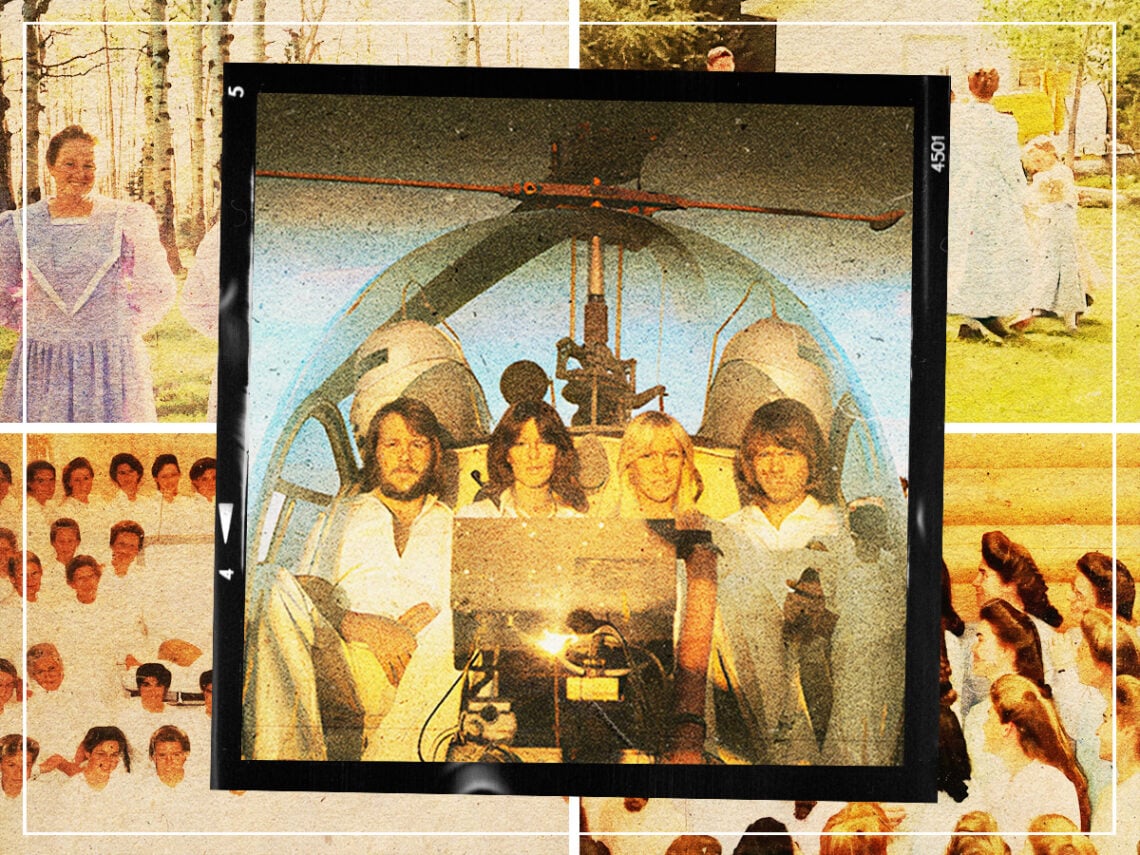
Revisiting the strange first-ever performance by ABBA under the name Festfolk

ABBA achieved their significant breakthrough at the Eurovision contest in 1974 when they made history as Sweden’s first-ever winner with their vibrant rendition of ‘Waterloo’. Despite this performance being widely regarded as the greatest in the competition’s history, ABBA’s activities prior to Eurovision largely remain undiscovered. While the group formed after each member had achieved moderate fame as a solo artist, the earliest iteration of the band appeared significantly different to their later, iconic image.
Each member of ABBA had prior success in their recording careers; singer-guitarist Björn Ulvaeus and keyboardist Benny Andersson formed a musical partnership in late 1969 which resulted in one album, LYCKA, and five Swedish singles. The blossoming romances between Ulvaeus and Agnetha Fältskog and Andersson and Anni-Frid ‘Frida’ Lyngstad became a key reason why the group started working together as a foursome.
The first-ever recording of all four members of ABBA was on a song called ‘Hej Gamle Man’, which, despite involving Fältskog and Lyngstad, was credited solely to Ulvaeus and Andersson as a duo. In fact, the first song to be credited to all four musicians wouldn’t be until 1972 when they collaborated on their song ‘People Need Love’, which then became a part of ABBA’s Ring Ring album.
While their on-stage chemistry seemed palpable, and audience members became mesmerised by their warm presence, the reality of their earlier performances was a little different. The four future ABBA members initially shared a stage in November 1970 as part of the band Festfolk. At that time, Andersson and Ulvaeus were in the process of recording LYCKA, while Fältskog and Lyngstad contributed backing vocals to several tracks.
This collaborative experience is what led them to launch Festfolk, but unfortunately, it wasn’t destined to be ABBA’s defining moment, not by a long shot. In fact, for the performance, they adopted a cabaret-style approach, which generally received unfavourable reviews, except for the performance of Andersson and Ulvaeus’s ‘Hej, gamle man’ along with a couple of solo numbers from their respective albums.
The bad reception caused them to put their plans of working together on hold for the time being, with each member refocusing on individual projects. They tried performing together in 1971 and worked together during other concerts in 1972, but this particular version of the group exemplified the shortcomings of the Festfolk approach. Rather than pursuing cabaret-style or variety show music, they learned the value of focusing on creating original, innovative, self-penned pop songs that prominently showcased the women’s vocal talents.
From then on, ABBA began to set the scene for the powerful supergroup that we all came to know and love. The talents of both Fältskog and Lyngstad were utilised more than ever before, and they perfectly showcased the dynamics between each band member, which added to their overall endearing appeal. ‘People Need Love’ provided only a brief glimpse of their potential as a pop-defining musical force, setting the stage for their official arrival in 1974.
