


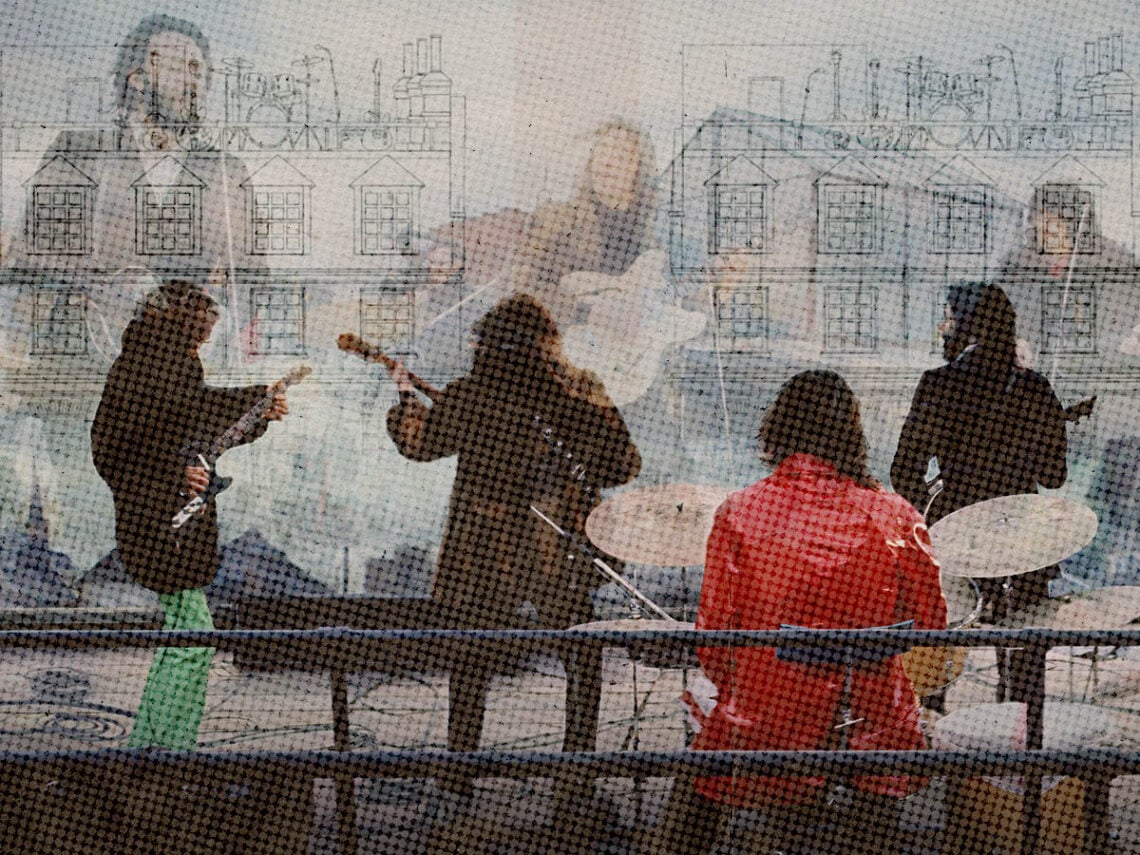
Revisiting the poetic imperfection of The Beatles’ 1969 rooftop concert

If they recreated it for a movie, and odds are pretty good that Sam Mendes will do just that in one of the four biopics he’s working on, The Beatles’ final, legendary rooftop gig would probably include lots of scenes of everyday Londoners popping their heads out of office windows and black cabs, marveling at the joyous sounds coming from the top of the Apple Corps building on Savile Row.
To be sure, as the wealth of documentary footage from that day reveals, there were quite a few real folks reacting that way on January 30th, 1969; confused at first, then tickled at the bizarre treat of hearing the world’s most famous band returning from their live performance exile, unannounced, on a random, frigid Thursday afternoon.
What has really made the rooftop concert so endlessly fascinating over the decades, however, isn’t the warm and fuzzy sentimentality of a great group unknowingly saying its last goodbyes to the British public; it’s the fact that so many people were legitimately annoyed about it.
The Beatles have been lionised and commodified into anodyne UK cultural mascots over the ensuing half-century, so much so that they’ve become almost depressingly inoffensive, deprived of the edginess that was so crucial to their art and their initial appeal. The rooftop moment, despite coming at the end of the band’s story, and at the height of their worldwide fame, is important because it reminds us that, even in 1969, the Beatles weren’t as mainstream as they are today.
Rock and roll, in general, was still only a little over a decade old, and there were huge swaths of the population, in England, America, and everywhere else, who still considered the whole thing a noisy, obnoxious fad. Some of those people, in accordance with the law of averages, were right there on Savile Row when John Lennon, Paul McCartney, George Harrison and Ringo Starr decided to go upstairs, brave the cold, and plug in.

Stanley Davis, a woollen merchant from the building next door to Apple Corps, was one such non-believer. “I want this noise stopped!” he shouted when a reporter from the Daily Mirror approached him during the event, “You can’t use a telephone, dictate a letter, or have your window open”. There was no follow-up as to why Mr Davis would have needed his window open in late January, but in any case, he wasn’t alone. A chief accountant at the Royal Bank of Scotland across the street, Stephen King, was downright horrified.
“I am furious,” King told reporters, “We were trying to talk to our customers but couldn’t hear them. I telephoned the police, but apparently they are powerless to do anything”.
Of course, after receiving a deluge of similar complaints, the cops did eventually climb their way up to the top of the Apple building, unwittingly giving The Beatles the perfect ending to a story they’d been struggling mightily to write themselves.
As many fans learned by diving into the deep end of Peter Jackson’s 2021 Get Back documentary, the sessions that became the Let It Be album, and the accompanying documentary Michael Lindsay-Hogg was originally making at the time, were intended to be doubling as preparation for a big, grandiose concert event, something suited to the Beatles’ place in the current pop music hierarchy. A standard stadium show wasn’t gonna cut it anymore, but the boys couldn’t agree on what the alternative should be, and the bickering over the issue carried on through the entirety of the recording process, leaving them with dwindling time to land upon a solution.
McCartney famously pitched the idea of doing a comeback show on the Queen Elizabeth II ocean liner, bringing along lucky fans for a Beatles cruise of sorts, to which George Harrison responded, “The idea of a boat is completely insane. It’s very expensive and insane”. Other suggestions had been arguably even more extravagant and difficult to manage, including potential concerts in front of the Giza pyramids or inside a Roman amphitheatre.
Two years later, Pink Floyd’s Live at Pompeii concert film proved that these sorts of settings could certainly deliver the drama, but in retrospect, they were also far better suited to the psychedelic space-rock of Floyd than the sort of back-to-basics blues rock The Beatles were playing in 1969.
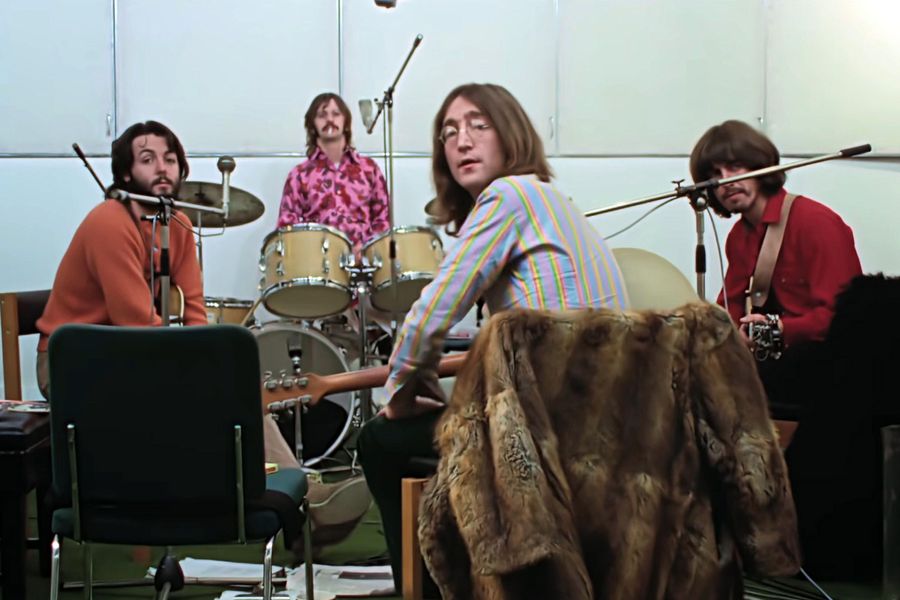
Finally, just a few days before the Let It Be experience was set to wrap, the idea was floated to do something a bit more ramshackle and DIY. While John Lennon, Lindsay-Hogg, and guest keyboardist Billy Preston have all been credited at one time or another for pitching the rooftop at Apple Corps, sound engineer Glyn Johns quite matter-of-factly reiterated that the moment of inspiration was his, albeit loosely carried over from a chat with Ringo.
“That [the rooftop concert] was my idea, actually,” Johns is quoted in 1998’s The Beatles: An Oral History, “They said they had this desire to play to the whole of London. It was in the middle of winter, and we were sitting up in the dining room at Savile Row having lunch. We were all these, including Michael Lindsay-Hogg.”
Johns continued, “We were talking about the building, and Ringo said there was a wonderful roof on it that The Beatles were thinking of making into a roof garden. I said, ‘Oh, that’s fantastic’. Then I looked over at Michael and said, ‘I have an idea. We should go up and look at this roof’. So we all went upstairs and looked at it and thought, ‘What a great idea it would be to play on the roof, play to the whole of the West End.”
Clearly, even in his recounting of the event, Johns is a bit wishy-washy in how the final decision was diplomatically settled upon. As Lindsay-Hogg explained to Rolling Stone in his own version of events, even after the four band members and Preston agreed to the concept, there were some serious second thoughts that seeped in once the day of the show rolled around.
“Right before the band went on to play, they got nervous,” Lindsay-Hogg said, “George didn’t want to do it, and Ringo started saying he didn’t really see the point. Then John said, ‘Oh, fuck it, let’s do it’”.
The pre-gig nerves were coming from a lot of different places. Yes, this would arguably be the first Beatles ‘concert’ in three years, even if Harrison rightly pointed out that they’d mostly be playing to an audience of chimneys. There were also some concerns about the potential response from the neighbours, however, for obvious reasons. Macca had always wanted this comeback show to have some element of danger to it, though, particularly liking the idea of ‘trespassing’ or playing on a site they didn’t have permission to play at.
Despite owning their own building, the rooftop still qualified as an illegal trespassing of loud amplified sound across a busy part of London during business hours, so that was appealing. The trouble was, what would happen if the performance got shut down after two songs, or if Glyn Johns wasn’t able to properly record the audio over interference from unexpected interlopers?
In the end, most Beatles fans would agree that the flawed plan and the flawed rooftop set were absolutely perfect in their lack of refinement or preparation. Even the arrival of the police, who’d been held at bay on the ground floor by Apple staff for as long as they could manage, was perfectly timed in hindsight; cutting the concert short, but giving the Fabs one last chance to be proto punk rockers again, causing a stir and getting the boot just like the old Hamburg days.
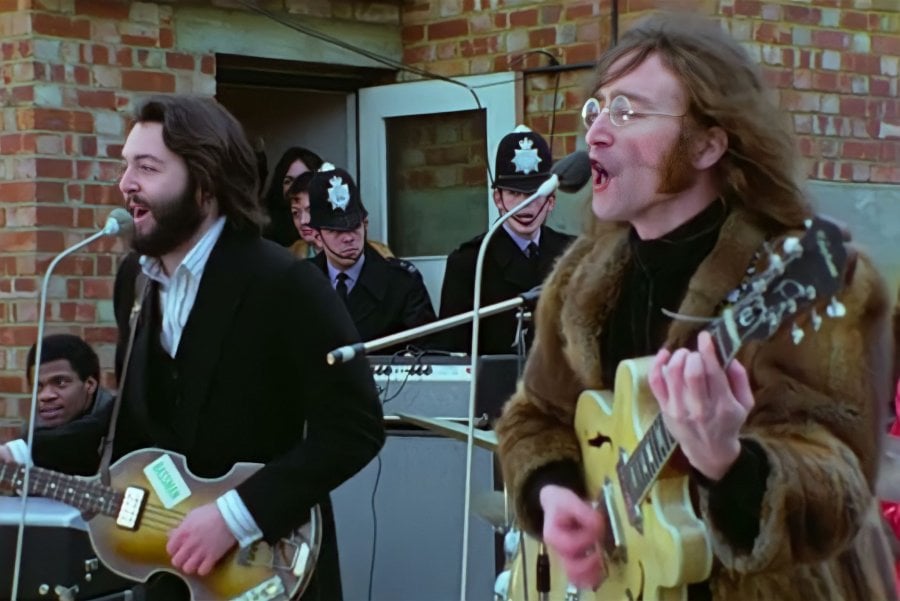
Any Beatle admirer, all these years later, can close their eyes and picture the rooftop scene with total clarity, from John’s fur coat to George’s green trousers, the gradual realisations of the passersby on street level, the reluctant bobbies in slow pursuit, and each sung word from Paul and John spiralling into a temporary cloud in the January air.
The footage we see tends to be the remarkably tight renditions of ‘Get Back’, ‘I’ve Got a Feeling’, and ‘Don’t Let Me Down’, but the people walking around Savile Row that day were hearing what would have sounded more like a rough 40-minute rehearsal: at least two run-throughs of each of those songs (three in the case of ‘Get Back’), plus some technical delays, 20 seconds of ‘God Save the Queen’ (not the Sex Pistols one), and eventually, the muffled voice of John Lennon, bidding the city adieu as the cops finally shut off the amps: “I’d like to say thank you on behalf of the group and ourselves, and I hope we’ve passed the audition”.
No one was crying because no one knew it was the end. Although the banker and the woollen merchant on Savile Row wouldn’t have cared if you’d told them they were hearing The Beatles play for the last time. All they knew was that somebody was making a racket and disturbing the peace, and in the end, wasn’t that rock and roll’s mission all along?

Never Miss A Beat
The Far Out Beatles Newsletter
All the latest stories about The Beatles from the independent voice of culture.
Straight to your inbox.