


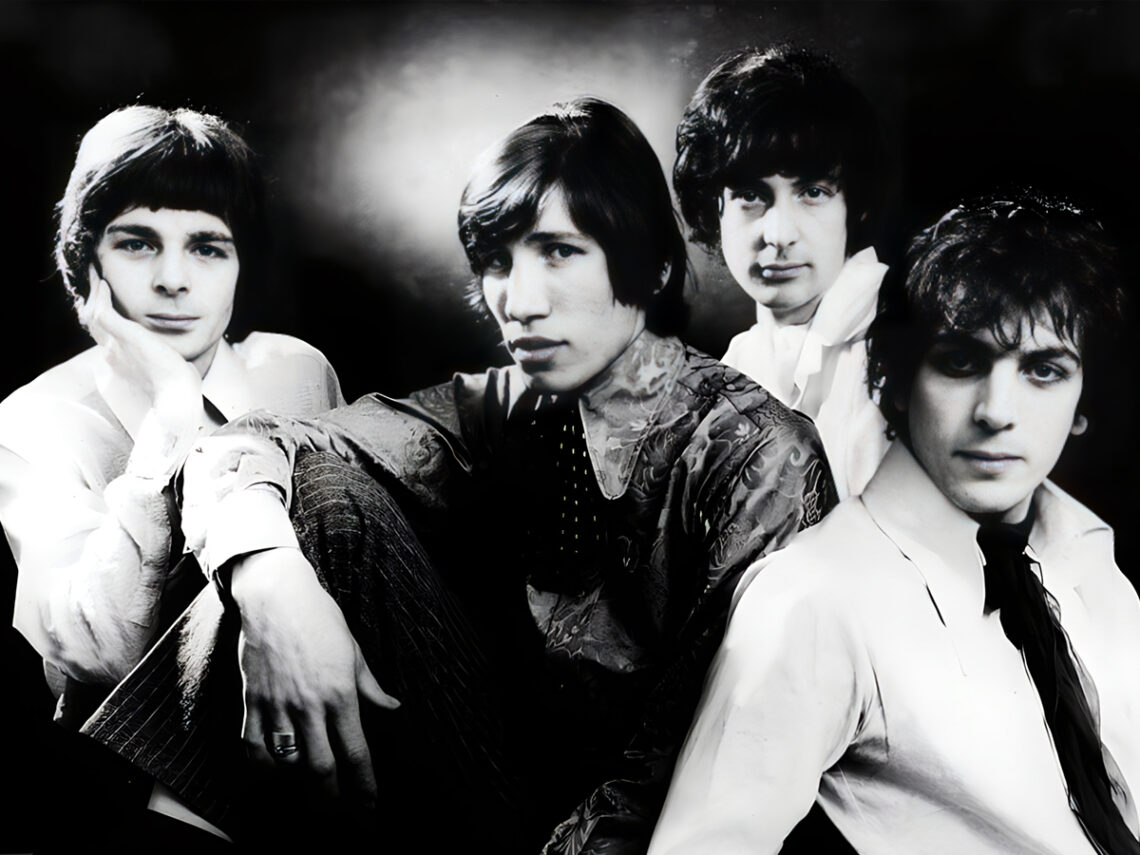
Revisiting Pink Floyd’s forgotten 1969 album ‘More’

Barbet Schroeder’s More didn’t make waves in America upon its 1969 release, but the film’s exploration of heroin use was a hit in France, becoming something of an equivalent to Easy Rider. Its success in Europe also gave psychedelic pioneers Pink Floyd a newfound audience, given their often-forgotten third album soundtracked the film.
More was the first album recorded without Syd Barrett after his ousting from the band following A Saucerful of Secrets. Recorded in London’s Pye Studios, Floyd had to put together their material on a tight turnaround and an even tighter budget. After two weeks, they’d managed to shape the bulk of the album’s material, which was largely improvised. Budget constraints meant they didn’t have access to a dubbing studio, so they timed certain moments in the film to figure out how long they had to fill.
Lyrics were left mainly to bassist Rodger Waters, with Nick Mason and keyboardist Richard Wright co-writing ‘Up The Kyhber’. With Barrett kicked out of the group following a period of strange behaviour and increased drug use, David Gilmour stepped in for all the lead vocals. The soundtrack they produced was eclectic, ranging from down-tempo acoustic ballads to hard rock instrumentals.
Director Schroeder was a huge fan of the band and thought that instead of using stock background music, they could provide full-bodied songs. They often appear in the film as diegetic sounds, meaning they originate from within the confines of the movie. ‘Cymbaline,’ as sung by Gilmour, for instance, can be heard wafting out of someone’s record player at a party.
As Waters put it, Schroder’s concept involved a really immersive feel to its music. “His feeling about music for movies was, in those days, that he didn’t want a soundtrack to go behind the movie. All he wanted was, literally, if the radio was switched on in the car, for example, he wanted something to come out of the car,” he explained.
“Or someone goes and switches the TV on, or whatever it is. He wanted the soundtrack to relate exactly to what was happening in the movie, rather than a film score backing the visuals,” said Waters.
Mason agreed, saying that Schroeder’s vision for the soundtrack was “ideally suited to some of the rumblings, squeaks and sound textures [Pink Floyd] produced on a regular basis”. ‘Cymbaline’, as well as ‘Green is the Colour’ quickly became live staples. For their live performances, the band would often leave the stage midway through a song, giving their audience a moment to take in a tape of quadraphonic sound effects, almost in a similar way that their music appeared in the film. The More album routinely bulked out their sets until the landmark arrival of Dark Side of the Moon.
