


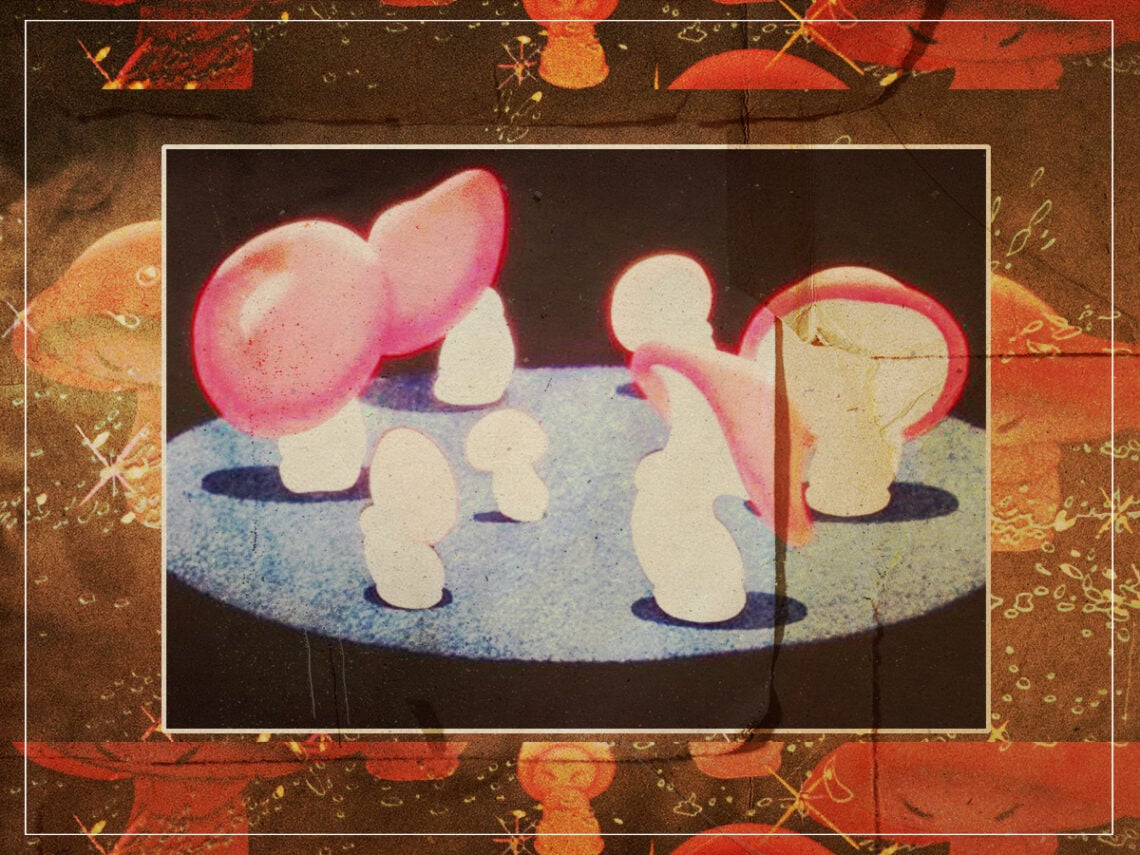
The resurgence of ‘Fantasia’ in the 1960s as a “head movie”

Animation and drugs have long been bedfellows, with hapless stoners loving outlandish cartoon titles such as The Ren and Stimpy Show, Adventure Time, and Rick and Morty due to the facilitatory nature of their contents. It’s not just the dank green leaf that’s inextricably tied to animation either, with many titles adored by time-worn LSD warriors and mushroom-cramming students alike. Yet, there was one that started it all: Walt Disney’s Fantasia.
It might initially seem a strange point, as the Disney conglomerate is synonymous with family-friendly capers in the live-action and animated spheres. While the stylised autograph of its founder and namesake has been ubiquitous for decades and was long before his 1966 passing, the company has become more omnipresent over recent years, as it has stretched the Marvel Cinematic Universe and Star Wars franchise to the absolute limit, churning out a mass of content that is both bewildering in its sheer volume and disconcerting because of the pure insouciance with which it is produced.
Yet, the state of play today is far from Walt Disney’s heyday, and his commitment to never doing the same thing twice is why captivated audiences never got a return to the beloved Snow White and the Seven Dwarves. He loved that the next best thing in animation was always around the corner, relished the constant development intrinsic to the form, and was unafraid of the jeopardy this dynamic nature held for him and his company. The potential for a rival to swoop in and knock them off their perch was invariably high, meaning that Disney continued to strive for innovation to preserve his empire.
For him, Fantasia was the pinnacle of such vision. Far too ahead of its time in its scope, the lengthy film pioneered the all-encompassing audiovisual relationship we have come to know with its Fantasound sound system – a precursor to surround sound – and its heady animated segments set to pieces of classical music. However, it was a flop, with a monumental budget set against disappointing box office returns due to an unready audience and Disney’s big plans for its rollout interrupted by the Second World War. However, years after its 1940 debut, the film would finally come to be appreciated for the masterpiece that it is.
When Fantasia was reissued in December 1969, helped by a psychedelic poster, it found itself in the right place at the right time. Re-emerging in a moment when significant cultural advancements were unfolding across the board and with a more expansive coterie of narcotics for the populace to choose from than ever before – not to mention LSD being inherent to the countercultural zeitgeist – this was the perfect juncture for it to rise. It was cherished as a “head movie” by the longhairs, which is ironic, given that no one who worked on its production that we know of had dabbled in drugs.
It was a different time when innovation was motivated by the good old-fashioned rolling up of the sleeves. Many of this new generation of viewers could not believe that its creators were not chemically influenced during production. Nevertheless, it was an unparalleled psychedelic experience, and the sober nature of its creators only heightened its wonder.
Famously, the animator Art Babbitt, who helmed the iconic dancing mushrooms segment during the Nutcracker Suite, one of the most psychedelic instances in the movie, once said, “I myself was addicted to Ex-Lax and Feenamint”. It’s a comical point, referring to a prescription laxative and chewing gum.
In a show of its resonance, Fantasia quickly profited from its $2.28million budget when it returned to screens in 1969. The psychedelic advertising campaign and its contents proved a match made in heaven during this era. Since that moment, it was regularly issued to art houses in left-leaning college towns until late in the next decade, with many more reissues yet to come over the years. Its cultural standing was transformed.
Finally, Walt Disney’s ultimate passion project found its place, and a completely distinct generation appreciated his innovations from the one it was intended for.
