


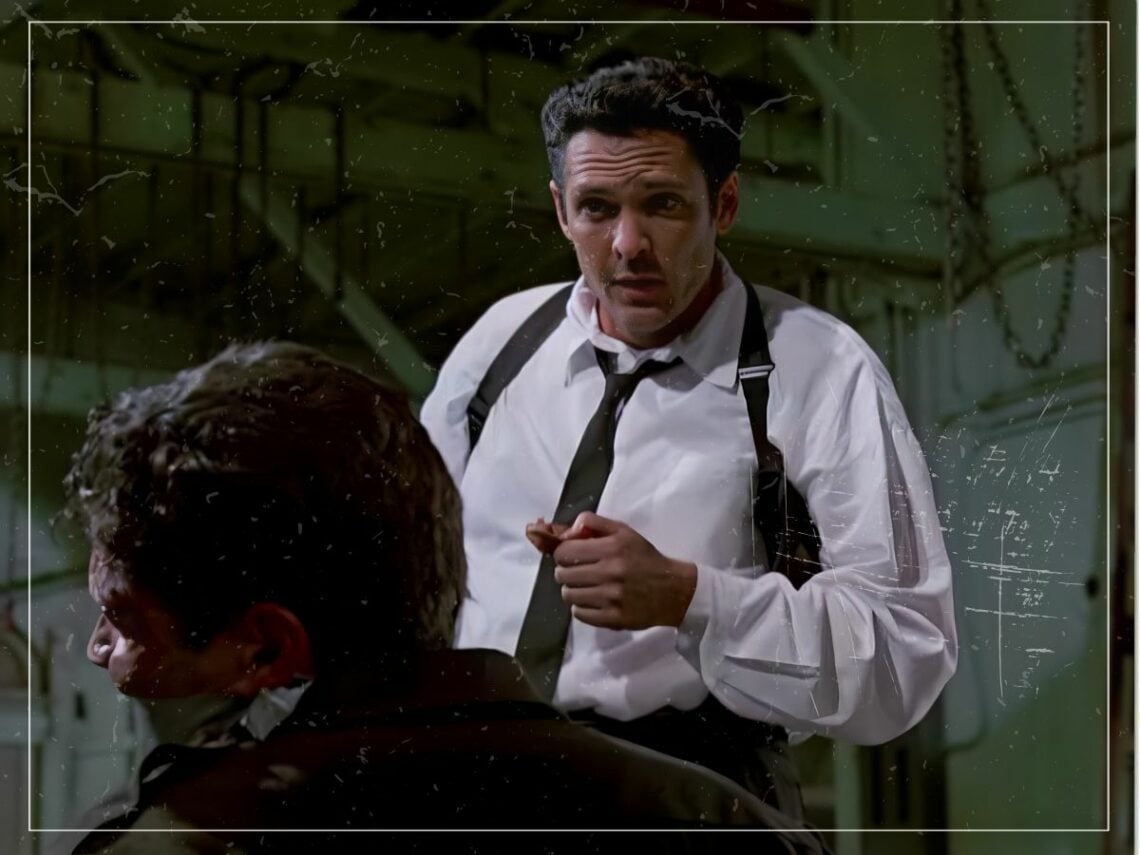
‘Reservoir Dogs’, Michael Madsen and the greatest needle drop in cinema history

As the tragic news of Michael Madsen‘s death at the age of 67 was confirmed by his family, there was a common theme that seemed to emanate from every reactionary post on social media.
The troubled actor wasn’t exactly a squeaky clean performer in his private life, and his on-screen persona seemed to mirror this trend. Perhaps one of the finest character villains to ever step on the lot, Madsen’s cinematic legacy can be uniquely distilled into one horrifying, unstoppably iconic and uniquely disturbing scene. It is the one scene belted across the internet as the legacy moment of his life, and, of course, you already know the one I am talking about.
If there was one scene that indicated just how far Quentin Tarantino was willing to take things in the gore stakes, then the legendary ear-cutting sequence from Reservoir Dogs has to be it. And who was the man doing the shuffle to secure that fleshy trophy from the captured police officer bound to the chair in front of him after the failed heist ensured the criminal gang needed a hostage? Why, Madsen’s Mr Blonde, of course.
Played expertly by the actor, Mr Blonde operates as the resident psycho for the group of bank robbers. After briefly meeting and only exchanging code names, the planned heist goes badly wrong, and Mr Blonde goes on a shooting spree, taking out innocent bystanders and picking himself up a piece of collateral in a uniformed officer. The logical members of the group can see that he might have done so in order to aid his escape, but it soon becomes clear that Blonde isn’t just here for the information he needs; he is here to have a good time.
What happens next is a gruesome interchange that sees Mr Blonde violently beat and torture the officer before the film’s climactic ending. But perhaps the most disturbing thing of all, and also one of the reasons the scene is so deeply seared into the collective consciousness of movie lovers everywhere, is the music.

Tarantino’s love for music is well noted, and his use of pop songs within his movies has often been lauded as one of his greatest assets, and it does not get better than Stealers Wheel and ‘Stuck In The Middle With You’ as Blonde slowly slices the ear of his victim clean off.
“When you take songs and put them in a sequence in a movie right, it’s about as cinematic a thing as you can do,” Tarantino said of the song’s perfect placement in his debut feature film. “You are really doing what movies do better than any other art form. And the effect is you can never really hear this song again without thinking about that image from the movie. I don’t know if Gerry Rafferty necessarily appreciated the connotations that I brought to ‘Stuck In The Middle With You’. There’s a good chance he didn’t.”
Rafferty may not have, but the cinematic world did. There have been many moments where a director drops the needle on a classic tune at just the right time to make you truly feel what’s happening on screen. Martin Scorsese’s use of the Cream track ‘Sunshine of Your Love’ as Jimmy Conway sees his future unfolding in front of him in Goodfellas lets you in on the intensity at hand. Even Marty McFly blasting ‘Johnny B Goode’ for an audience of unsuspecting teens gives you a thrill. But Tarantino takes the winner’s medal for the greatest combination of a pop song and a movie, and much of that is down to Madsen.
Sure, the track is unusually buoyant, which works perfectly as an antidote to the horror that is unfolding—it’s not often you witness physical torture in the cinema. The 1970s theme is effortlessly woven into the narrative through the use of the radio via K-Billy’s Super Sounds of the ’70s. But the real genius comes in the shuffling masterclass of Madsen’s performance.
Having played a proverbial psychopath for much of the movie, shifting with serpentine eyes and rarely losing focus on his desire to do bad things, Blonde effortlessly shimmies into a new energy. Thrilled by the opportunity in front of him, he uses the fragrance of the track to perfume every moment of the heinous violence he is about to enact on another human being. It is delivered with suave pizazz and a seemingly unwavering commitment to the moves. It makes the scene completely compulsory viewing.
The moment the music starts in a certain scene, you can be transported to its setting. The moment Mr Blonde kicks up the volume on the radio, so visceral and inescapable are the sound, the movement, and the next moments that are about to unfold, you would rather be anywhere else in the world. And that is pure cinema.

Never Miss A Take
The Far Out Quentin Tarantino Newsletter
All the latest Quentin Tarantino content from the independent voice of culture.
Straight to your inbox.