


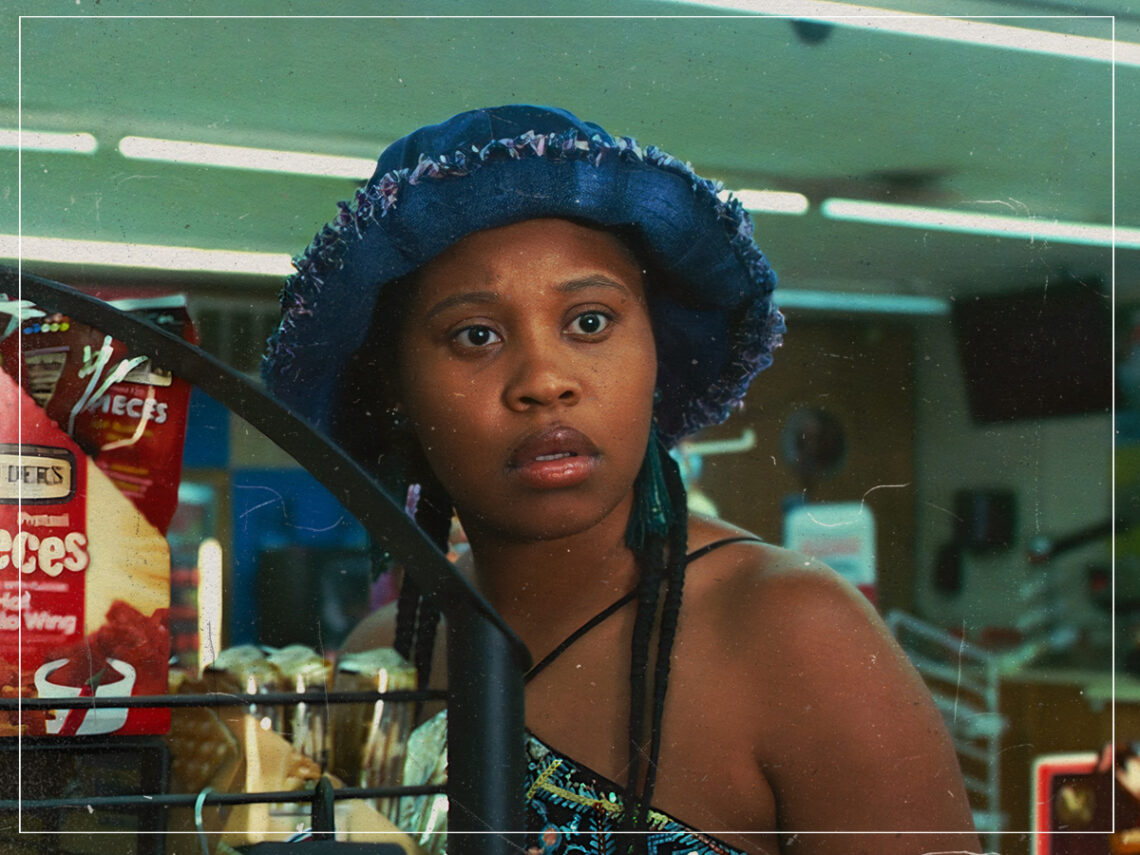
Dominique Fishback’s sublime portrayal of repressed female rage in ‘Swarm’

In the glorious, filthy cinematic hot tub of horror and psychological thrillers, the portrayal of repressed female rage has often been a territory dominated by white actors. In Swarm, however, Dominique Fishback’s Andrea ‘Dre’ Greene offers a scintillating exploration of this theme from a Black perspective. Dre is the ultimate manifestation of the queer-coded, repressed female rage of the asexual kind.
Created by Donald Glover and Janine Nabers, Swarm follows Dre, a devoted fan of a pop star named Ni’jah. While Glover explored the chase to stardom in Atlanta, Swarm puts an inverse lens on the downsides of stan culture. With the audacious tagline, “This is not a work of fiction. Any similarity to actual persons, living or dead, or actual events is intentional”, Swarm places Ni’jah on the similar mysterious pedestal the hive puts Beyoncé upon. With a famous husband and a sister who is also a singer in her own right, Ni’jah is decidedly a pastiche of Beyoncé.
Dre lives with her former sister, Marissa, and our introduction to their characters occurs as she watches Marissa having sex with her boyfriend, Khalid. Dre is seemingly an unperturbed voyeur.
After tragedy strikes when Marissa dies by suicide, and her family casts Dre out of the funeral—a final rejection as her chord to the world outside is cut forever, she copes with a violent spree targeting those who disparage Ni’jah on social media. As Dre’s mind blurs the lines between reality and imagination, the series explores themes of obsession, identity, and repressed rage that stems from constant alienation. Fishback’s performance encapsulates Dre’s fragmented sociopathy bourne out of arrested development, as she oscillates between gluttonous euphoria and apathetic detachment towards her victims.
In a lot of ways, Dre defies traditional archetypes of cinematic psychopaths. Unlike the charming and confident rewritings of Jeffrey Dahmer or Hannibal Lecter, Dre is neither fiery nor particularly bold, but she is unhinged to the core. We have seen a more maladaptive manifestation of this kind of repressed female rage and frustration in Anna Biller’s The Love Witch and a more melodramatic form of it in Ti West’s Pearl.
However, like most of Glover’s post-Community oeuvre, Swarm digs deep into themes explored in other Afro-surrealist works. While characters like Mia Goth’s Pearl exhibit theatricality in their psychopathy, Dre’s subdued yet visceral rawness offers a terrifically refreshing departure from conventional representations. Moreover, the satirical elements present in the sixth episode of the show, ‘Fallin’ Through the Cracks’, draw parallels with the mockumentary style employed in Atlanta season four episode, ‘The Goof Who Sat by the Door’. This not only underscores the series’ irreverence but further ties the two works together thematically.
Dre’s narrative arc in Swarm provides another subtle commentary on the societal factors contributing to repressed female rage. Her upbringing in the foster care system, coupled with her ostracisation by peers and foster family, highlights the systemic neglect and marginalisation faced by Black women who slip through the socio-economic barriers put in place. Dre’s foster mother’s revelation in the sixth episode that she never had a tragic past that involved trauma or abuse is in itself an unwitting confession of her own othering and misunderstanding of Dre.
At its boldest, Swarm scrutinises the intricate makings of a psychopath but only holds up a mirror at the end of it all. Fishback enacts Dre’s internal turmoil with sublime relish, challenging viewers to confront the underlying trauma fueling her violent actions even when they lead to darkly comic ends.
Dre’s encounters with the female cult led by Billie Eilish’s icy Eva (and other white women who look like those who bullied Dre in school) and the glib Black-presenting stripper played by Paris Jackson add fatalistic humour to Swarm’s explorations of racial multiplicity.
Ultimately, Dre finds refuge in a new lover, who, ironically enough, is a veritable Ni’jah hater. The end of Dre’s short-lived happy days is inevitable from the start. But that’s not the tragedy. The real tragicomedy arrives after the tears when Dre realises she has burned the Ni’jah concert tickets along with the evidence.
Swarm interrogates the dangers of unchecked idolisation in the digital age. However, celebrity worship is merely just a side-effect of the deeper maladies that plague Dre and women like her. In dissecting Dre’s psyche, Swarm elevates the discourse surrounding female representation in fiction. Black women don’t need to be relegated to roles of model or magical minorities, nor should they be stereotyped as bold and fiery sans nuance. They can be the finest psychopaths on television, too.
