


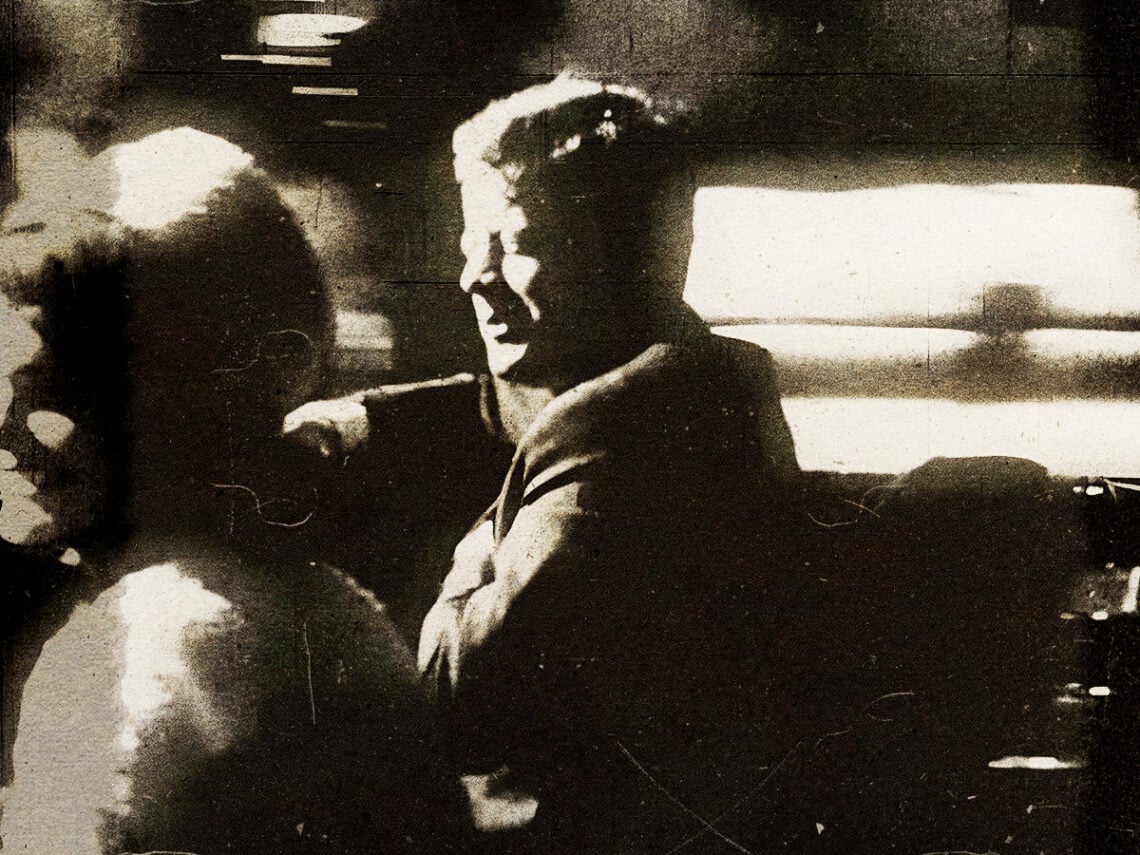
‘Report’: Bruce Conner on the Kennedy assassination

Few moments in the modern era have impacted the public consciousness as much as John F. Kennedy‘s assassination. On November 22nd, 1963, the President of the United States was shot while riding in a motorcade, instantly becoming one of the most significant events in the country’s extensive history. While there have been innumerable films, shows, and books that have attempted to cover it, there is no denying the fact that American artist Bruce Conner created something special with Report.
Throughout his career, Conner worked on several fascinating avant-garde projects that operated within hybrid frameworks to generate alternate artistic expressions. However, it was Report that became the crowning jewel of his filmography, which is unsurprising considering the gravity of the subject. The 1967 film presented a self-reflexive meditation on the assassination, questioning the media’s coverage of the President’s death while also contributing to the creation of a new form of historical analysis.
During a conversation with Rolling Stone, Conner explained that he wanted to move away from “all the social ritual and absurdity that went along with it.” Using live news commentary as a soundtrack for his experimental visual language, Report repurposes the familiar images of the coverage and uses constant repetitions to highlight the machinations of the media apparatus, which transformed the tragedy of the death into something more commercial.
“The repetition is like the first three days after the assassination, when there was nothing to think about but the death of Kennedy,” Conner added while talking about the two segments that work together to ask important questions about the media’s role in the mythologisation of Kennedy’s death. “It’s never been a good film — on purpose — up to the last five minutes. The art should not stand in the way of the realisation of the death of the man.”
This mythologisation is still evident in the discourse surrounding the event today, with many bizarre conspiracy theories complicating the conversation. While films like Oliver Stone’s JFK have attempted to tap into these ideas, Conner is not interested in such sensationalisation. Instead, he uses the news coverage against itself – to point out that the chaos of history cannot be explained by the commercial logic of news cycles.
As the filmmaker admitted himself, it’s the second half of Report that truly makes it a visceral experience. Conner incorporates a powerful montage that oscillates between footage of the President and strange images, such as a bullet shattering a light bulb. In contrast to the news reports that were obsessed with the chronology of the event, Conner’s radically experimental account of the assassination deconstructs our perception of history as well as time.
Watch the film below.
