


‘Red Road’: Andrea Arnold’s haunting surveillance drama

British cinema has long been associated with social realism, with filmmakers like John Schlesinger and Karel Reisz spearheading the genre in the 1950s and 1960s. The late ‘60s gave rise to Ken Loach, and Mike Leigh followed suit in the ‘70s, two of the biggest names within the movement.
It wasn’t until the 2000s that female filmmakers began to earn prominence in the social realist genre, with one of the most significant names to emerge being Andrea Arnold. After abandoning a career as an actor and presenter, Arnold studied the medium and started making her own shorts, winning an Academy Award for Wasp in 2004.
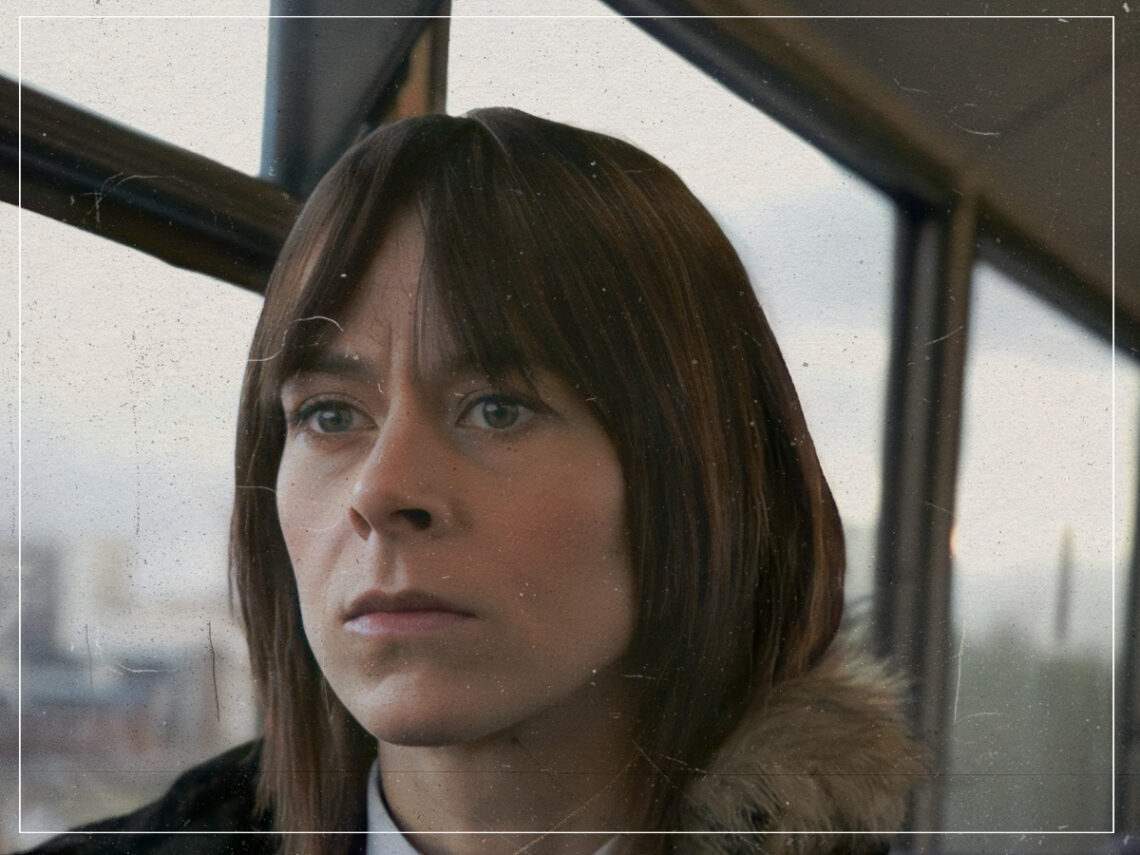
In 2006, she made her directorial debut, the Bafta2-winning Red Road, which stars Kate Dickie as a lonely CCTV worker. Set in Glasgow, Dickie’s Jackie spends her days monitoring footage, becoming particularly obsessed with watching a man, Clyde, who lives at the Red Road Flats. We don’t know why Jackie can’t stop tracing Clyde’s moves despite the camera following her closely. However, she soon takes her preoccupation with him to the next level by following him and eventually attending one of his parties.
Jackie is reserved – there is an unspoken grief weighing down on her that Arnold forces us to question rather than spoonfeeding us the information. The camera often confronts her face up close, resulting in a somewhat claustrophobic feel, mirroring Jackie’s unstable, suffocated mental state. There’s a graininess and unpolished nature to the visuals that emphasises the movie’s gripping sense of realism. Arnold’s film is a far cry from typical Hollywood storytelling, and an incredibly intimate and explicit sex scene only highlights this further.
The movie was made as part of a series called Advance Party, conceived by Gillian Berrie, Lone Scherfig and Anders Thomas Jensen. The idea was that debut feature directors would follow the rules imposed on them by these executive producers, using the same actors in each film.
Additionally, the movie was largely filmed with Dogme 95 in mind, a movement created by Thomas Vinterberg and Lars Von Trier, the latter of whom played a role in coming up with the Advance Party idea. The Dogme 95 movement discouraged the use of studios, non-diegetic music and special effects while encouraging hand-held cameras and natural lighting. Red Road largely sticks to this ethos, and as a result, it feels incredibly gritty, raw and haunting.
During tense and emotional moments, such as Jackie revealing the reason for her obsessive manhunt and plot for revenge, the movie packs a considerably more poignant punch due to its almost documentary-like feel emulated by unstable camera movements. The movie feels so real – you can tell that this has been made on a low budget, as far as away from sparkly Hollywood studios as possible. Arnold’s background – she grew up as the child of a young single mother on a council estate – no doubt helped shape the way the story was told, too.
Red Road is a fascinating watch that blends meditations on grief, obsession, class and gender dynamics with expert precision. It is not hard to see why the movie won several prominent awards, including the Jury Prize at Cannes, paving the way for Arnold’s next – and best – film, Fish Tank.
