


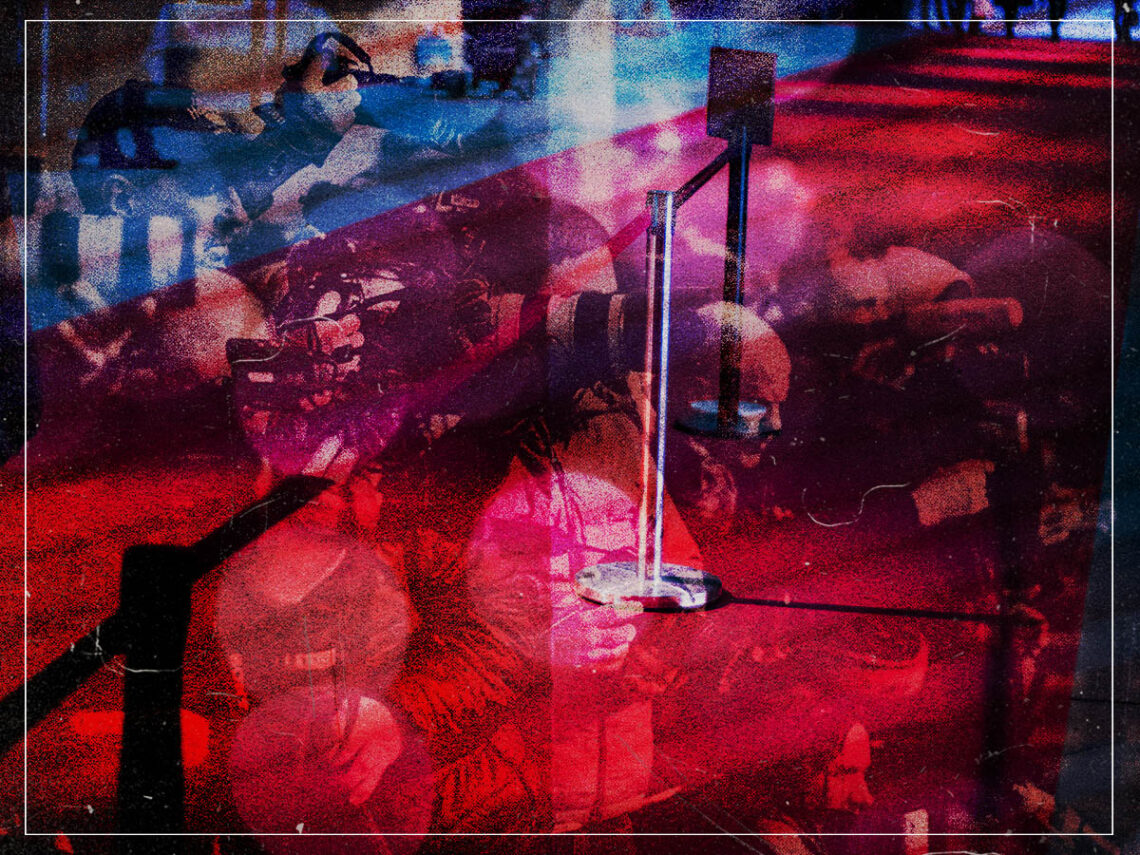
How the red carpet became a hotbed of Hollywood controversy

“There is much to be said in favour of modern journalism. By giving us the opinions of the uneducated, it keeps us in touch with the ignorance of the community.” – Oscar Wilde
Journalism has a long history of being a medium for delivering news, but lately, some folks argue that it’s more about stirring up controversies than having productive conversations or sharing reliable stories. While this topic is probably a whole other can of worms, Hollywood has undoubtedly played a big role in creating some of the most talked-about moments in contemporary culture history.
Put simply, online journalism tends to thrive without the immediate demands of real-time updates, allowing for the creation of carefully crafted and thought-provoking content. On the other hand, journalism conducted face-to-face, like on red carpets, is known for its wild and unpredictable atmosphere, often resulting in memorable and surprising comments from highly regarded industry figures.
While pinpointing the exact start of the red carpet tradition is tricky, its main purpose has stayed pretty consistent: honouring and spotlighting the top figures in showbiz. Sure, the definition of “entertainment royalty” has broadened over time, but the whole idea of celebs strutting down a fancy red carpet hasn’t changed all that much. However, while being in the limelight used to be all the rage, nowadays, some contemporaries are a little over the whole thing.
“I guess I’m not very good at being a ‘personality’, and I’m not very comfortable doing the red carpet thing or the chat show scenario,” once explained actor Cillian Murphy. “I wish I was because it would make life easier for me,” he added. Murphy certainly isn’t alone in his dislike for the event, either. America Ferrera previously shared she doesn’t like them because she doesn’t align well with “the duties of being a celebrity”.
Similarly, Sandra Bullock previously deemed the carpet “the most uncomfortable situation imaginable,” while Emily Blunt likened it to “bedlam”. Tom Hardy, someone you might misjudge as being one of the most confident players in the business, has also expressed his dislike for the event, saying, “I don’t want to be me”.
For some people, it might be hard to understand why anyone would dislike such a fancy occasion celebrating entertainment triumphs. But a quick glance at some of the red carpet’s darker moments might explain why stars have been giving it the cold shoulder. Not only does it make people incredibly socially anxious, but it’s also a breeding ground for some seriously awful questions and comments from journalists—ones that have been misogynistic, racist, or homophobic.
Of course, a recent example of this would be Andrew Scott’s unfortunate encounter with a renowned BBC journalist. During his short red carpet interview, a time you might think would be wisely spent asking the star about his recent role in Andrew Haigh’s masterpiece All of Us Strangers, Scott was asked about another film with which he had nothing to do whatsoever. After the reporter inquired about his thoughts on the infamous concluding scene in Saltburn, Scott looked physically uncomfortable before politely brushing the interviewer off and moving along to the next person.

The BBC has since apologised for the incident, but it raises the question: do some media outlets see the red carpet as a chance to exploit potentially sensational headlines? The intentions of the journalist were clear – get a catchy headline or quote from Scott and use it to drive clicks. But it backfired, putting the BBC’s – and the journalist’s – reputation at risk.
In other cases, when it doesn’t appear that the reporter is seeking attention by asking celebrities strange or offensive questions, it’s hard to understand how and why it happened. From women constantly being asked about their outfits while men are questioned about their careers to Rashida Jones being complimented on looking “tan and tropical”, many of these controversies often seem too outrageous to be real.
It’s perhaps easier to understand Taylor Swift’s feud with the media when you remember her experience on the Grammys red carpet in 2015 when a reporter from ET said, “You’re going to walk home with more than a trophy tonight, I think, lots of men”. Looking tired of the relentless comments about her perceived promiscuity, Swift politely shut her down by responding, “I’m not going to walk away with any men tonight”.
Scarlett Johansson experienced similar treatment when a reporter almost assaulted her during the 2006 Golden Globes carpet. The same night, the journalist asked actor and producer Eva Longoria if she had shaved “down there”. Meanwhile, John Travolta, though not a journalist, physically embraced Johansson at a separate event, which sparked discussions about consent, even in its mildest forms.
In 2003, during a Men In Black premiere, a reporter approached Will Smith for a hug and a kiss on the cheek. Nothing transpired at first, but when the reporter attempted to kiss him on the lips, the actor pushed him away and lightly slapped his cheek. Although it could have been a simple mistake, as journalists often have to juggle copious amounts of information at any given time, one reporter asking Mayim Bailik how many people think she can “solve calculus at the drop of a hat” became a viral internet meme considering the fact that Bailik is in-fact a neuroscientist and trained in calculus.
So, why do such moments occur in the first place? While some reasons are easier to understand, including the fact that the red carpet is inherently a high-pressure environment, others may be more difficult to unpack. The most obvious, however, is the journalist’s desire to grab attention and generate juicy headlines. As a result, some may resort to asking provocative or inappropriate questions in an attempt to elicit a reaction from celebrities.
All of Us Strangers is a beautiful film, but asking Scott for a line or two about Barry Keoghan’s nudity is probably more likely going to drive traffic when packaged up in a nice homepage article on the BBC. Of course, this doesn’t make it right, as it comes across as unfair and even homophobic. However, the competitiveness of the journalism world can bring out the worst in people, leading to bold statements in a high-profile setting.
That being said, there’s also a more dignified, respectable way to conduct highly considered journalism that still provides audiences with genuinely insightful and grabbing headlines. Hollywood just hasn’t figured that out yet.
