


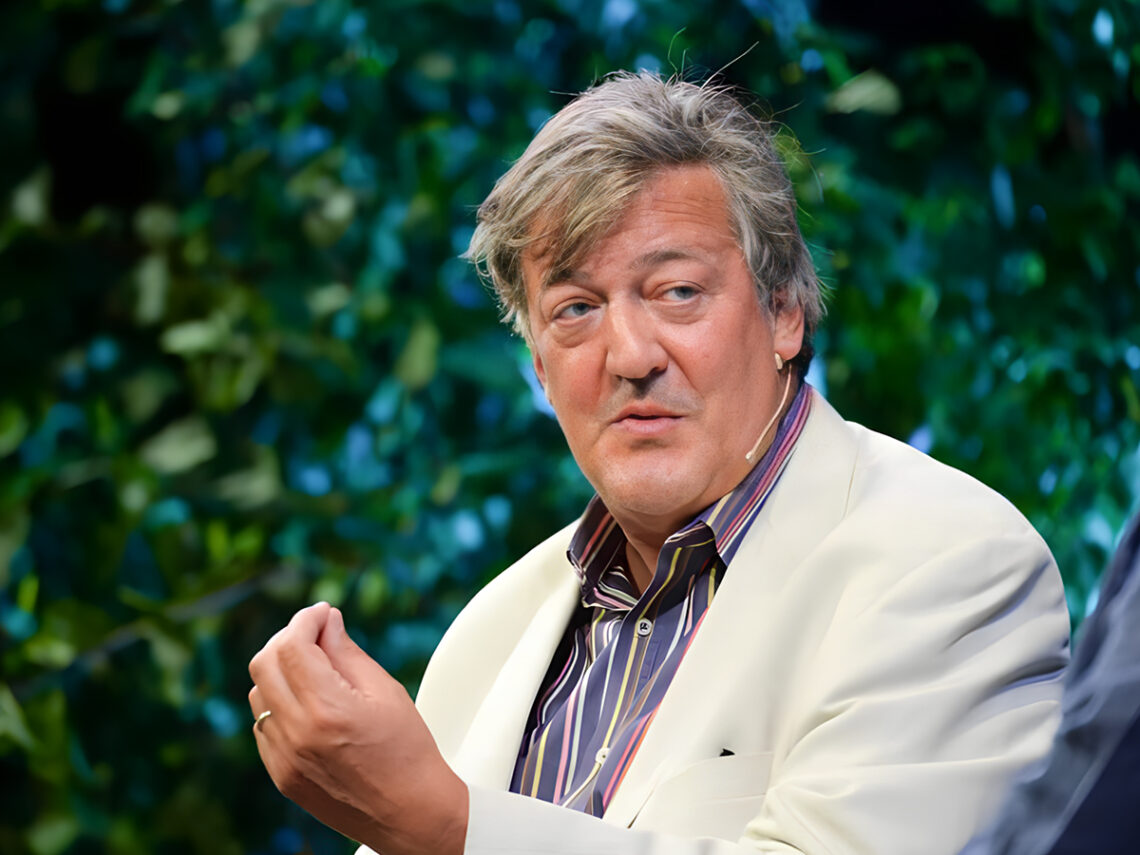
The record-breaking 2016 movie Stephen Fry can’t stand: “Didn’t see the point of it at all”

Whatever Stephen Fry says, one is compelled to nod along.
His booming, timeless voice, still delicate and personal while yielding a status of impressive grandeur, has a way of convincing even the most sceptical of the truth in his opinion.
This is exactly why Fry became one of the most celebrated audiobook narrators in the world, as his decadent baritone soared through retellings of fantastical tales and mythic epics, imbuing the imaginary with an enthusiastic inkling that anything outside the limits of the possible could happen.
Still, one’s power must have its limits, and Fry found his the day that he tried to convince film lovers that Damien Chazelle’s 2016 record-breaking movie, La La Land, was a terrible film.
When Fry, ever the beaming optimist, was asked by The Times to name a movie he walked out on, his answer took many by surprise. Without a second thought, he named the romance, starring Emma Stone and Ryan Gosling. His criticism was simple, one of disaffected nonchalance delivered with British flavour: “Really didn’t see the point of it at all, I’m afraid.”
I shouldn’t need to present my case for La La Land‘s supremacy here, but I may as well: Perhaps one of the last real examples of Hollywood charm in recent memory, Gosling and Stone whip a furious love story around one another, balancing shimmering neon-lit escapism with the bitter demands of sacrifice.
The colours pop, the dance numbers soar, and the dialogue is perfectly poignant and humorous in equal measure. I saw the blockbuster hit on a first date, his bony hand grazing my nobbly knee for the entire duration, and as the credits rolled, it seemed inevitable that we’d entered into a love affair of the ages, called into hopeless romanticism obediently through the dizzying cinematography.
What is the point, Fry asks? Only that love doesn’t have to last a lifetime to make an impact, and a connection doesn’t have to last to be valuable. Only that your defined limits of success could, and should, change if you move through the world with openness, humility, and inspiration.
Unfortunately, beyond a shrug of his shoulders, Fry gave no clear indication why he couldn’t stand to see love bloom, fade, and reappear like a dream. Having said that, if we poke around in Fry’s filmic psyche, further disillusion begins to present itself: “Mind you,” he added, “I can’t think of many films that won, or were up for, best picture that I’ve ever really enjoyed or wanted to watch more than once.”
Perhaps we understand him better when we heed what he added next: “Felt the same about that awful one about the mean bully who kept being horrid to the drumming pupil. What was it called? Whiplash. Everyone seemed to love it. I think maybe I’m just a bit too soft for this world . . . Not that I’d fare better with the dinosaurs”.
Perhaps this explains why Fry is the perfect man to read us our bedtime stories: The bad guys lose, and the good guys prevail every time. Gosling and Stone exit stage right.
