


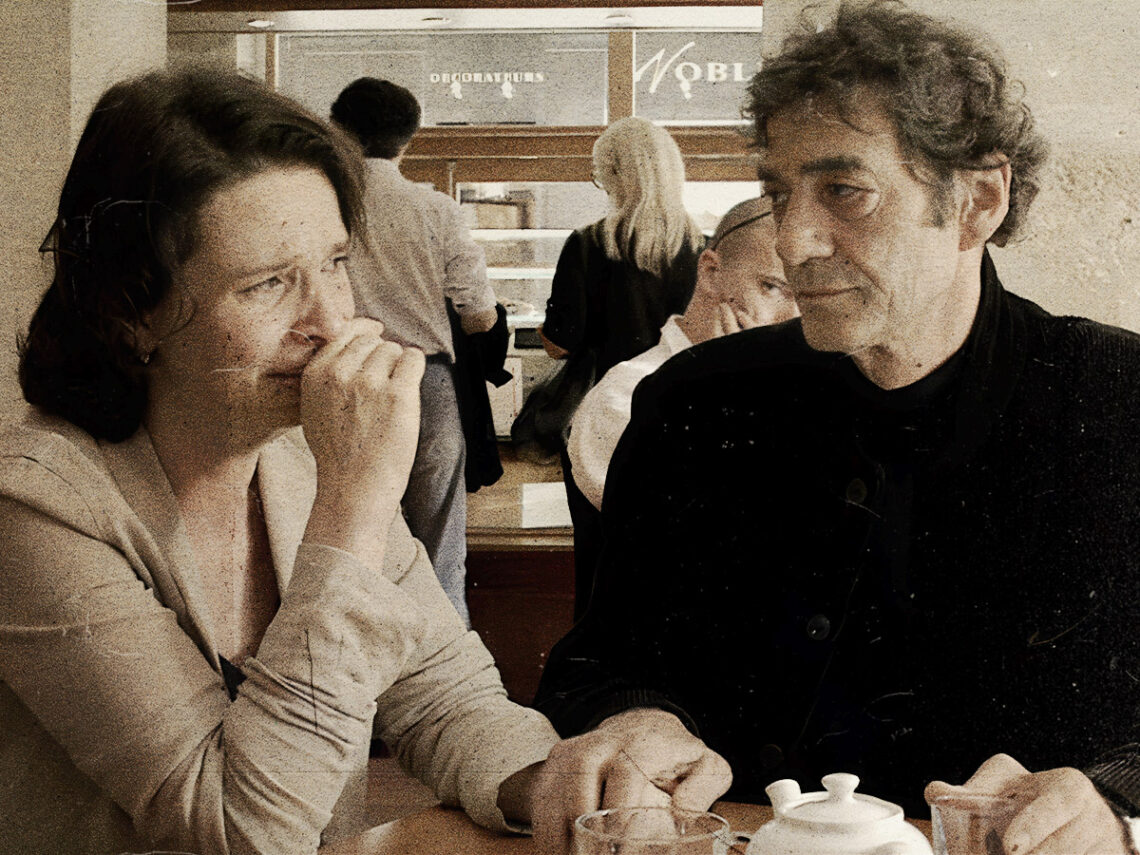
How does Michael Haneke movie ‘Caché’ pose as a thriller?

On the surface, one might claim that Michael Haneke‘s 2005 movie Caché is a psychological thriller. However, upon diving deep into its inner workings, the thriller categorisation doesn’t really seem to apply, nor does it accurately describe the way in which the narrative is finally presented at the movie’s conclusion.
Caché stars Daniel Auteuil and Juliette Binoche as a well-to-do French couple named Georges and Anne. The pair are mysteriously sent video tapes of the front of their home that merely show that their property is under surveillance, and the fact that little else is portrayed creates an unsettling feeling both in Georges and Anne and in the audience too.
Eventually, Georges figures out that the videotapes are somehow linked to a figure from his past, an Algerian orphan named Majid, who his parents were close to adopting. However, a young Georges played a cruel trick on Majid, which prevented him from living a life of luxury, and forced him into one of poverty instead.
So the film’s real message becomes one of guilt and memory, rather than the direct thriller that we think it may be at the narrative’s beginning. Even Georges himself expects that whoever is sending the tapes will likely want money seeing as he is rather wealthy.
Perhaps one of the most interesting facets of Caché, though, is that we don’t really ever find out who has sent the tapes. Majid denies sending them just before he violently takes his own life in front of Georges, deepening his guilt, as does his younger son, who is even more furious at Georges’ childhood actions than his father.
Haneke intentionally wrote the film so that it would be initially presented as a thriller, but it eventually becomes a reflection on guilt. In an interview with The Guardian, the Austrian director opened up on the ambiguous ending of the movie and the lack of a distinctive motive for the videotapes.
“I’m not going to give anyone this answer,” he said. “If you think it’s Majid, Pierrot, Georges, the malevolent director, God himself, the human conscience – all these answers are correct. But if you come out wanting to know who sent the tapes, you didn’t understand the film.”
“To ask this question is to avoid asking the real question the film raises, which is more: how do we treat our conscience and our guilt and reconcile ourselves to living with our actions?” Haneke continued. “People are only asking, ‘Whodunnit?’ because I chose to use the genre, the structure of a thriller, to address the issues of blame and conscience, and these methods of narrative usually demand an answer.”
Haneke is keen to stress that Caché is not a thriller but notes that perhaps it is a thrilling narrative that enables one to confront their own guilty feelings. “Who am I to presume to give anyone an answer on how they should deal with their own guilty conscience?” he said.
That was one of the brilliant things about Caché and about Haneke in sum; that there was a level of frustration with the film that is never quite resolved. Or, as Haneke himself puts it, “Films that are entertainments give simple answers, but I think that’s ultimately more cynical, as it denies the viewer room to think. If there are more answers at the end, then surely it is a richer experience.”
