


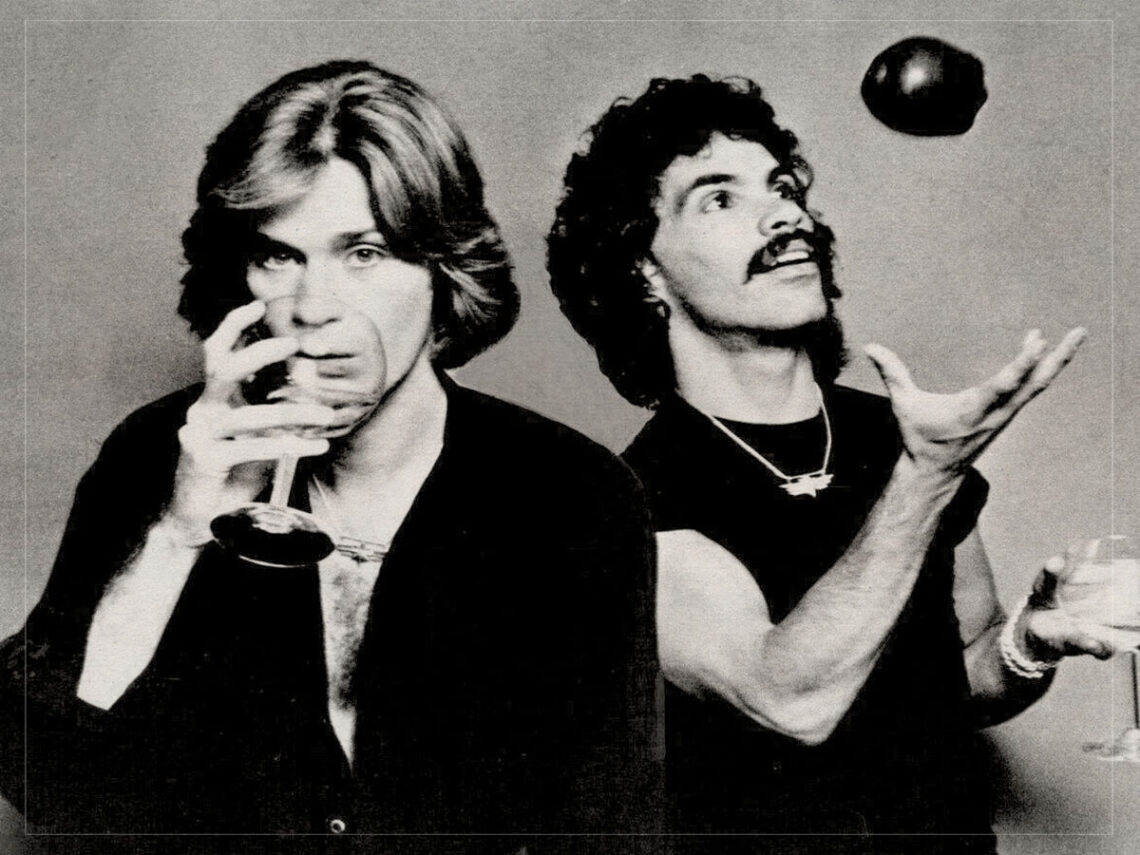
“Acting sort of strange”: the real person behind the classic Hall & Oates song

The wonderful nature of art is that it doesn’t always have to be rooted in something real; it can take on a life of its own, allowing people to interpret it in any way they wish. Hall & Oates might have fallen out years ago, but nothing will ever undo the music that demonstrated the power of two harmoniously artistic minds coming together to make something great.
In fact, the lasting impact of Hall & Oates can be found across many spaces in modern culture, not just in the many cinematic favourites the older generation still love and cherish but also among the youth, whose TikTok doom scrolling exposes them to some of the finer music they know, like Billy Joel’s ‘Piano Man’, Fleetwood Mac’s ‘Silver Springs’ and, of course, Hall & Oates’ ‘You Make My Dreams’.
Coasting the line between blue-eyed soul and yacht-rock, Hall & Oates have that quintessential 1980s catchy pop appeal that the younger generation loves to claim as their own, a timeless appeal that ensures much of their music remains just as popular now as it was then, if not more. Against their peers, that’s the one thing Hall & Oates have no doubt managed to achieve better than most: withstanding the test of time.
According to John Oates, that’s all a musician could ever really ask for. Referring to their 1973 single, ‘She’s Gone’, Oates recently told People that its endurance is “the mark of a great song” and that the “key” to a “legendary” song is timelessness. ‘She’s Gone’ also has many of the familiar hallmarks of a typical Hall & Oates song, including a charming, accessible progression, a catchy hook, and an upbeat, albeit laidback groove.
This seems to be the pattern when looking at their best songs, especially ones with as much intensity and immediacy as hits like ‘You Make My Dreams’ and ‘Rich Girl’. Both of which took on a life of their own over the years, particularly the latter, which not only attracted immediate commercial success as their first ever number one but also proved that, when it came to Hall & Oates, it didn’t matter what they were actually singing about, as long as people enjoyed what they heard.
In fact, ‘Rich Girl’, despite its lyrics about a pretentious, privileged girl who has gone too far relying on her “old man’s money”, wasn’t originally about a rich girl at all, at least, not exactly. Instead, it was initially inspired by an ex-boyfriend of Daryl Hall’s then-girlfriend, Sarah Allen, called Victor Walker, who went into their apartment one day and, according to Hall, was “acting sort of strange”.
Walker’s father was fairly well-off and owned a fast-food chain, which struck Hall as convenient, considering that Walker himself had the kind of demeanour that would get him into trouble one day. “This guy is out of his mind, but he doesn’t have to worry about it because his father’s gonna bail him out of any problems he gets in,” said Hall.
Embracing his need to express his views more creatively, Hall immediately wrote the chorus to ‘Rich Girl’, specifically the part about Walker being able to rely on his “old man’s money” no matter what situation he finds himself in. However, he felt that singing about a “rich boy” didn’t feel right, for whatever reason, so he changed it to a fictional “rich girl” instead.
One of the biggest hits of 1977, ‘Rich Girl’ changed the game, proving not only that Hall & Oates could show up with a catchy tune and achieve immediate commercial success, but also that they could take something real, embellish it with a few additional tweaks, and turn it into some of the most timeless art in music history.
