


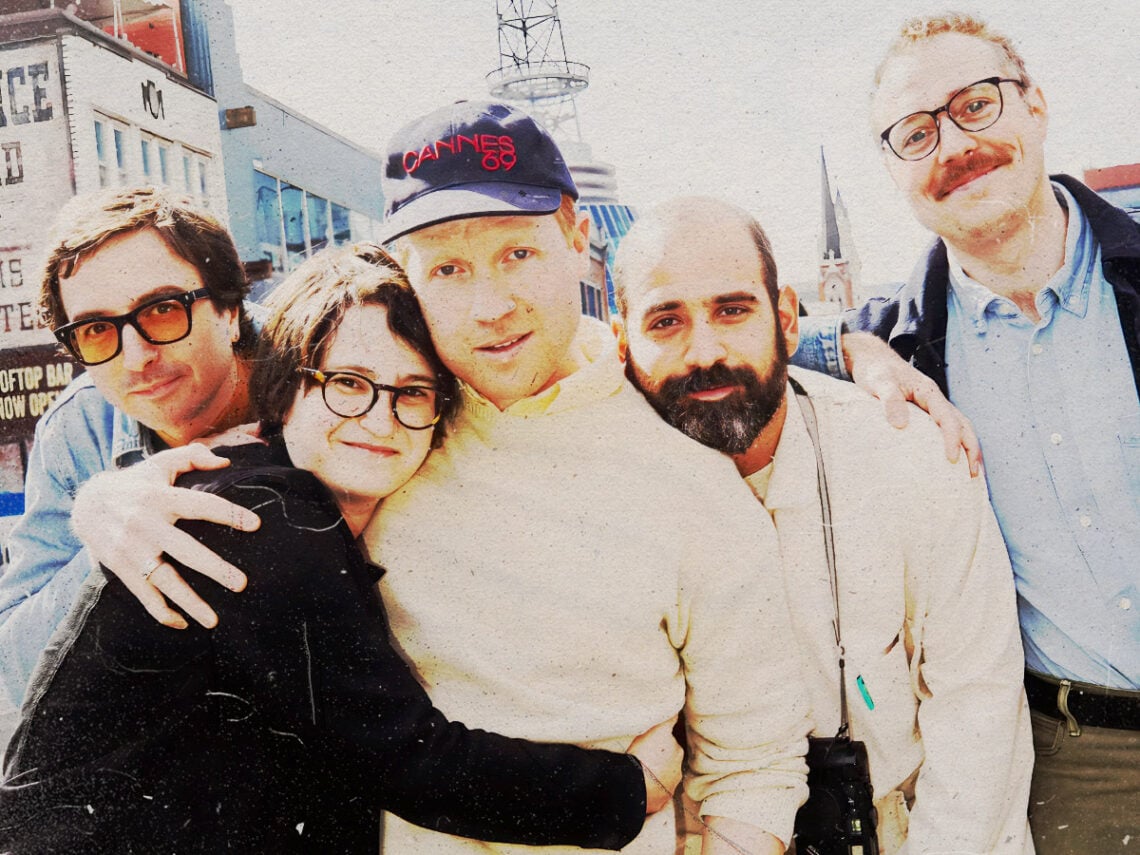
Real Estate on the music industry: ‘It’s easier to break in; harder to make a living’

In a new interview with Far Out discussing Daniel, their first album in four years, indie stalwarts Real Estate reflected on the music industry’s evolution since their formation in 2008.
Hailing from New Jersey, the band has experienced firsthand the profound impact of technology on the industry, witnessing sweeping transformations that have reshaped how artists connect with audiences, create music, and tour worldwide.
After discussing the making of their new record, which arrives on February 23rd, bassist Alex Bleeker recalled how Real Estate approached the skill of getting noticed in their formative years, “When we were younger,” he began. “We would dream about making a demo tape and passing it to our favourite band, thinking something would happen.”
Bleeker is reluctant to disparage the present landscape but maintained in earnest that he wasn’t well-informed concerning how it works for young startup bands because of Real Estate’s established status. “I hope there’s something really cool and organic,” he added. “There have to be cool scenes that still exist and people making pathways and alternative ways, and I’m not sure if it’s harder or easier. We had a kind of old-school pathway, but we blurred lines, though.”
Bleeker and frontman Martin Courtney recalled using sites such as MySpace to book shows in the early days and how, for a while, they deemed streaming as something of a novel entity. Both conceded that selling millions of records akin to bands like Metallica was an unlikely ambition and, as inexperienced musicians, saw the internet as a PR tool, a means of getting their sounds to more people.
However, things have changed for the band in light of the industry’s transformation. “It’s easier to break into music; it’s harder to make a living from it,” Courtney said regarding how things have altered for artists. “It’s easier to find an audience, but it’s really hard to make money”. This sentiment has been echoed by artists across the board.
Far Out first investigated how widespread this issue has grown to be in the 2023 Price of Music report. Clarifying the gravity of the problem was Ben Woods, the leader of the 4AD band The Golden Dregs. Woods outlined how, aside from the most notable streaming problem, touring is another connected issue that obstructs artists from making a living through their art, despite clocking up hundreds of thousands of listens online. The expenses for his moderately-sized act’s tour across America exceeded the annual earnings of most people in the UK. Additionally, despite the support of a prominent record label, a tour in the UK and Europe resulted in an estimated loss of £7,500.
This is not an isolated incident, and Real Estate, who are much more prominent than The Golden Dregs, with a long, celebrated history and millions of streams to their name, echoed these findings.
In another sobering moment, Courtney touched on the mental health strains that saw Real Estate’s friends, Animal Collective, cancel their UK and EU tour in 2022 because of the increasing burdens it now brings as a requisite of being the breadwinning operation. The frontman, who is married with children, like others in his band, says: “That’s where the mental health thing comes in. Because it’s really hard, it’s hard to tour, it’s hard to have a life.”
In the most painfully ironic way, the live show is an area where musicians across the pyramid make the most money, not streaming or physical sales. This is why severe mental stress and pressure arise, due to the paramount importance of supporting themselves and, in Real Estate and many others’ cases, their families.
As a result of this changed landscape, Bleeker concludes: “Musicians need to get it together. I used to not want to come off like I was complaining, but transparently, and I’m sure you’re hearing this from everyone, it’s hard for us to keep doing what we’re doing; we are not highly financially supported by this. And where the financial support comes from is the live show, full stop, not physical.”
