


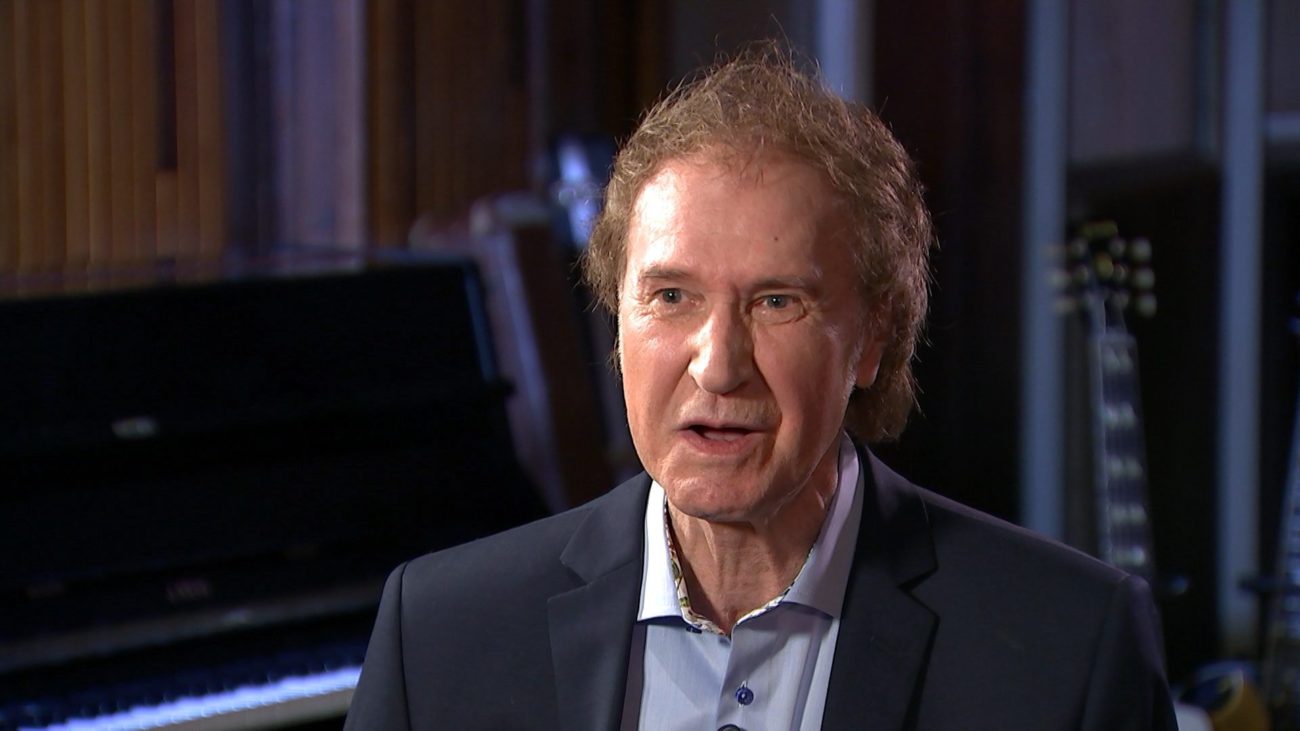
Ray Davies discusses his love of ‘The Sopranos’

As a founding member of The Kinks, Ray Davies was instrumental in developing post-war Britain’s international reputation. Albums like The Village Green Preservation Society are rooted in a uniquely British cultural lexicon, and songs such as ‘Sunny Afternoon’, ‘Waterloo Sunset’, and ‘Dead End Street’ found romance in the mundanity of ordinary British working-class life. How strange, then, that Davies’s favourite TV drama is American.
That’s not to say all of Davies’ favourite cultural artefacts are from the US. In his ‘My Culture Fix’ article for The Sunday Times, the Kinks frontman revealed that much of his favourite music was written by either Vaughan Williams, Holt or Percy Grainger and that Great Expectations by Charles Dickens is his favourite book. “A timeless story that could well apply to today,” he said of the 1860 serialised novel. “All the characters could exist in the modern world. I’ve related to many of them from time to time. When I was a youngster, I related to Pip; at one time, I related to the escaped convict, but now I’m older, my sentiments are drifting towards Miss Havisham (and believe me, I know how Miss Havisham feels).”
When it comes to TV, however, Davies sets his sights state-side. “The Sopranos equalled and even surpassed any TV series that was made in Britain (and we all know Britain produces the best drama),” he began. “David Chase, its creator, uses humour that is on a par with Ealing comedies and yet can switch seamlessly into the most gruesome violence. The casting is superb. RIP James Gandolfini, AKA Tony Soprano“.
Written and directed by David Chase, The Sopranos, for those of you who have been living under a rock for the last two decades, focuses on the life and times of titular Italian-American mobster Tony Soprano, who is continually trying to find a balance between his life as the leader of an underground criminal network and a family man.
Originally conceived as a feature film about a mobster in conversation with a therapist for issues concerning his mother, Chase was advised to adapt the screenplay into a television series. In 1995, he signed a development deal with Brillstein-Grey and wrote the script for the pilot episode. Drawing on his personal life and experience growing up in New Jersey, he attempted to implement the dysfunctional dynamic of his own family to mobsters. It worked a treat, and soon enough, Chase had a hit series on his hands.
