


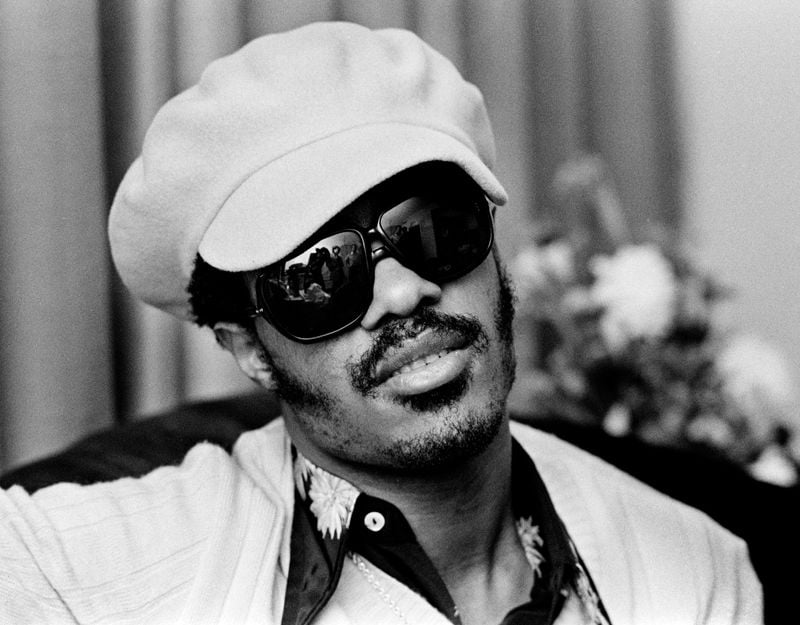
Ranking every Stevie Wonder album from the 1970s

From top to bottom, nobody dominated the 1970s like Stevie Wonder. The former child prodigy of Motown was now a man, someone who was desperate to prove his worth as an artist. As he approached his 21st birthday, Wonder saw an opportunity: his contract with Motown was about to expire, and he could easily gain more artistic freedom by leaping over to any number of labels, all of whom would have been desperate to get Wonder on the ascent.
After some negotiations with Berry Gordy, Wonder got what he wanted. That meant full artistic control over his work, with the ability to write his own material, produce his own sessions, and assemble his own albums without any oversight from the higher-ups at Motown. Jumping over to the subsidiary Tamla Records, Wonder was now in control of his own destiny.
What followed was one of the most astounding runs in the history of popular music. Taking on social commentary, love songs, cosmic religiosity, everyday struggles, and more pure joy than anyone had ever channelled into his albums, Wonder found his own voice and created some of the most intoxicating and enticing music that had ever been put to vinyl.
He was rewarded by his peers, most notably by snagging three different ‘Album of the Year’ Grammys, but Wonder’s impact went well beyond awards.
Stevie Wonder’s albums from the 1970s, ranked from worst to best:
8. Where I’m Coming From
As Stevie Wonder approached his 21st birthday, he sought emancipation from the stifling control of Motown. The assembly line process of making music at the label didn’t fit Wonder’s own vision of his music, and with his contract break with the label looming, Wonder created his first true independent album.
Where I’m Coming From is a baby step toward what would eventually become Wonder’s classic period of recording. Songs like ‘I Wanna Talk To You’ and ‘Take Up a Course in Happiness’ are fairly outdated, and Wonder’s identity as a self-sufficient R&B savant wasn’t quite at its most refined place, but Where I’m Coming From still represents a sign of things to come.
7. Signed, Sealed, Delivered
Stevie Wonder really didn’t want to sing schlock anymore. Not that his previous hits with Motown were bad, but the label wouldn’t take on politics, racial tensions, or the darker side of the black experience. Wonder was ready to branch out on his own, but his first album of the 1970s was still in the safe pop music vein that Berry Gordy preferred at Motown.
The thing is, Signed, Sealed, Delivered is a fantastic farewell to Wonder’s early identity. With tracks like ‘Signed, Sealed, Delivered’, ‘Never Had a Dream Come True’, and a fantastic rendition of The Beatles’ ‘We Can Work It Out’, Wonder was still working at a higher level than just about any other pop singer in the world. He just wanted more.
6. Stevie Wonder’s Journey Through ‘The Secret Life of Plants’
When Wonder was tapped to create the soundtrack for the 1979 nature documentary The Secret Life of Plants, he decided to take inspiration from ambient, new age, and minimalist music, three areas that Wonder had yet to explore in his artistic journey. There were still some classic pop and R&B elements, but Journey Through ‘The Secret Life of Plants was easily Wonder’s most challenging album up to that point.
Although it can sound clunky and dated in places, The Secret Life of Plants represents Wonder’s experimental apex, mashing dance, baroque, classical, children’s music, and ballads into one massive explosion of strangeness. It would only be an artistic triumph and nothing else if Wonder hadn’t made the feature-length soundtrack remarkably listenable. It’s the least Stevie Wonder-sounding album in his discography, which makes it a fascinating trip.
5. Music of My Mind
It was time for Stevie Wonder to step into the light. With a newly renegotiated Motown contract that gave him the ability to write, produce, and record his own material without the oversight of Motown executives, Wonder unleashed his first truly unfiltered work on Music of My Mind.
Experimenting with vocoders, new synthesisers, and a more expressive lyrical approach, Wonder emancipates himself from the Motown assembly line on tracks like ‘Love Having You Around’ and ‘Girl Blue’, tossing out the saccharine orchestral arrangements for a more stripped down and funky sound. It’s a transitionary album that would lead to bigger and better things, but don’t underestimate the power of Music of My Mind, which still feels fresh more than 50 years later.
4. Innervisions
Stevie Wonder was one of the first artists who truly embodied a self-sufficient approach to music. Acting as his own producer and songwriter, Wonder would also record nearly all of the instruments in his songs himself. Innervisions represents the peak of Wonder as his own man, being the sole player on songs like ‘Living for the City’ and ‘Higher Ground’. When other musicians were involved, their contributions were often limited to background parts.
There was still room to grow for Wonder: ‘He’s Misstra Know-It-All’ was Wonder’s first, but not best, takedown of Richard Nixon. ‘Jesus Children of America’ isn’t terribly nuanced. But those are just nitpicks: top to bottom, Innervisions is a revelatory experience that proved Wonder had no peers who would match his singular power.
3. Talking Book
With his independence guaranteed, Stevie Wonder didn’t want to stop recording in 1972. After releasing Music of My Mind in March, Wonder was right back at it in October when he released Talking Book. All of the promise that his previous album had shown was expanded on in Talking Book: the music was funkier, the hooks were more memorable, and the lyrical content was more powerful.
It’s one of those albums where you could just list the songs and not have to say anything more: ‘Superstition’, ‘You Are the Sunshine of My Life’, ‘You’ve Got It Bad Girl’, ‘You And I (We Can Conquer The World)’. But even deeper cuts like ‘Big Brother’ and ‘Tuesday Heartbreak’ unfurl with newfound confidence and happiness. Wonder was only getting started, but his classic period was in full swing with Talking Book.
2. Fulfillingness’ First Finale
After a near-fatal car crash following the release of Innervisions, Wonder shifted his approach to music. More thoughtful about the fragility of life, Wonder began writing material that was more philosophical and sombre than his previous material. Fulfillingness’ First Finale has intention all over it, with Wonder taking stock of his life and looking toward existence beyond his time on earth.
‘Heaven is 10 Zillion Light Years Away’ and ‘They Won’t Go When I Go’ take Wonder’s religious convictions and place them in songs that anyone could love. Wonder still has time for earthly delights on ‘Boogie On Reggae Woman’ and ‘Bird of Beauty’, and he also takes some time to give pointed thoughts on Nixon with ‘You Ain’t Done Nothin’. When put together, Fulfillingness’ First Finale reads like an album of pure transcendence that is mostly preoccupied with life beyond the clouds. But Wonder would truly make his masterpiece by shifting his focus back to life on earth.
1. Songs in the Key of Life
As if he was on a mission to prove how untouchable he was in the pop music world, Stevie Wonder decided to stretch out, combine all his best instincts, and create one of the best albums ever. Songs in the Key of Life is groundbreaking, enthralling, a little bit cheesy, surprisingly rugged, and completely unforgettable.
From the welcoming gospel tones of ‘Love’s in Need of Love Today’ to the funky dedication of ‘Sir Duke’, the nostalgic longing of ‘I Wish’, the religious undertones of ‘Pastime Paradise’, the nurturing sounds in ‘Summer Soft’, the pop hooks of ‘Isn’t She Lovely’, the dry funk and social sharpness of ‘Black Man’, and the joyous finale of ‘Another Star’ (plus the four extra songs from A Something’s Extra EP that have no been canonised), Songs in the Key of Life is the only album that can take you through a full lifetime’s worth of music and still leave you wanting more.
