


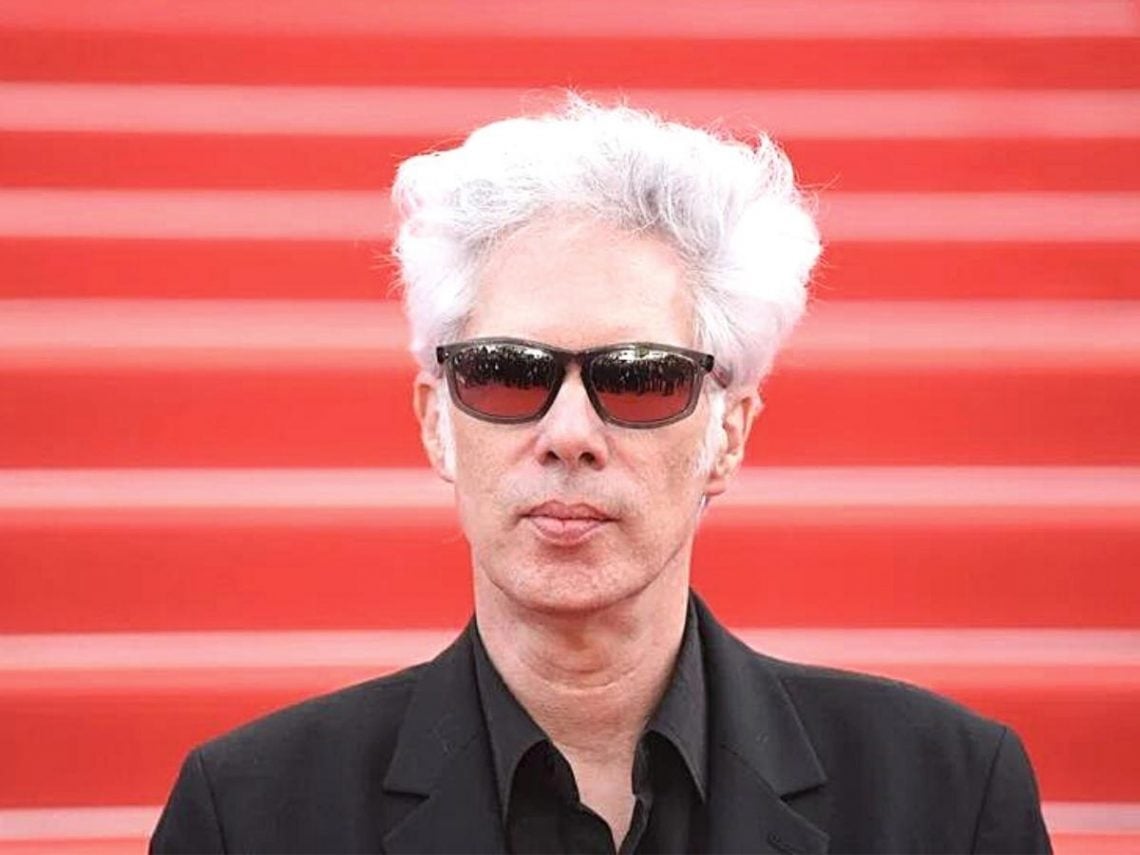
Ranking every Jim Jarmusch movie from worst to best

Looking a little like his fellow American movie pioneer David Lynch, Jim Jarmusch is known as one of the most celebrated independent filmmakers in contemporary cinema, approaching the medium with a similar fearlessness to the aforementioned experimenter. Working with recurring actors such as Tom Waits, Bill Murray and Tilda Swinton, Jarmusch is an eccentric mind capable of surreal masterworks and soul-searching dramas.
A free-spirited filmmaker from an early age, Jarmusch started out studying the craft at New York University, pestering lecturers who were looking for comprehensive narrative scripts, with screenplays where very little happened. Still, his rebellious streak and genuine artistic talent attracted his lecturer Nicolas Ray, who took the young creative under his wing to nurture his storytelling expertise.
Ever since, Jarmusch has become considered a significant staple of contemporary American cinema, creating such classic movies as Down By Law, Stranger Than Paradise and Ghost Dog: The Way of the Samurai. Along the way, he’s had the chance to collaborate with the very best Hollywood talent, including Johnny Depp, Iggy Pop, Chloë Sevigny, Steve Buscemi, Cate Blanchett, Alfred Molina and Steve Coogan.
With an extraordinary grasp of world cinema, naming the likes of Roberto Rossellini, Akira Kurosawa and Robert Bresson as major inspirations, Jarmusch has proved himself proficient in several genres of filmmaking, offering something innovative every time he takes to the silver screen.
Ranking every Jim Jarmusch movie:
13. The Limits of Control (2009)
Jarmusch has stayed remarkably consistent throughout his 40-year-plus career in Hollywood, but his early movies were undoubtedly more impressive than his most recent efforts. For our money, his worst film is the 2009 mystery-drama The Limits of Control, a forgettable movie that tells the story of a mysterious loner, played by Isaach de Bankolé, who is in the process of completing a criminal job.
Alongside Ivorian actor Bankolé come Jarmusch’s favourites Tilda Swinton and Bill Murray, but even they aren’t able to save this confused, plodding drama about very little at all.
12. Permanent Vacation (1980)
Very few directors have the privilege of saying that it was their final year of university film that sent them to stardom. However, for Jarmusch, this is certainly the case with his 1980 film, Permanent Vacation establishing him on the independent film scene. Made for just $12,000, the commendable 80-minute debut is a quasi-autobiographical feature that follows an adolescent young man as he drifts through the vacant streets of downtown Manhattan.
With hallmarks of Jarmusch’s later style, featuring a drab urban setting, dry humour and close character study, the film is respectable but also admittedly simple in his impressive, complex filmography.
11. The Dead Don’t Die (2019)
The Dead Don’t Die slips into number 11, ahead of Permanent Vacation and The Limits of Control purely for the fun that the filmmaker clearly has with the concept. Whilst it doesn’t make the most of being a Jarmusch zombie flick, the film is still a fun, ironic ride through the undead horror sub-genre, telling the story of the peaceful town of Centerville which finds itself at the centre of a battle with the undead.
Featuring the director’s most glitzy ensemble cast, including the likes of Adam Driver, Bill Murray, Tilda Swinton, Chloë Sevigny, Tom Waits, Steve Buscemi and Danny Glover, The Dead Don’t Die is largely remembered as a massive missed opportunity.
10. Coffee and Cigarettes (2003)
An anthology film made up of an impressive ensemble cast, in Coffee and Cigarettes Jarmusch creates a vignette of characters and situations where everybody enjoys a hot cup of java and a ciggy. Brought to life by its larger-than-life roles and the performers who fill the boots, including Tom Waits, Bill Murray, RZA, Cate Blanchett, Iggy Pop and Steve Coogan, this unusual film is a relaxing Sunday afternoon of a movie.
Constructed with no real point or aim, Coffee and Cigarettes is a sharp slacker movie with a succinct script and strong character chemistry. What more could you really ask for?
9. Night on Earth (1991)
Constructed in a similar manner to the aforementioned 2003 anthology, Coffee and Cigarettes, 1991s Night on Earth is a mosaic of several stories that build up to create one beautiful whole. Collecting five vignettes of related stories taking place on the very same night on earth, Jarmusch links each one by shedding profound light on the temporary bond between taxi drivers and their passengers.
Spanning five cities across the world and five very different languages, Jarmusch’s Night on Earth is a liberating joyride of a movie that takes place in Los Angeles, New York, Paris, Rome, and Helsinki.
8. Dead Man (1995)
By the mid-1990s, Jarmusch had become an established American cult icon, with his films gathering attention from across the globe. His success was fully realised in 1995 when he worked with the contemporary Hollywood hot-shot Johnny Depp for the movie Dead Man, a film that saw the actor feature as a murderer who goes on a spiritual mental journey through the American plains.
Though slow and methodical, Dead Man is one of Jarmusch’s best films for exploring and dissecting his exploratory narratives, sprinkling the perfect amount of surrealism on top of his wild, weird western.
7. Broken Flowers (2005)
Though Jarmusch adopted a new fondness for surrealism at the turn of the new millennium, releasing Dead Man and Ghost Dog: The Way of the Samurai in the 1990s, his 2005 movie, Broken Flowers better resembled his early stoic dramas. Though surreal in part, this Bill Murray-led drama recalls Jarmusch’s love of the road movie, telling the story of a father who is informed that his estranged son is looking for him.
Picking up the Grand Prix at the 2005 Cannes Film Festival, largely thanks to Murray’s excellent lead performance, Broken Flowers is a romantic tale of lost love and mortality whose charm is endlessly alluring.
6. Only Lovers Left Alive (2013)
Speaking to the director’s eclectic tastes, in 2013 Jarmusch took to the vampire sub-genre in the hopes of instilling his own idiosyncrasies. Proving that one of the oldest mythical beings can still be in vogue, Only Lovers Left Alive stars Tom Hiddleston and Tilda Swinton as two gothic yet stylish blood-suckers whose love spans generations. In true Jarmusch style, the vampires aren’t regular killers, instead, they’re depressed musicians and chic thinkers.
Still, Only Lovers Left Alive is a compelling watch with the filmmaker’s hands all over it, providing a new spin on a fantastical sub-genre that cinema has milked to death.
5. Mystery Train (1989)
Suffusing his love of the road movie and wandering lost protagonists, Mystery Train is a stark yet charming impression of contemporary America that tells three stories each connected by a Memphis hotel and the spirit of Elvis Presley. Similar in spirit to his 1991 film Night on Earth, Mystery Train is a slightly more humble tale, replacing Hollywood stars with the likes of Masatoshi Nagase, Yûki Kudô and Cinqué Lee.
Helping to establish him as an internationally-acclaimed filmmaker, Jarmusch’s simple, stylish energy earned him a generation of new fans who became enamoured by his take on the exploratory road movie.
4. Paterson (2016)
Jarmusch’s recent flicks have erratically bounced from genre to genre, from the blood-soaked comedy of The Dead Don’t Die to the romantic brooding of Only Lovers Left Alive, but 2016s Paterson proved that he was still capable of absorbing character dramas. Starring Adam Driver as a poet and bus driver, Paterson is a gentle road movie of sorts that flirts with surrealism and follows the protagonist’s everyday musings and observations in the town of Paterson, New Jersey.
Slow, thoughtful and hypnotic, Paterson is one of Jarmusch’s most loveable films, perfectly mixing his stylish tone together with a story grounded in the beauty and absurdity of everyday living.
3. Ghost Dog: The Way of the Samurai (1999)
An outlandish action thriller, tracking Forest Whitaker as ‘Ghost Dog’, a Mafia hitman who models himself on the samurai ways of old, Ghost Dog: The Way of the Samurai is a meditative journey through the twilight underworld of New Jersey. Captured with absorbing beauty by cinematographer Robby Müller, who creates a hypnotic visual energy, Jarmusch’s 1999 film is one of his most staggering.
As absurdly thrilling as it is ceaselessly stylish, Ghost Dog is a joy of a movie well-known for its thumping soundtrack that features the likes of RZA, Wu-Tang Clan, Method Man and Kool G Rap.
2. Down by Law (1986)
Jarmusch’s confidence as a filmmaker may have grown throughout his career, but it is his early movies that are still his most impressive. His third feature film, Down by Law, would have the most profound impact on his career, with the movie starring John Lurie and Tom Waits, elevating his own status in the entertainment industry. Shot in black and white, just like his previous movie, Stranger Than Paradise, the film follows two men who are framed and sent to jail where they meet a murderer who helps them escape.
Expressing the innate funny bone of the filmmaker, Down by Law was the director’s first attempt at comedy, setting a new standard for his career with a simple, charming character drama that leaves you perfectly satisfied.
1. Stranger Than Paradise (1984)
For our money, Jarmusch’s sophomore movie, Stranger Than Paradise, is his very best. Bottling the unadulterated creativity of his youth with his trademark comedy and surrealism, Jarmusch’s unusual road movie tells the story of a New Yorker named Willie (John Lurie) whose life in Brooklyn is thrown into disarray when his younger cousin surprises him at home. This sparks an unlikely adventure between the pair and Willie’s friend, Eddie (Richard Edson).
A remarkably brave feature film for such a young filmmaker, Stranger Than Paradise would rightfully earn Jarmusch the Golden Camera award at Cannes Film Festival thanks to the film’s stunning monochrome cinematography that enriches its effortlessly charming central narrative.
