


Ranking every Eagles album in order of greatness

Wars still wage to this day on whether the band are “Eagles” or “The Eagles”, and whole pub quizzes have been ruined by some wayward competitor correcting the quiz host on their erroneous use of the definite article. It’s a shame that so much should be dedicated to their name, since its the music that holds up.
Which is how it should be, as the Eagles’ music, crisp and deeply American, creates a time portal into the density of the decade that time has tried to forget in a sea of Nixon inflected soundbites. What the albums boasted was context and character, a tasty representation of what was once a great time in history.
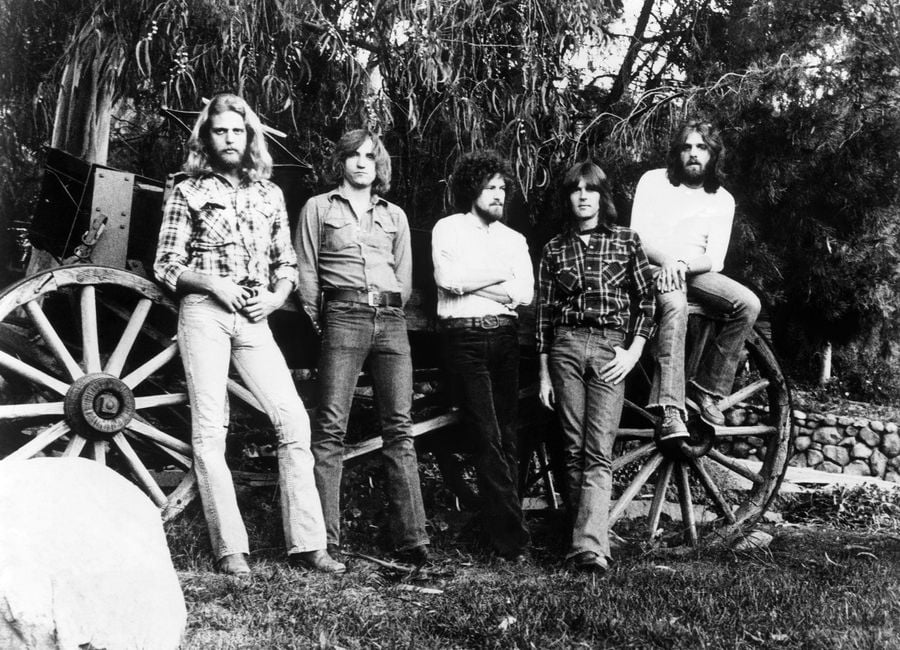
The Eagles, or Eagles, were a band of no distinctive frontman, although drummer Don Henley tended to sing the singles or shimmering stage anthems. Elsewhere, Glenn Frey created a counter harmony that was as powerful, but more lyrical, to the rock-heavy voice Henley held.
Where they were strong was from their roots to the decade in question, and the band boasted a certain flavour none of their imitators could replicate. And neither could they, seeing what ultimately resulted in the risible Long Road Out of Eden. But they did have six strong albums that have stood up with the best of the decade.
Ranking The Eagles albums from worst to best
7. Long Road Out of Eden (2007)
The Eagles were the quintessential 1970s rock band, so it was right for them to call time on their career when the decade ended. So, it’s no surprise that the only disappointing album in their career was recorded decades after the one they seamlessly conquered. Nothing within the album sounds as rich as their first two records, and although the production techniques paper some of the cracks, there’s no denying that the lyrics fail to hold up on repeat listens.
The songs feature a collection of dense, deeply put together rockers that stands as a midway point between the sparkily produced pastoral rock numbers of the past, with the slicker, more energised rock outlet of the millennium. The album features a high number of covers, of which Paul Carrack’s ‘I Don’t Want to Hear Any More’ is the most impactful, while J.D.Souther’s ‘How Long’ features one of Henley’s more scintillating falsettos. But the original songs lack the bite of the band’s earlier output, particularly through its lyrics. Tellingly, the best of the originals is ‘I Dreamed There Was No War’, an incendiary instrumental dizzying hooks and angular melodies.

6. On the Border (1974)
Three albums into their career, and the band most likely to topple The Beatles for ingenuity were starting to stumble. It doesn’t help that nobody had a clear vision for the album, with producer Glyn Johns favouring a more country tinted record, and the band shifting towards a harder sounding format. Guitarist Glenn Frey felt unhappy with Johns “no-drugs” rule, and the album flits between two disparate genres, un-eager to jump into either pot with any deep conviction.
As it happens, the album comes out fairly well- bolstered by Don Felder’s guitar on ‘Already Gone’ – but there’s a lack of identity to it that’s pretty damn apparent from the get-go. Bassist Randy Meisner sings ‘Is It True?’, and does so fairly nicely too. The vocals are lit with a certain jagged quality that comes from years of touring and rehearsing, and the band- particularly Henley – sound prepped for the challenge. Henley’s strongest vocal can be heard on ‘Best of My Love’, co-written by Frey and J.D.Souther.
More happily, the album stands as a midway point between the ragged textures of Desperado, and the turbo-charged guitar instrumentals on Hotel California.

5. The Long Run (1979)
The title track was written by drummer Don Henley as a response to the critics who thought the band were past in the wake of disco and punk and reflects the entire record. Considering the lyrics, “Who is gonna make it/ We’ll find out in the long run,” the band were undergoing great change at this juncture in their personal lives. The band decided to channel this sense of displacement on their sixth album, the band’s last before they broke up in 1980. It might be the band’s darkest work, replacing levity with a lingering sense of despair. Even something as docile as ‘Heartache Tonight’ betrays a sense of anger at the world at large.
Anger regularly translates into terrific art, see Plastic Ono Band, but it didn’t necessarily suit Eagles, whose best work recalled the shimmering tales of America past. The band were growing detached from their roots, which explains why ‘In The City’ and ‘I Can’t Tell You Why’ carry a commitment to the change in tone that the music industry was undergoing. The deliciously perverse ‘The Disco Strangler’ carries a warning to the temporary fads that were entertaining listeners on a momentary basis. Would it last for long?

4. One of These Nights (1975)
The album features Glenn Frey’s favourite Eagles track. “We had Don Henley’s voice, which allowed us to go in a more soulful direction, which made me exceedingly happy,” Frey recalled. “We made a quantum leap with ‘One Of These Nights.’It was a breakthrough song. It is my favourite Eagles record. If I ever had to pick one, it wouldn’t be ‘Hotel California’; it wouldn’t be ‘Take It Easy.’ For me, it would be ‘One Of These Nights.'” He’s right to single out the tune, given its complexity, shadings and differences in tone and texture. It’s certainly the band’s most inventive affair, deviating between genres within a matter of seconds of one another.
‘One Of These Nights’ is the undisputed highlight, but there’s a great deal of contrast heard throughout the album, flitting from rollicking guitar-heavy fodder, to more cerebral, waltz-like material. The songs showed an emotional spark that cemented the album, creating a new type of spark and sincerity. ‘Lyin’ Eyes’ is a bit of a misfire, but ‘After the Thrill is Gone’ holds great resonance, as does ‘Hollywood Waltz’, showing the band’s adherence to stranger, more complicated forms of music. Hotel California was in their grasp.

3. Desperado (1973)
There’s a humble beauty to the band’s sophomore effort. From the sparsely lit ‘Tequila Sunrise’ to the ornate brilliance of the title track, there’s something tangible to the album. It’s not surprising that many consider it to be the band’s finest hour, and although it lacks the spontaneity of their debut, it did show that the band were growing as artists.
‘Doolin-Dalton’ had some degree of sonic invention, lovingly replayed as an instrumental, and ‘Outlaw Man’ holds stronger elements still, creating a more fiery form of music, equating the pertinence of the moment, for a more pastoral form of music. The album also held a more immediate change on the band, bringing its two most accomplished singers together as one voice.
“Glenn came over to write one day, and I showed him this unfinished tune that I had been holding for so many years, ” Henley recalled. “I said, ‘When I play it and sing it, I think of Ray Charles – Ray Charles and Stephen Foster. It’s really a Southern gothic thing, but we can easily make it more Western.’ Glenn leapt right on it – filled in the blanks and brought structure. And that was the beginning of our songwriting partnership – that’s when we became a team.”

2. Hotel California (1976)
Yes, yes, we hear you now. There is a reason why Hotel California has lingered on in the public’s imagination, long after it left the realms of imagination, but there’s something more complete about the band’s debut. Indeed, their debut makes the better listening experience, while Hotel California is their most impressive work as a whole. It’s like comparing The Godfather to The Godfather Part II, invariably the first entry is going to win out, no matter how tightly coiled the later work is.
Such is the way of life, and such is the way of things, but Hotel California is very, very good still. The title track features a startling guitar coda, putting the emphasis on the tremolo hooks that close out the track with gusto and good form.
Then there’s ‘New Kid In Town’, a jaunty keyboard heavy track, exhibiting some of the band’s most forlorn work, as well as ‘Life In The Fast Lane’, curating a band in the midst of great creative upheaval. What it held was some of the best examples of lyric writing, particularly evident during the album’s cinematic closer, ‘The Last Resort’. Awash in strings and orchestral flourishes, the song closes the album out on a bang.

1. Eagles (1972)
The greatest American album recorded in England? No matter that the album was mostly recorded and completed in London, the band were writing about their lives across the Irish sea, demonstrating a camaraderie with the world at large.
The music was gripping,and the vocalists- particularly Glenn Frey – showcase a liveliness they would struggle to re-capture on future albums. There’s the punchy ‘Take It Easy’, all guitar hooks and desert emblems, coming together as one feistily produced whole. The songs were written as if ready to be performed onstage, and it’s virtually a live album in all but name.
Such is the way of the game, the album proved the band’s template from which they could either honour or reject.And the band would continue to furnish their career, to varying degrees of success, but their first album is the work people tend to associate the band with. From ‘Witchy Woman’ to ‘Tryin”, the songs show the band playing as if everything, including their souls, depended on the finished results.
The band were growing more confident as producers and arrangers, culminating in a setlist that worked both inside and outside of the studios. It still sounds fresh.

