


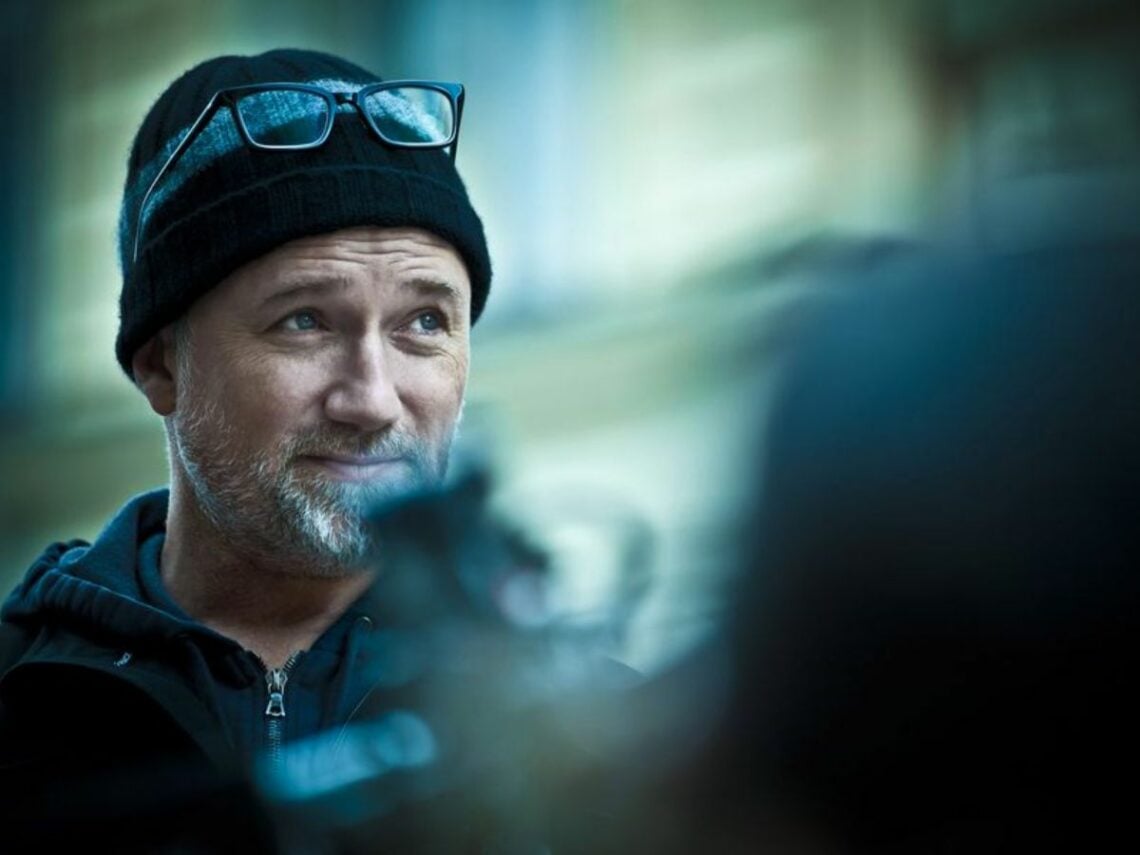
Ranking David Fincher’s book-to-movie adaptations

David Fincher is the modern master of the thriller. His style is relentlessly precise, dark and desaturated to match the stories and characters he depicts. Thematically, Fincher’s filmography focuses on obsession and isolation through the lens of unhinged, outsider characters, from Tyler Durden to Amy Dunne.
Many have come to associate Fincher with the modern thriller, and rightfully so, but the director also seems preoccupied with the art of adaptation. Of his 11 feature films, six of them have been adapted from a literary work of some kind – whether short stories, non-fiction, or novels.
Fincher’s interest in literary adaptation began in 1999 with cult favourite Fight Club, which was adapted from the book of the same name by Chuck Palahniuk. Since then, he has honed his process of adaptation through the likes of Gone Girl and The Social Network, creating sleek on-screen depictions of existing stories. He remains concise while maintaining a level of care for his source material.
Over two decades later, his films continue to adapt from literary works – his upcoming feature, The Killer, will see him delve into graphic novel adaptation for the first time. Ahead of the release of Fincher’s latest adaptive offering on Friday, October 27th, we’re taking a look back through his filmography to rank his book to film adaptations from worst to best.
David Fincher’s adaptations ranked:
6. The Curious Case of Benjamin Button
In 2008, David Fincher borrowed from beloved 1920s author F. Scott Fitzgerald to bring The Curious Case of Benjamin Button to screens. Starring Brad Pitt, Cate Blanchett, Taraji P. Henson and Mahwershala Ali, the film went on to become one of Fincher’s most critically acclaimed – it received 13 Oscar nominations at the Academy Awards ceremony in 2009.
Though critics and crowds commended the fantastical story of Benjamin Button, the film ranks as the worst of Fincher’s literary adaptations. It’s one of the director’s only efforts in which you can’t feel his presence at the helm of it. Between warm, vintage camera flashbacks, an elderly infant Brad Pitt, and a lengthy runtime, Benjamin Button is a stark contrast from Fincher’s usual output.
The Curious Case of Benjamin Button may have been well-loved by the Academy, but it lacks the uneasy atmosphere and perfect pacing that usually characterises Fincher’s filmmaking.
5. The Girl with the Dragon Tattoo
The Girl with the Dragon Tattoo was based on a novel of the same name by Stieg Larsson. The book was first released posthumously in 2005 before being published in English in 2008. Just three years later, Fincher adapted the story of Lisbeth Salander, the girl with the dragon tattoo, to the big screen.
The film starred Daniel Craig and Rooney Mara and was met with rave reviews, even obtaining an Academy Award for ‘Best Film Editing’. With perfect casting in Mara, The Girl with the Dragon Tattoo is one of Fincher’s most faithful adaptations while still retaining his characteristic filmmaking style. It’s a triumph, but it’s just not quite as memorable or engaging as some of his other adaptations.
4. Zodiac
In 2007, Fincher tried his hand at adapting non-fiction for the first time with Zodiac. Based on two books by Robert Graysmith, played by Jake Gyllenhaal, the film followed the real-life murders committed by the Zodiac Killer in San Francisco, California, in the 1960s and 1970s. With a star-studded cast featuring Robert Downey Jr, Mark Ruffalo, and Brian Cox, Zodiac just misses out on Fincher’s top three book-to-movie adaptations.
Though the film certainly feels its runtime, which comes in at almost two hours and 40 minutes, it retains your engagement the entire time. From beautiful cinematography that effortlessly imitates the 1970s to complex performances from the film’s leads, Zodiac is masterfully executed. It’s the perfect real-life story for Fincher’s filmmaking style.
3. Fight Club
Despite a mixed initial reception, the gloomy, anti-capitalist Fight Club has come to be a defining cult classic. Fincher’s take on Chuck Palahniuk’s novel of the same name has been lauded by Letterboxd fanatics and favoured by film bros for years now – Tyler Durden has almost become a household name.
The film was faithful to Palahniuk’s story, though it censored some of the novel’s more outrageous moments. Nonetheless, the film version of Fight Club adapted Palahniuk’s story with cleverly placed visual clues to Tyler’s identity and strategic use of voiceovers to replicate the novel’s unreliable first-person narration. It’s a carefully crafted and considered adaptation, but it’s also an iconic film in its own right, with invisible CGI and beautifully memorable shots.
Fincher’s Fight Club only elevates the story’s criticism of capitalism and modern masculinity in a wildly entertaining film. It’s impressive that he mastered the art of adaptation so early in his career.
2. Gone Girl
In 2014, Fincher brought the iconic Amy Dunne to our screens with his take on Gillian Flynn’s psychological thriller Gone Girl. Following the investigation of her disappearance, the film features a stunning performance from Rosamund Pike, who takes on the role of the eponymous ‘gone girl’.
It’s an effortlessly sleek film which uses voiceover diary entries to mimic Flynn’s first-person narrator. For the film, Fincher worked in close collaboration with Flynn, who adapted the screenplay herself, to ensure that he followed the original vision for the story. As a result, the film enhances Amy Dunne’s unwavering brutality and Flynn’s themes of facade and betrayal.
As a result of its smooth storytelling, captivating cast, and tense atmosphere, the film claimed the title of Fincher’s highest-grossing picture.
1. The Social Network
The Social Network is an adaptation of the story of Mark Zuckerberg’s creation of Facebook and the resulting breakdown of his friendship with Eduardo Savern. However, more specifically, it is based on Ben Mezrich’s book, The Accidental Billionaires. Like Zodiac, it saw Fincher venture into real-life adaptation, putting actual people on screen as characters.
With assistance from Aaron Sorkin’s distinctive screenwriting, Fincher elevated the story of Facebook to be far more than boring boardroom conversations and squabbles between college students. Sorkin and Fincher didn’t look to tell the story as accurately as possible, charting each development of Facebook. Instead, they told the tender story of a breakdown of a friendship, elevated by Jesse Eisenberg’s cold performance as Zuckerberg and Andrew Garfield’s emotional Saverin.
Combining witty dialogue, a magnetic score from Trent Reznor and Atticus Ross, and Fincher’s precise filmmaking, The Social Network is Fincher’s greatest book-to-movie adaptation yet.
