


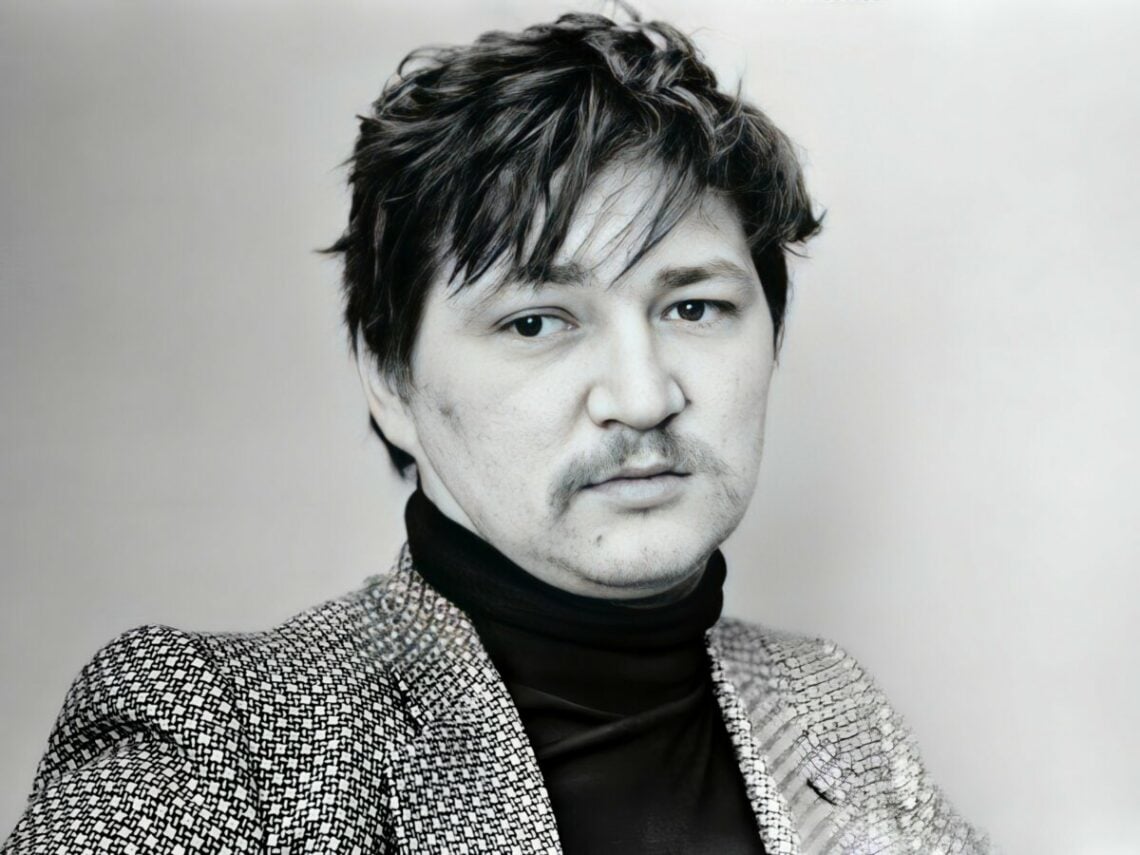
Hanna Schygulla: How Rainer Werner Fassbinder’s favourite actor “survived” his abuse

The cinematic works of Rainer Werner Fassbinder are some of the most critically admired to have come out of the New German Cinema movement of the 1970s. His films and TV shows often explored the consequence of Nazi Germany and combined a Hollywood dramatic narrative with experimental production techniques.
However, there were many controversies surrounding Fassbinder despite his critical admiration. He was constantly in the German news for making provocative claims during interviews, and it was only after the director began to be well-received internationally that German critics paid him any notice.
The films themselves were also the target of criticism, and many allegations of obscenity came Fassbinder’s way. His films depicting women were often said to be misogynistic in tone and topic, while others were considered homophobic, even though Fassbinder himself was known to have relationships with both men and women.
Fassbinder’s personal life and his approach to directing were also known to have caused a stir, and he was said to be rather manipulative of any person entering his creative world. However, one person that was frequently wrapped up in the chaos of Fassbinder – and yet escaped without being emotionally abused – was his muse, the actor Hanna Schygulla, who offered her talents to 23 of his films and TV shows.
In a 2017 interview with The Guardian, Schygulla referred to herself as a “survivor” of Fassbinder. Fassbinder himself had once written of the actor, “It suddenly became crystal clear to me that Hanna Schygulla would one day be the star of my films. Maybe even something like their driving force.”
Schygulla noted that Fassbinder would threaten and intimidate a number of his cast and crew members, but fortunately, she would not fall victim to such behaviour. “He didn’t torture me,” she said. “He knew he could only get things from me if he made me feel he liked what I was doing.”
Others were not so lucky. He manipulated Gunther Kaufmann, who starred in his 1971 film Whity, into sleeping with him, threatening to slit his wrists if he didn’t. Cinematographer Michael Ballhaus was often a target of Fassbinder’s fury, and on Whity, the director used to drink nine rum and cokes and then throw a tenth at Ballhaus.
“Working with [Fassbinder] was hard, both mentally and physically,” Ballhaus once noted. “He used to emotionally abuse me and also my wife, who was an art director on a few of his movies. I never understood his behaviour, but I learned so much from him.”
The torturous behaviour of Fassbinder sadly did not end there, however. The actor Irm Hermann, who also worked with the director often throughout her career, tried to take her own life several times. One occasion saw Hermann threaten to jump out a window, to which Fassbinder coolly stated, “Go ahead”. He later told her he would have sex with her if she would renounce her vegetarianism and eat a steak. She obliged but then threw the meat back up.
For Schygulla, there was an element of guilt over the fact that she seemed to be treated better than the others around her. “It was painful to watch,” she said. “I looked away a lot”. She then noted that it was rare for Fassbinder’s actors to come together in union against his actions. “No one ever said, ‘Stop this behaviour, or we’ll quit.’ It was like being in a laboratory that was set up to discover what man is like under pressure,” she said.
Eventually, Schygulla and Fassbinder’s other actors would be freed from working for him when he died in 1982 from an overdose of cocaine and barbiturates. He was undoubtedly a terrible director to work for, but his approach to filmmaking will likely be critically admired for generations to come.
Perhaps this passage for Schygulla sums up Fassbinder perfectly: “He never explained anything, and his direction was never psychological. He was more like a choreographer. There were precise gestures and movements he would get us to do. If you were a little strained and not totally into it, he would like that because it seemed you were living a life in which you were not comfortable; it was not really yours. That’s how he felt.”
