


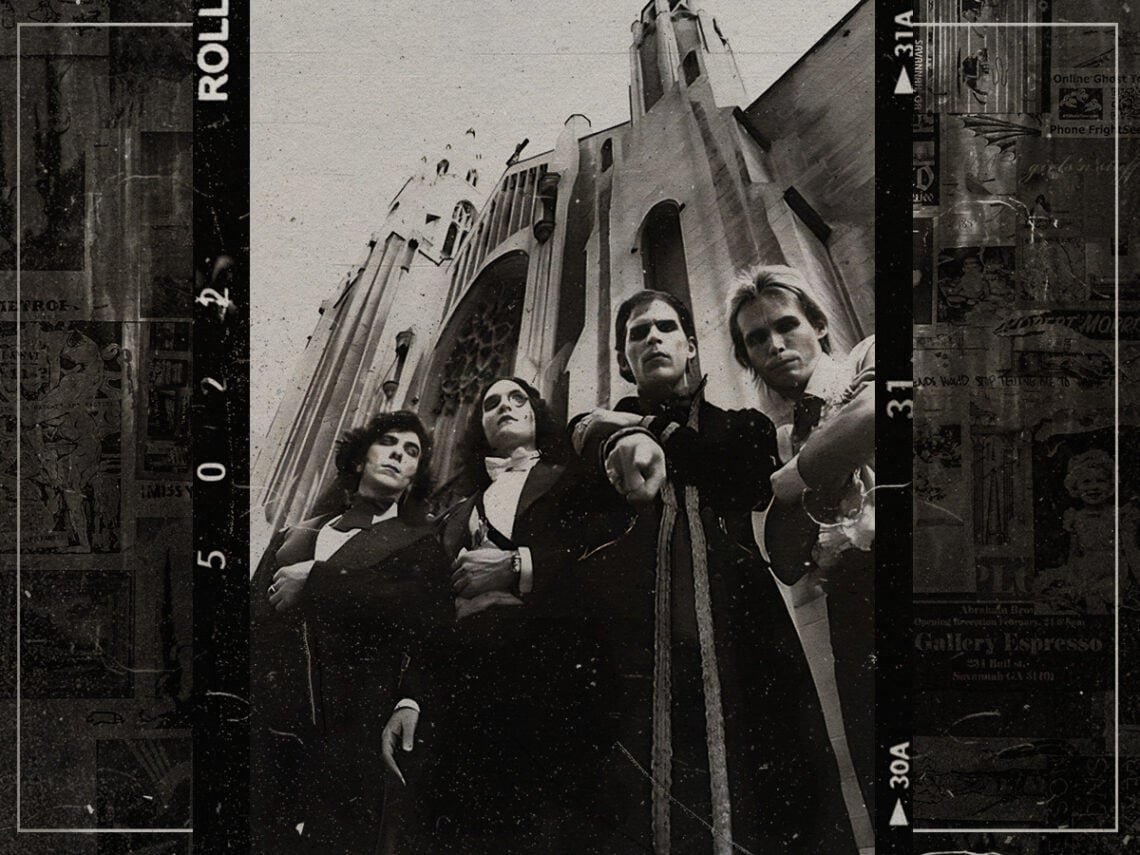
Radio Werewolf: “The most dangerous band in the world”

Imagine being ranked highly as one of the most satanic bands in the punk landscape, considered by many as one of the weirdest groups of all time. Well, Radio Werewolf are just that, once dubbed “the most dangerous band in the world”.
Founded in Los Angeles in the 1980s, the band was led by Nikolas Schreck and would have a rotating cast of musicians coming in and out as the group bounced from one controversy to another. It’s difficult to even describe their sound. As early pioneers of post-punk, they mixed together the darkness of what was known as gothic music with the haziness of dream pop to create a song that was wholly unique and highly divisive.
The band themselves proclaimed that their music was part of a purist movement designed to evoke feelings of power and harmony through the use of the “dominant frequency”. Their live performances immediately gained attention and shock due to their controversial, ritualistic style. More akin to theatre than a gig, they called their shows Radio Werewolf Youth Rallies, playing at iconic venues like The Whisky a Go Go and The Roxy.
With their style, lyrical content and crazy live shows, it didn’t take long for people to start paying attention to Radio Werewolf, being hit almost immediately with outrage. The band would go on to admit that they were always more of a theatre trope than a musical outfit, primarily interested in using historical events and controversial figures to evoke feelings, even the negative kind. They sang songs about serial killer John Wayne Gacy, about incubuses, tracks supporting vampirism and beyond. Critics piped up quickly, claiming their lyrical content condoned necrophilia and might actually turn teenagers into literal, bloodsucking vampires.
That’s not even the worst of it. The controversy following Radio Werewolf majorly stepped up when they started playing songs about Naziism and national socialism. While the band’s motivation was to mock the movement, playing over-the-top oom-pah instrumentals and exaggerated marching drums, their sarcasm didn’t always translate.
Their most infamous track, ‘Triumph Of The Will’, takes its name from a Nazi propaganda song, with the band singing, “Eva, oh Eva, come sit on my face; Berlin is burning, and we are the master race,” from the perspective of an ageing Nazi reflecting on the regime. To Radio Werewolf, this was dark humour. But to the public, it was disgusting.
By the late 1980s, the band were everywhere as the face of conservatives fear for the youth of the time. They were constantly talked about on TV shows and in the media, believed to be heading up a kind of worldwide satanic movement. They bought into the controversy, even collaborating with the Church Of Satan. To the mainstream media, Radio Werewolf was evil and deeply dangerous, posing a real threat to America and beyond. But the band maintains that it was all just jokes.
In 2011, Schreck set the record straight when he said, “black humour, sarcasm, and irony were always essential to the Radio Werewolf experience.” However, the misunderstanding of Radio Werewolf’s dark comedy led to their demise. Unless the sarcasm is read, you can easily see how their lyrical content could be perceived as supporting far-right ideology. In the end, this frustration led one member, Evil Wilhelm, to quit the band as he felt their music was being misunderstood by Nazi groups.
Despite the band’s high notoriety in the 1980s, the early music that fostered the controversy is hard to find. Although the original band recorded an album back in the 1980s, it was never officially released, only spread through bootlegging as fans tried to get their hands on it. Trying to hear the band that America believed were highly dangerous, spreading satanism to the youth, Radio Werewolf’s controversy made them a cultural phenomenon.
