


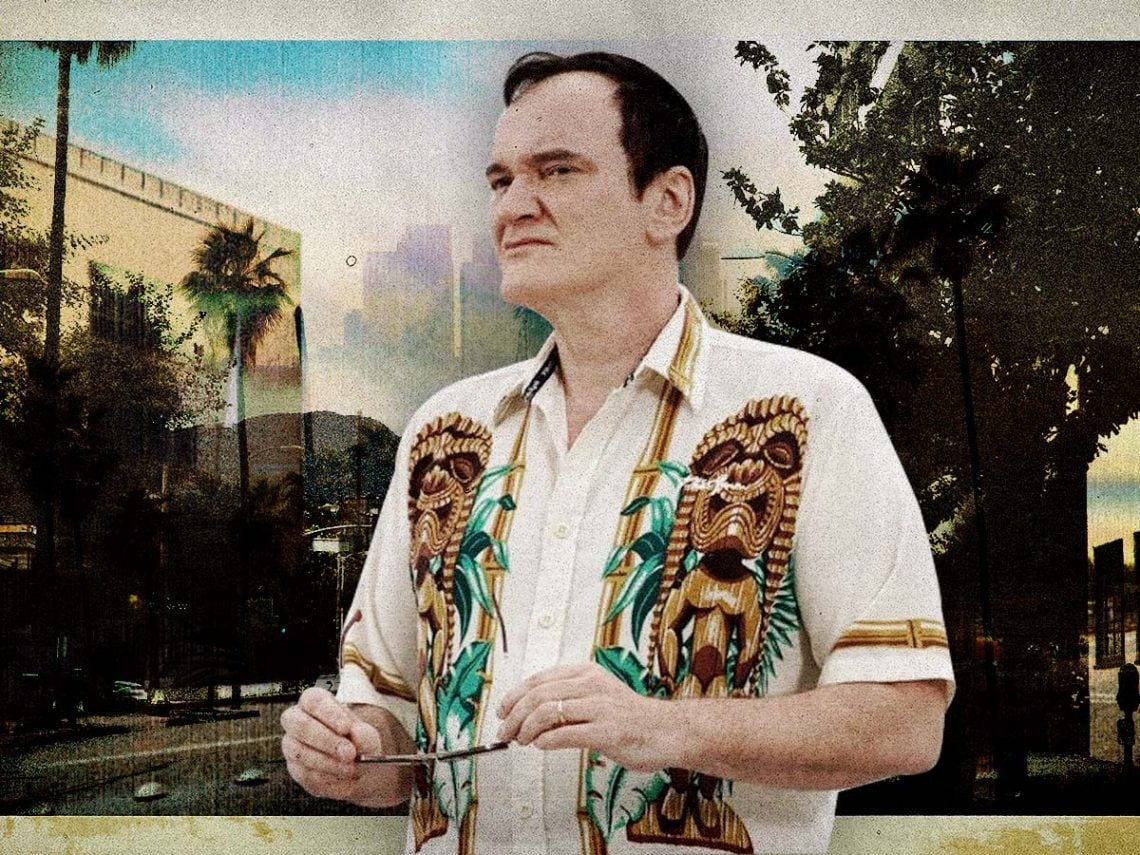
Why Quentin Tarantino is embarrassed by his screenplays

“When I’m writing,” Quentin Tarantino says, “it’s about the page.” He approaches his screenplays as though they were literary works of conventional fiction, so much so, in fact, that he even writes backstories for characters that will never see the light of day just to provide depth for the actors to draw on. He takes the writing so seriously that he opines: “If I do my job right, by the end of the script, I should be having the thought, ‘Y’know, if I was just to publish this now and not make it, I’m done. I’ve done it. I could actually be okay with just saying, ‘That’s it’.”
With Once Upon a Time in Hollywood, he half realised this fantasy by turning the screenplay subsequently into his first literary novel. The book was everything we have come to expect from Tarantino. As is often the case when famous writers transition to literature, it was impossible to divorce his personality from the page. With Tarantino, however, this was unapologetically so—three-page musings on the history of cinema supposedly taking place in the mind of the main character were really just vessels for the director to seep into the mind of one of his creations.
In essence, although his screenplays might be as bombastic as bank heists and reimagined history, they are, in their own way, deeply personal. Hell, he even manages to squeeze his patently obvious foot fetish into each of them. This was a truth that he was happy to divulge in conversation with Charlie Rose when discussing the art of the screenplay.
“To me, all the movies are very personal when I look at them,” he said. “Now, I don’t mean that I’m some crook, but what I mean is like this group of friends will look at it and go, ‘Oh Quentin, I can’t believe you talked about that.’ This old girlfriend will go, ‘Oh Jeez, Quentin.’ You should be semi-embarrassed about certain people seeing your movie when you’re finished if you are working on a personal level.”
In other words, Tarantino’s old school chum who doesn’t believe in tipping was left red-faced when a drunken discussion wound up in Reservoir Dogs, and his ex-girlfriend who tried to get him to shut up for a second recognised herself in the Pulp Fiction moment where the ability to “shut the fuck up for a minute” was lauded with relieved praise.
These little personal moments fill Tarantino’s films with a sense of depth. After all, if you placed plots like Inglorious Basterds or Django Unchained in the wrong hands then they could come across as pretty hammy, but Tarantino embellishes them with a wealth of literary weight. It is a hefty dollop of nuance that comes from his own life experience and while this might induce embarrassing moments, as far as he is concerned, if you’re not left blushing by your own screenplay then it isn’t worth its salt. “I don’t want to make that blanket a statement,” he says, “but I guess for me, [the work isn’t authentic if you’re not embarrassed by it], yeah.”
This embarrassment, he believes, is a sign that you have put a piece of individualism in the film. “You should have this little voice inside you saying, ‘Tell the truth, tell the truth, tell the truth’. Reveal a few secrets in here.” The truth for Tarantino is his life experience, “that’s the truth as I know it,” he says. That is the undeniable triumph of Tarantino—there is no doubt that he puts a portion of himself up on screen, even without the cameos, because if the credits were hidden from you, you’d still be able to spot a new Tarantino picture from a mile off.

Never Miss A Take
The Far Out Quentin Tarantino Newsletter
All the latest Quentin Tarantino content from the independent voice of culture.
Straight to your inbox.