


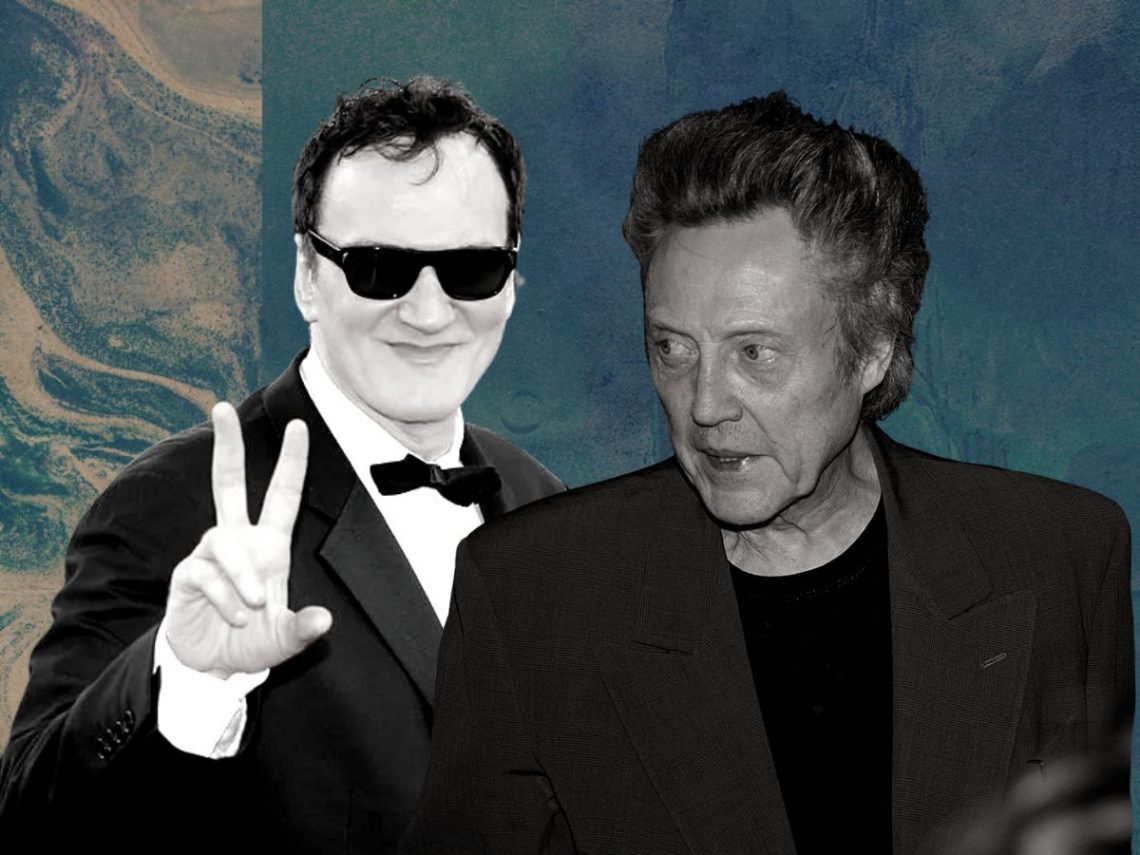
Why Quentin Tarantino was “embarrassed” by Christopher Walken

Quentin Tarantino and Christopher Walken, as with most figures in the film industry, have collaborated more than once throughout their careers.
True Romance is a 1993 American romantic crime film directed by Tony Scott and written by Tarantino. It stars Christian Slater and Patricia Arquette, with Dennis Hopper, Val Kilmer, Gary Oldman, Brad Pitt, and Christopher Walken in supporting roles. Tarantino’s story follows a pair of newlyweds who spend their first days as a married couple running from the Mafia after stealing drugs.
The film started as an early script by Tarantino, following the success of his directorial debut, Reservoir Dogs (1992). It is perceived as showcasing several of what would later become Tarantino’s artistic trademarks, such as a Southern California setting, pop cultural references, and stylised violence, all accentuated by Scott’s own distinct directing style.
Despite an initial failure at the box office, True Romance has been re-assessed to the point of gaining cult classic status and is also regarded as one of the best American films of the 1990s.
In 1994, Tarantino released what is arguably his most iconic film, Pulp Fiction, starring Samuel L.Jackson, John Travolta and Uma Thurman. In the film, Walken also makes an appearance as Captain Koons, a USAF veteran of the Vietnam War who gives a young boy his father’s coveted gold watch. Tarantino wrote Pulp Fiction in 1992 and 1993, incorporating scenes originally written for True Romance.
The Kill Bill director has spoken on his first time working with Batman Returns actor Walken, specifying a moment of filming that left him feeling ’embarrassed’. While commenting on the work put into True Romance, Tarantino praised Walken’s skills as an actor, as demonstrated in the famous “Sicilian Speech Scene”, where he converses with Dennis Hopper’s character.
The scene involves an intimidating and sinister Walken interrogating a beaten Hopper in a push and pull of power. Going into detail about why he felt embarrassed, Tarantino sets the scene with how “aside from [a little bit of improv], everything they said in the scene was scripted – so much so that Christopher Walken has so much dialogue in this.” He follows this by sharing how Walken prioritised the material given as many great actors do: “he memorised every line — every single little tiny word he said, and he said perfectly.”
Tarantino describes the moment as “I almost got embarrassed the first time I saw the scene”. This is due to how it played out as a pivotal moment for Tarantino as a film writer, seeing the words he put onto paper be brought to life for the big screen by such a talented actor.
The director expresses his emotional state: “it was almost intimidating that such a terrific actor would take my work so seriously”. This showcases Tarantino as bashful during his early days as a filmmaker, feeling moved by his art being engaged with so effectively and seriously.
He also specifies how Walken emphasised just how seriously he took Tarantino as a screenwriter. Tarantino was intimidated by how Walken, as an actor, “never made up anything” when performing Tarantino’s writing, instead executing every line he created.
It was a life-changing sight for Tarantino, for an actor to take his work and “never smooth out everything, just say every…” word he wrote. The director summarises the event with a sense of feeling so honoured by Walken’s commitment: “he did them all, and it was quite terrific.”
Watch the combination of Tarantino’s skilled character writing and Walken’s distinct trademarks as an actor below.

Never Miss A Take
The Far Out Quentin Tarantino Newsletter
All the latest Quentin Tarantino content from the independent voice of culture.
Straight to your inbox.