


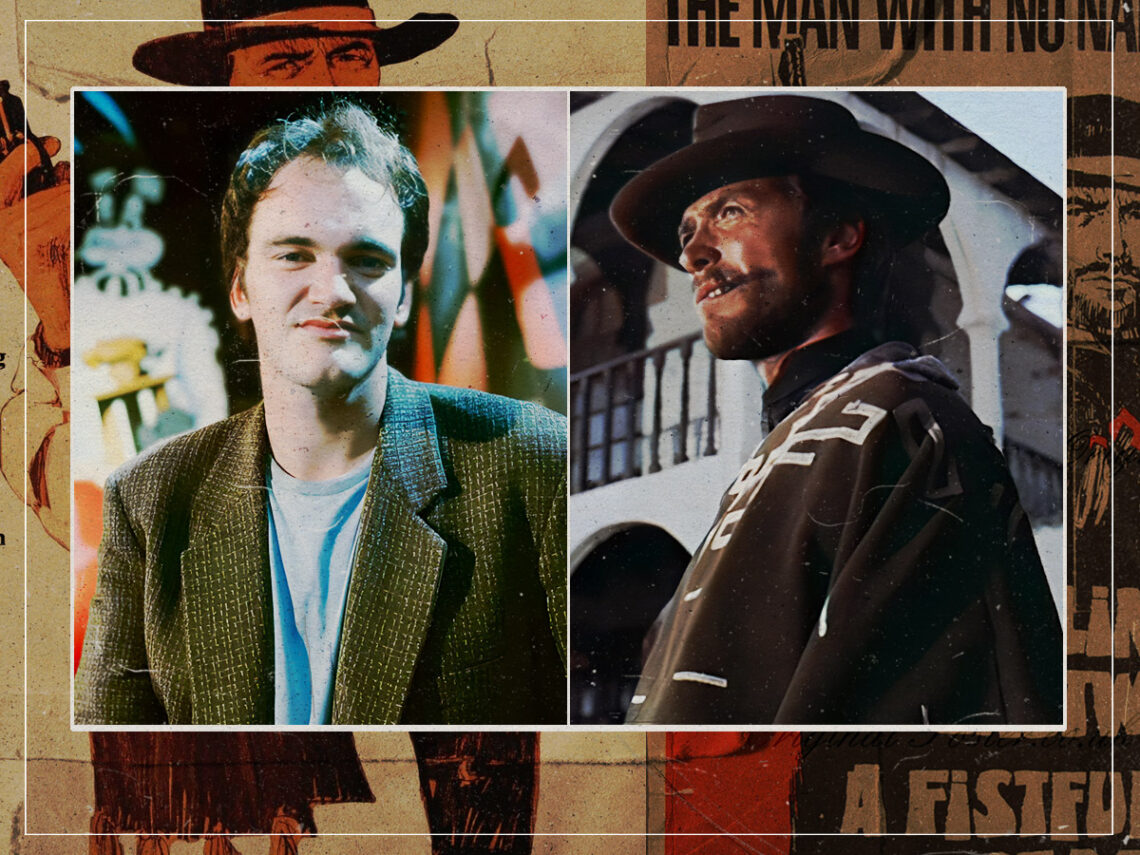
Quentin Tarantino on how Clint Eastwood changed cinema

Given his well-known fondness for the genre, it was inevitable that when Quentin Tarantino finally dipped his toes into the waters of the western, his influences would be clear for everyone to see.
Django Unchained has Sergio Leone’s fingerprints all over it. He even cast Franco Nero – the star of 1966’s Django – in a small role, with Sergio Corbucci, another titan of the medium that Tarantino repeatedly nodded towards. That’s to say nothing of the legendary Ennio Morricone being drafted in to compose the score for The Hateful Eight.
Of course, when Leone and Morricone go, Clint Eastwood is never too far behind. Their collaborations helped redefine and reinvent what the western could be in the late 1960s, something that was never going to be lost on a cinephile like Tarantino.
“A Fistful of Dollars is one of the greatest auteur pieces of all time, but one of the things that makes the film so great is that you have to sing the praises of Clint Eastwood,” he said. “The way we think of the western icon that Clint Eastwood has become for 50 years straight to today started 50 years ago with this movie.”
When pressed to name the single most recognisable, towering, and monolithic on-camera presence in the history of the western, the majority of people would name either Eastwood or John Wayne. For Tarantino, though, it was the former who stands tallest for the way in which he didn’t just change the concept of what a hero could be but the way in which he altered the perception of an entire genre.
“You need no more proof than to watch his big introduction scene,” he continued. “When he kills Baxter’s men right at the beginning with one of the coolest, badass fucking speeches in the history of action cinema.” From Tarantino’s perspective, “That is why a hero was born that day.”
It also helped that he was the personification of the ‘men want to be him, women want to be with him’ mantra, too, as the two-time Academy Award winner helpfully outlined. “He was one of the sexiest motherfuckers,” he noted. “During this time, western heroes weren’t sexy. They didn’t look cool. They looked badass, and they looked tough, and they looked heroic, but they didn’t look cool. They didn’t look sexy.”
Eastwood’s smouldering charisma ushered in a new era for the cinematic action hero, and it was an impact that was felt well beyond the confines of the western for decades to come.

Never Miss A Take
The Far Out Quentin Tarantino Newsletter
All the latest Quentin Tarantino content from the independent voice of culture.
Straight to your inbox.