


Quentin Tarantino calls out Columbia Pictures for ‘Taxi Driver’ race change

Director Quentin Tarantino has spent the last few days giving out his strong-minded outlooks and reactions to numerous events in the film industry.
The Pulp Fiction director has recently released a book titled Cinema Speculation, where he voices his opinions to readers. In one chapter of the book, he takes the time to discuss and reflect on fellow film auteur Martin Scorsese, directly referring to his 1976 film Taxi Driver.
Taxi Driver is a gritty psychological character study on Travis Bickle, played brilliantly by Robert De Niro in one of western film’s greatest performances. Tarantino acknowledges this strength of the film and states that he perceives Taxi Driver and Bickle’s character as “the greatest first-person character study ever committed to film”.
However, Tarantino implies some objective thinking towards the film that proposes a negative to counteract its many positives. He references how “the film makes it obvious he [Bickle] sees black males as figures of malevolent criminality” when further analysing De Niro’s character, who is a racist.
“He’s repelled by any contact with them. They are to be feared or at the very least avoided” the director explains, “and since we watch the film from Travis’ point of view, we do as well.” So what exactly is Tarantino getting at here?
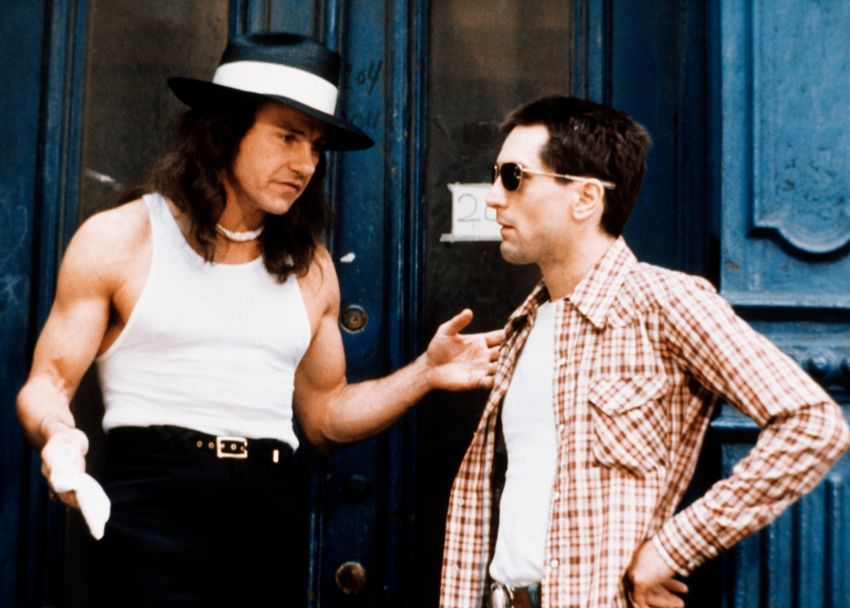
Well, he believes that this whole addition to the film is compromised when we meet the character Sport, a pimp played by Harvey Keitel, a white man even though this wasn’t the original plan. Tarantino calls out the fact screenwriter Paul Schrader was “asked by the producers and Columbia Pictures to change the character of Sport from black to white because the race riots a few years earlier still cast a long shadow.”
These race riots in question were the 1970 Asbury Park race riots that took place following a major civil disturbance in New Jersey between July 4th and July 10th, 1970. The seven days of rioting, looting, and destruction left more than 180 people injured, including 15 New Jersey state troopers, and resulted in an estimated $5,600,000 in damages.
Drawing from this, Tarantino asks his readers: “Is it possible Columbia could be timid about a provocative film like Taxi Driver?” He then compares his experience with filmmaking and race: “Hell yeah, over thirty years later, Columbia Pictures was timid as hell about the reaction to Django Unchained.”
The director then seeks conclusions to this change in casting using identity politics in film audiences and film producers. He asks, “and who couldn’t handle that? Black audiences? Or is it more likely that the white folks financing the movie were the ones made to feel uncomfortable by the imagery in Schrader’s original script?”
He elaborates on this statement by wondering if white financiers were “so uncomfortable that a fear of black males causing violence in cinemas was conveniently trotted out as an excuse to change Schrader’s Sport from black to white?”
Tarantino then eventually gets to the director himself. Whilst he doesn’t directly blame Scorsese for this, he does exemplify some accountability towards him. To Tarantino, “Scorsese, and producers Michael and Julia Phillips, and Columbia Pictures changing the pimp character of Sport from black to white was a societal compromise.”

Never Miss A Take
The Far Out Quentin Tarantino Newsletter
All the latest Quentin Tarantino content from the independent voice of culture.
Straight to your inbox.