


Quarteto Em Cy: How Brazil’s greatest girl group revolutionised bossa nova

It is difficult, if not impossible, to overstate the importance of bossa nova on the cultural landscape of Brazil.
When it first emerged towards the tail-end of the 1950s, born from a blending of traditional samba grooves and laid-back jazz rhythms, the revolutionary style not only provided the South American nation with its own distinct musical identity, but with a means of cultural rebellion, too.
Bossa music, as the years went by, splintered off into varying different subsections, ranging in quality from the Dylan-esque activism of Chico Buarque to the overwhelming torrent of tourist-focused bossa nova which emerged from various copycat artists in the Western world. On the whole, though, the bossa landscape was almost entirely dominated by male artists, and the few female artists to establish themselves – Rosinha de Valença being a key example – were rarely taken seriously by the musical masses.
Zooming out, that fact should not come as much of a surprise. After all, the music industry has always tended to platform male artists over their female counterparts and, particularly under the Brazilian military dictatorship, which came in back in 1964, it was largely thought that music, including bossa nova, was no place for women.
Ultimately, though, that never stopped Quarteto Em Cy; bossa nova heroes and perhaps the greatest girl group that has ever arisen from the golden shores of Brazil.
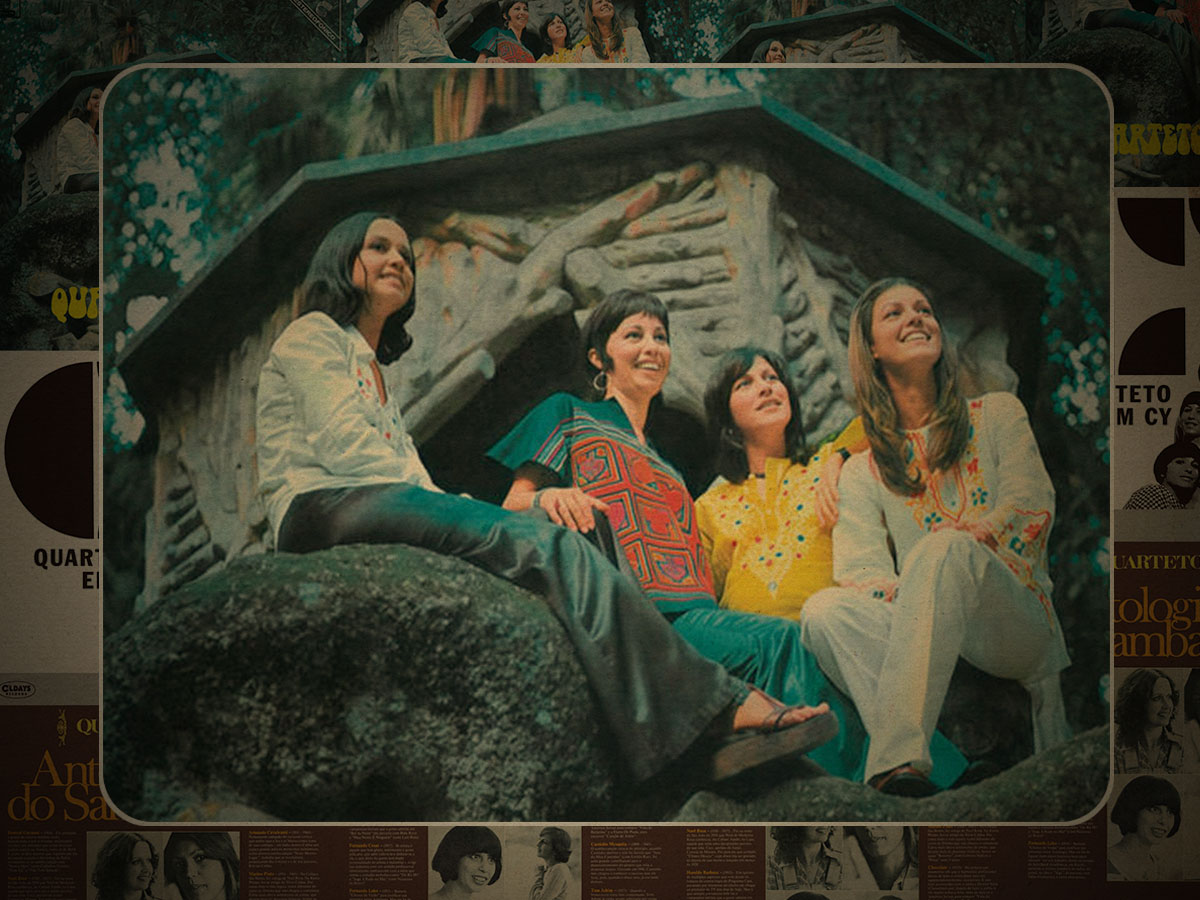
Some 800 miles north of the bossa nova epicentre in Rio De Janeiro, Quarteto Em Cy was formed by four sisters – Cybele, Cylene, Cynara and Cyva – in the town of Ibirataia circa 1959. Within a few short years, though, the group had relocated to that sprawling city of Rio, and it didn’t take long for their music to catch the attention of the city’s bossa scene. Their self-titled debut arrived in 1964, but the group’s sound was already beginning to break away from the music being peddled by everybody else at that time.
If you look back at those early releases, the impact of bossa nova is utterly undeniable, but there is something much deeper to behold, too. While the vast majority of other artists in Rio were still taking advantage of the bossa boom, the girl group were already reaching for a much more expansive, diverse sound, the likes of which would later become known as post-bossa, or MPB.
That progenitive sound is perhaps at its best on the band’s 1972 album, which was one of multiple self-titled records they released over the years. Leaning further into the sonic diversity of MPB, the tracklisting also sees them master the art of tropicália, crafting one of the greatest Brazilian albums of the 1970s in the process.
With the arrangement and guitar stylings of Edú Lobo, one of the brightest stars of the bossa nova age, behind the record, and the songwriting talents of Chico Buarque and Lo Borges, among various others, creeping in over the course of the record, Quarteto Em Cy has a feeling of being a vast collaboration and, as a result, a perfect time capsule of Brazil’s incredible music landscape at that period in time.
Nowadays, original copies of that 1972 album are in short supply, thanks both to being coveted by bossa nova and MPB aficionados all across the globe and to the fact that Quarteto Em Cy’s sonic appeal has never really waned in the decades since they unveiled that masterpiece. In fact, the band are still active to this day, with Cylene being the only remaining original member, and their discography stretching well into the 2000s.
Thankfully, Madrid’s Vampisoul label recently announced that a reissue of that 1972 album is on its way, so there is a chance for it to reach the widespread audience it deserved to amass all those years ago. Either way, Quarteto Em Cy remain an essential chapter in the musical history of Brazil, as well as being a defiant voice for the women of the bossa nova age.
