


Quantum listening in the Faroe Islands: An unparalleled sonic experience

When was the last time you experienced true silence? For most people, the answer to that question is ’never’. After all, absolute silence is virtually impossible to achieve organically. Outside of special facilities or the empty vacuum of outer space, sound is always present in some form, particularly within the modern world. In the cities of the United Kingdom, you are never free from the noises of car horns, diesel engines, or the student population staggering home in the early hours of the morning. According to the celebrated American composer and experimental pioneer Pauline Oliveros, however, all of these sounds are valuable.
As a founding member of the San Francisco Tape Music Center and a lecturer at the University of California, Oliveros was an utterly essential figure in the development of modern experimental and electronic music. Aside from her extensive discography of countless stunning compositions, one of Oliveros’ most valuable contributions to the music world came with her radical concept of ‘deep listening’, which, in turn, gave way to ‘quantum listening’.
In essence, deep listening is the process of affording attention to any and all sounds that you encounter. Not just the sounds of somebody talking to—you or the music you are listening to—but of the faraway sounds that often fly under the radar. Say, for instance, you are standing alone in the countryside, with nobody around for miles. On a surface level, you might not hear anything. If you pay closer attention, however, you will hear the wind in the trees, the sound of grass and mud underfoot, and maybe even the distant bleating of a sheep.
As Oliveros herself describes it, deep listening is “listening in every possible way to everything possible to hear no matter what you are doing.” In her seminal 1999 essay Quantum Listening, she explained, “Such intense listening includes the sounds of daily life, of nature, of one’s own thoughts as well as musical sounds.” Taking this concept even further, the concept of quantum listening encourages you to listen even closer, “listen[ing] to listening”, as the composer put it.
The benefits of quantum listening are myriad, but in my personal experience, it is an incredibly beneficial form of meditation. With that in mind, the idea of removing myself from my usual surroundings in order to experience quantum listening in an entirely separate surrounding and existence has always been enticing. So, when given the opportunity to visit the picturesque landscape of the Faroe Islands, I boarded the plane to Vágar with a copy of Oliveros’ Quantum Listening in my pocket.

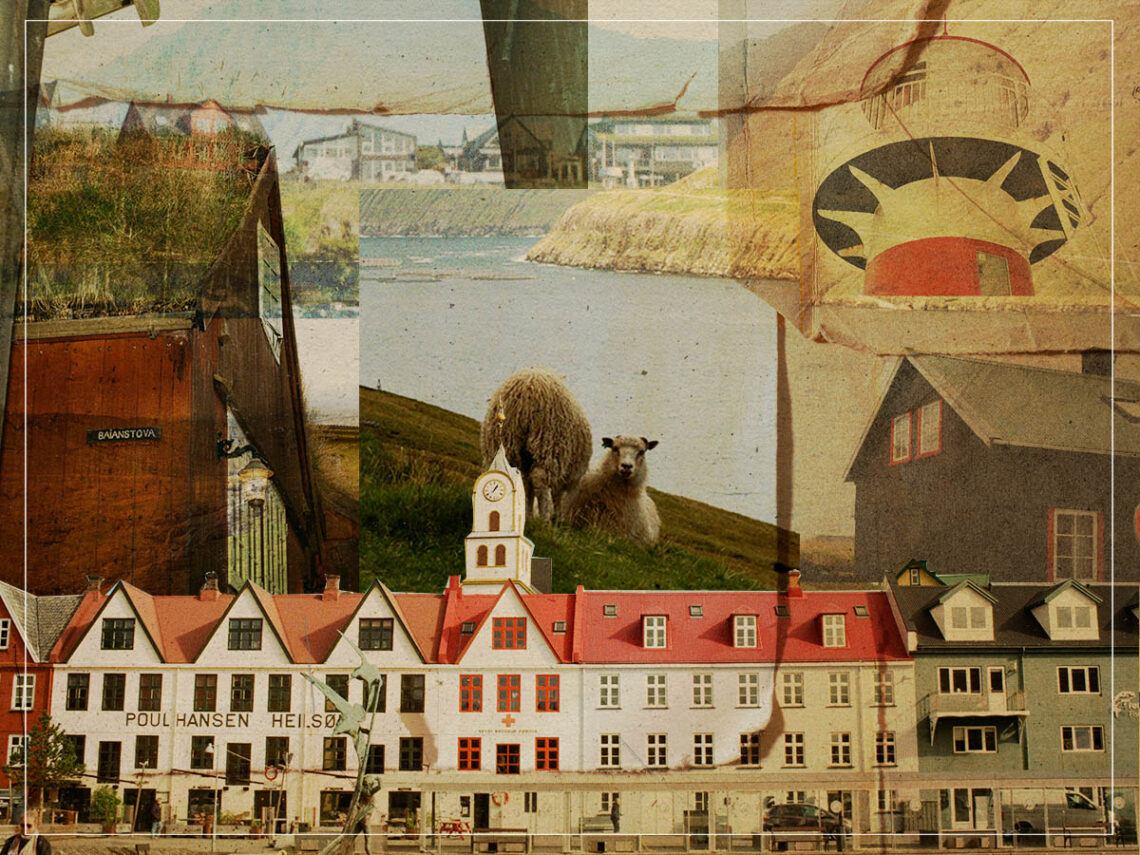
From the moment you step out of the airport on the beautiful archipelago of the Faroe Islands, it is difficult not to gaze in wonder at its scenery and tranquil nature. The Faroes have a population of just over 50,000 people, and it certainly shows. During the hour-long drive from Vágar Airport to the capital city of Tórshavn, I encountered only one other car. Although, if I’m honest, it was difficult to pay attention to the roads when every corner revealed another postcard image of beautiful green mountains and royal blue seas.
I soon found that the Faroe Islands are the perfect setting for the practice of quantum listening. From the bars, shops, and restaurants of Tórshavn to the abandoned ghost town of Múli, every place I visited on the islands provided new sights and, crucially, sounds. Múli, for instance, is located at the end of a long and deserted mountain road, broken up only by waterfalls and the odd gang of sheep.
As with any journey undertaken in the modern age, there is a temptation to stick your headphones on and listen to a playlist but, in this case, listening intently to the sounds around me proved more captivating than anything that a hastily thrown-together mixtape could offer.
Standing on the side of a hill in Múli, looking out at the ocean below and the comforting greenery of the hills around me, I began to pay attention to all the noises around me. I could not see another human being or any man-made structures in the miles that surrounded me, and this had a profound effect on my listening habits. Usually, when practising deep or quantum listening in the city, the majority of noises you hear – engines, roads, footsteps on concrete – are the result of human involvement. Here in the Faroe Islands, however, the sounds created are solely a result of nature.
Listening to the gentle trickle of a waterfall, the stones underneath my boots, and sheep grazing on that rich green grass was nothing short of a transcendental experience. These are sounds that have been constantly occurring for thousands of years, resisting the growing influence of humanity on the natural world. Once you start to pay attention to them, and I mean really pay attention to them, they open up an entirely new reality and frame of mind. All the more so when you begin to listen to yourself listening; interpreting your own thoughts and emotions in a groundbreaking way.
As a cynical Yorkshire man, conversations with people who have gone travelling to ‘find themselves’ have always elicited eye-rolls from me. In truth, though, it is hard to describe the experience of practising quantum listening in such a remote and unique setting as the Faroe Islands as being anything other than life-changing.
Of course, you do not need to travel to faraway climbs to practise quantum listening – the concept itself was, after all, developed in the bustling city of San Francisco. However, taking these principles to a place which is much less affected by human involvement adds an eye-opening new layer to Oliveros’ radical concept.


