


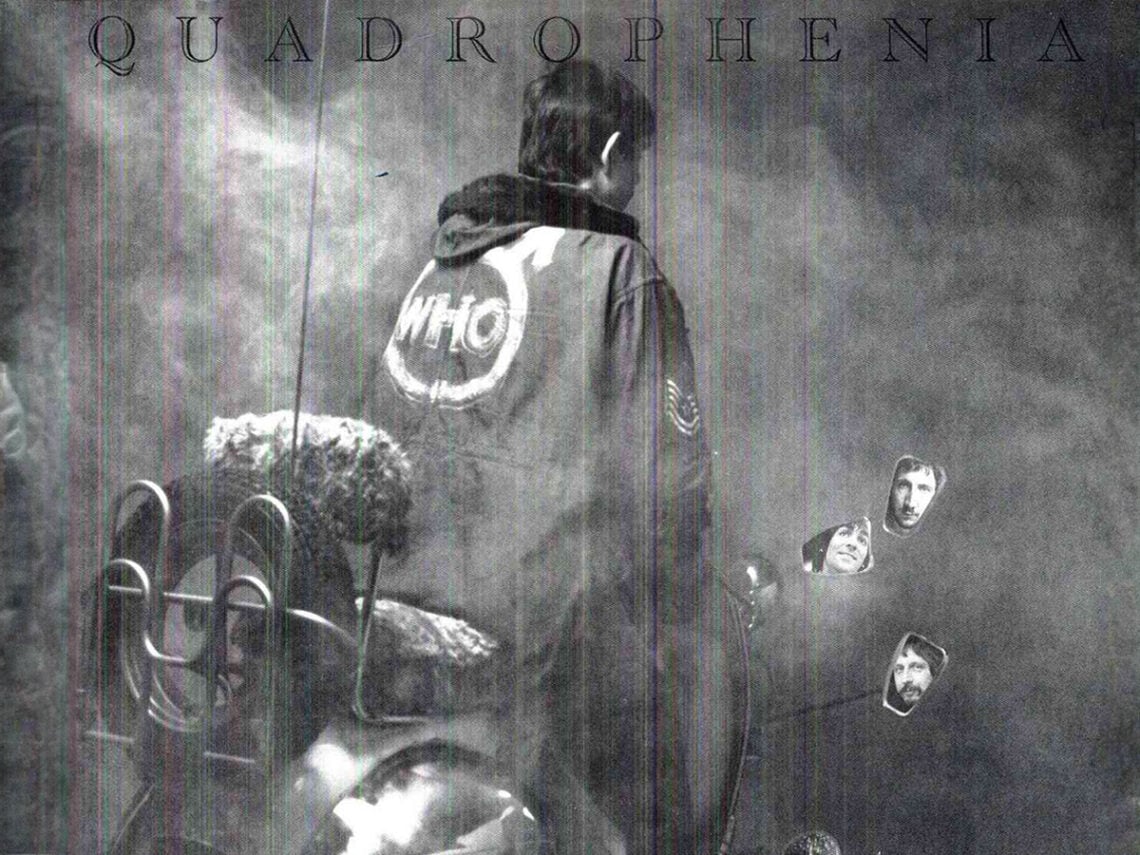
Quadrophenia: rock ‘n’ roll’s most underrated masterpiece?

Concept albums are often viewed as the pinnacle of profound artistry when it comes to the music world. Ever since groups like The Beatles started to reinvent the format of the album, countless artists have followed suit, creating their own narratives which span entire tracklistings. During the 1970s, there were few groups as skilled as The Who in the construction of profound concept albums and rock operas.
From their formation in the mid-1960s, The Who represented the anarchic voice of Britain’s disenfranchised youth. Through tracks like ‘My Generation’ and ‘Can’t Explain’, the songwriting of guitarist Pete Townshend helped to define the rocking sound of the swinging sixties in England, and the impact of those early records went on to influence later scenes of punk and alternative rock. Inevitably, though, the 1960s would not last forever, and The Who would be forced to adapt their sound to the changing landscape of rock.
So, in 1969, the London band unveiled Tommy, a revolutionary rock opera telling the narrative tale of a spiritual leader by the name of Tommy. The album quickly became one of The Who’s defining efforts, inspiring countless future artists in the process. However, the reputation of Tommy often overshadows The Who’s later, and arguably superior, work. For all the undeniable genius of Tommy, Townshend’s most daring and important songwriting efforts came on the 1973 record Quadrophenia.
Composed entirely by Townshend, the stunning concept album follows the story of a young man named Jimmy and his struggle for identity and self-worth. The record is loosely autobiographical, drawing upon The Who’s early days as disciples of the modernist subculture, which is probably why Townshend’s songwriting feels particularly profound and emotionally charged on the album.
As far as concept albums go, Quadrophenia tells a much more interesting and coherent story than Tommy, as Townshend himself would readily admit. Speaking to Steve Harris in 1996, the guitarist said of the record, “I think it’s the best album that The Who made,” he said, adding: “I also think it’s one of the most cohesive stories that I wrote, and in doing this kind of thing, I learn a tremendous amount.”
Quadrophenia is not often treated with the same reverence as records like Tommy likely because of the fact that the former has fewer stand-out singles on it. As a whole album, it is incredible, but when listening to the tracks individually, they tend to lose some of the power that the format of the concept album brings. Whereas, Tommy features tracks like ‘Pinball Wizard’, which has hit potential in its own right.
Nevertheless, the concept album put across such a compelling narrative that it was later adapted to the silver screen. Directed by Franc Roddam, under the supervision of The Who themselves, 1979’s Quadrophenia starred Phil Daniels as the character of Jimmy, and it went on to become one of the most beloved British coming-of-age stories in film history. The film – and, by extension, the album – is an integral part of Britain’s cultural fabric, and its impact can still be felt today.
The success of Quadrophenia also helped to bring the mod subculture back into focus, causing something of a renaissance during the late 1970s that inspired musical movements like Britpop, indie rock, and even 2 Tone ska. Although Tommy might get the most credit, within the context of The Who’s discography, its cultural impact pales in comparison to that of Quadrophenia.
