


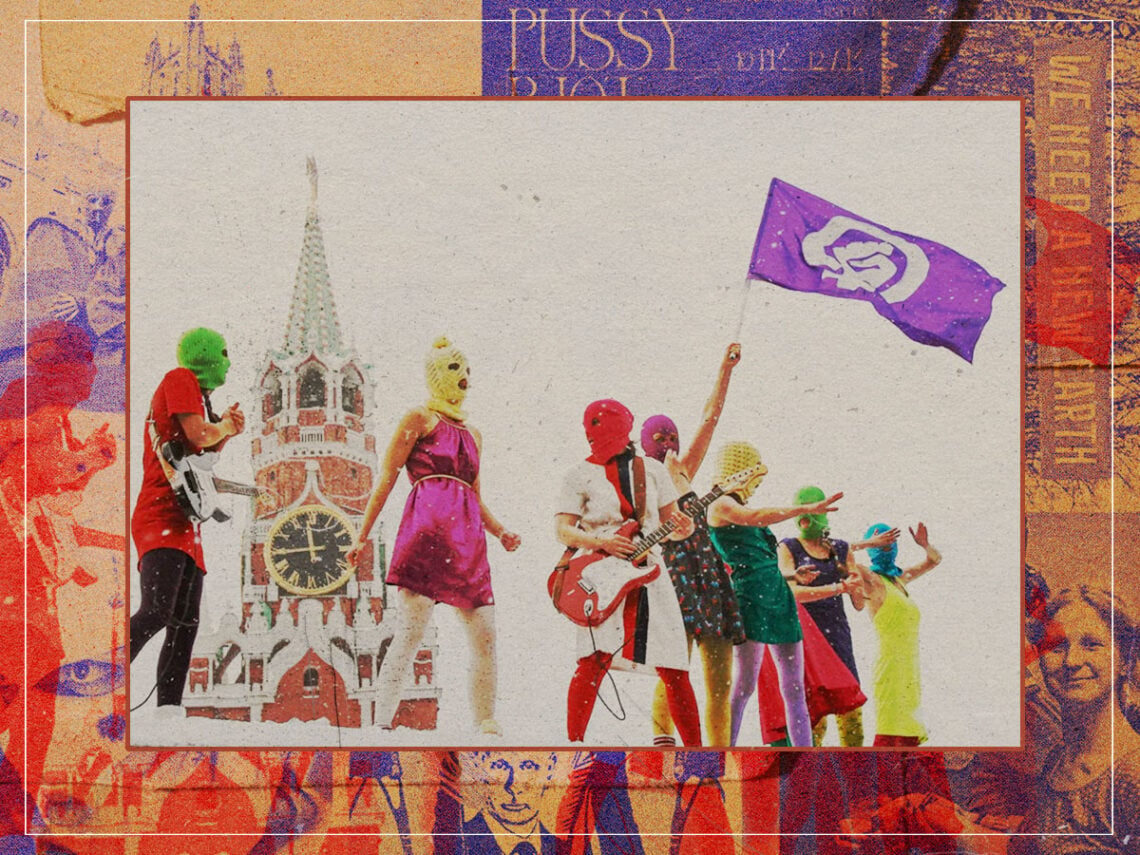
Pussy Riot: The unholy epitome of feminist punk

The Cathedral of Christ the Saviour stands proudly in Moscow. Its white walls and golden roof can be seen just on the northern bank of the Moskva River, not far from the Kremlin. It is the world’s third tallest Orthodox Christian church and is a common meeting place for the religious. “Holy mother, blessed virgin,” is sung, bouncing off the walls of the church, filling the now pricking ears of those perceived as holy, while the balaclava radical feminists take a stance front and centre, “Chase Putin out!” Pussy Riot scream.
On June 4th, 1913, headlines everywhere were dominated by Emily Davison, who threw herself in front of the King’s horse at the Epsom Derby. She gave her life that day, becoming the first woman to do so in the fight for female emancipation. At her funeral on June 14th, thousands of feminists gathered around her coffin, and people lined the streets to pay their respects. This moment carries a special significance on International Women’s Day and stands as a testament to the willingness to sacrifice yourself for the plight of others.
Members of Pussy Riot channelled similar feelings when they played distorted guitars and hit drums in the Cathedral of Christ the Saviour on February 21st, 2012. They played a song called ‘Holy Shit’, which was a denunciation of President Vladimir Putin and his ties to the Orthodox church. Many of the members were arrested that day, some of whom were charged and sentenced to years in prison. “Our patriarch is not ashamed of wearing watches worth $40,000, which is intolerable when so many families in Russia are on the edge of poverty,” said the band following their arrest, “Our position is to think critically, to doubt all ‘natural’ things, and find lies.”
Pussy Riot is an unwavering force of punk. Their music and performance art are completely unbendable in their stance. As the band has protested for feminism and LGBT rights, and in opposition to the presidency of Putin, they have sacrificed their freedom in the process. This is the modern interpretation of standing for your beliefs and fighting for something bigger than yourself. This is a peak of punk that other bands would be terrified to climb to, and this is how you make a statement.
The band formed in late 2011 and consisted of about 12 performers and 15 staff who helped set up equipment and shoot videos that would be posted on the internet. It initially came together thanks to Nadya Tolokonnikova and Yekaterina Samutsevich, who formed an offshoot of an anarchist art collective they were a part of called Voina.
Pussy Riot is unlike any other band that plays music or tries to make a statement. They embody true rage and protest; nothing they do is done through the guise of a label or the intention of making money, unlike many plastic protestors in modern music. Thanks to their anti-capitalist nature, they don’t charge for their gigs. Instead, they play pop-up shows in different places where they can gain plenty of attention. This has seen them set up shop outside of state capitals, on street corners, and, of course, in churches.
“Pussy Riot’s performances can either be called dissident art or political action that engages art forms,” said Tolokonnikova when asked about her band’s music. “Either way, our performances are a kind of civic activity amidst the repressions of a corporate political system that directs its power against basic human rights and civil and political liberties.”
There is something so profoundly hypocritical about a lot of punk bands. “This is our song about how much we hate capitalism,” they say before playing. “Anyway, thanks for coming to our gig at this festival sponsored by American Express.” Pussy Riot is beyond this kind of showboating, they stand for what they believe in, and their art is a way to make those views accessible, but how they deliver said art is their decision and no one else’s.
As handcuffs are slapped around wrists, balaclavas are removed, and Pussy Rioting perpetrators and prosecuted, we must remind ourselves that we are witnessing one of the most honest and raw forms of punk feminism. This is the point of protest art, and anything less shouldn’t be allowed to carry the mantel of punk.

Never Miss A Beat
The Far Out Punk Newsletter
All the latest Punk content from the independent voice of culture.
Straight to your inbox.