


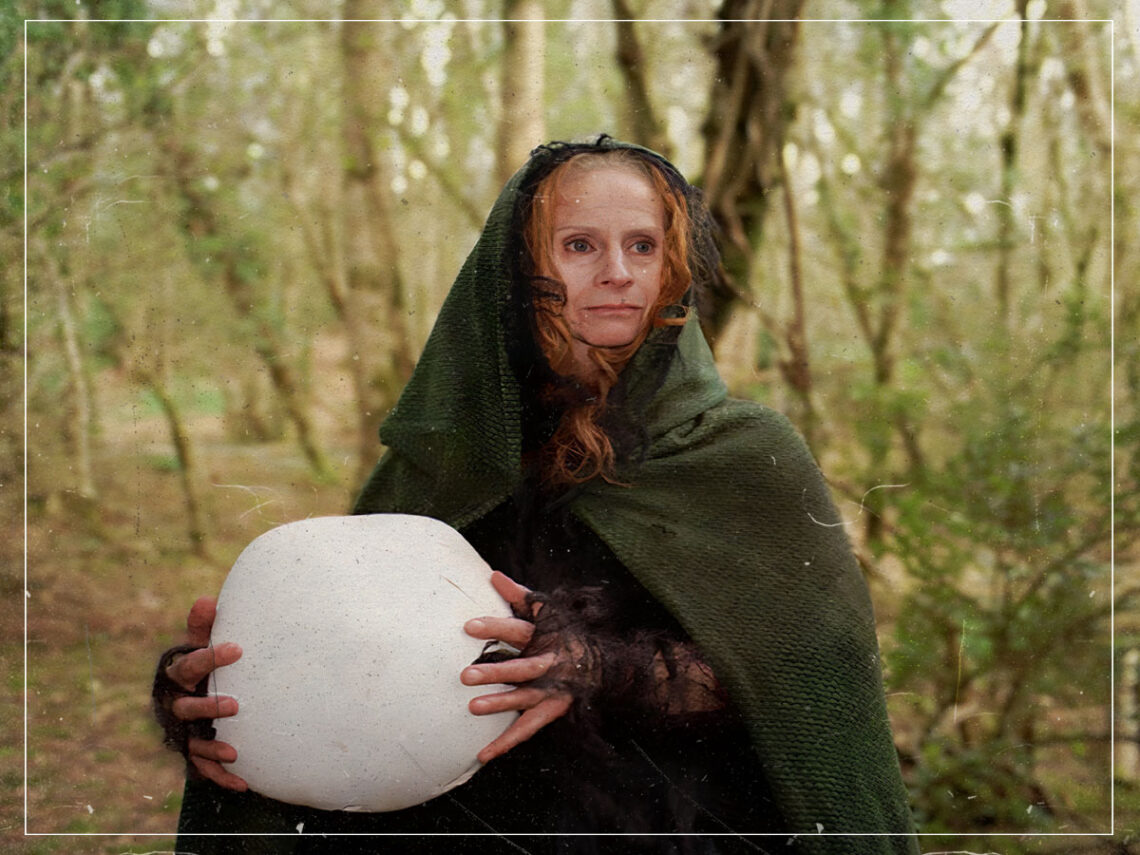
‘Puffball’: Nicolas Roeg’s final exploration of mysticism and the human psyche

Throughout his remarkable career as a film director, Nicolas Roeg has often concerned himself with the alluring wonders of mysticism, the occult and the darker sides of the human psyche. A true master of cinematic storytelling, Roeg proved himself a visionary in his profession and delivered works of a mesmerising nature.
Whether it be the haunting atmosphere of his 1973 horror-thriller Don’t Look Now, the world-changing David Bowie-starring The Man Who Fell To Earth or the fantasy comedy of The Witches, Roeg has always toyed with the relationship between the natural and the supernatural, a theme he explored further in his final film Puffball.
Based on the novel by Fay Weldon, Puffball sees Roeg once again dive into a hallucinatory world of the supernatural while exploring the themes of sexuality and fertility. Kelly Reilly plays Liffey, a young architect who moves to the remote Irish countryside with her husband Richard, played by Donald Sutherland, previously known for his excellent performance in Roeg’s Don’t Look Now.
When Liffey becomes pregnant, the couple’s neighbours, Mabs and Tucker, who seem to be strangely in control of the land that surrounds them, become wrapped up in their lives in moments of devastating tension. As always with Roeg, Puffball features an atmosphere of a truly eerie nature and gives the film a surreal edge.
Puffball is an examination of the relationship between nature, the supernatural and the human psyche. Liffey becomes increasingly paranoid and obsessed as her pregnancy continues, which leads to the film’s disastrous final act, a meditation on the darker side of sexuality and an alternate view of the traditional role of the mother.
Reilly’s portrayal of Liffey is an excellent and mesmerising exploration of a woman on the borders of sanity and madness, while Sutherland offers more of a subtle quietude in comparison with his Don’t Look Now character, and the non-linear narrative style helps to build the kind of unsettling tone for which Roeg is so well admired.
Discussing the kind of eerie mood of its Monaghan, Ireland setting, Roeg once told The Guardian, “We shot in Ireland, and without wishing to lean towards pretension or cliché there is a mysticism associated with the place… The atmosphere and the locations were very important, and yes, as with my other films, it does become something of a character in its own right.”
Puffball was Roeg’s final feature before he died in 2018. Though the film differs in some aspects and is certainly a unique story, it serves perhaps as a final farewell to the kind of themes that had served the legendary British director so well in his earlier years and the way in which he could weave stories using innovative narrative methods.
Check out the trailer for Puffball below.
