


The shameful problem with being a British tourist abroad

Let’s face it; nobody likes a tourist. Well, perhaps the only people that might are those who welcome them to spend excess cash in their establishments – but even then, we all know the truth. For the rest of us, tourists get in the way, and we mock them for taking photos at monuments and attractions that elude our everyday interest as we pass them each morning and evening. And yet, the humble tourist is doing nothing wrong, and when we ourselves set out to travel, the opinion changes.
In what is undoubtedly a tricky subject, we often change into the biggest self-righteous versions of ourselves, muttering under out breaths: “I’ve spent good money to be here, and I demand to be treated as such”. Of course, any of us with half an ounce of respect for humanity or culture would not behave in such a way. Yet, we know for certain that those that do indeed exist, for we have seen them along the marinas of the coastline, on the strips of the islands, and in the hustle and bustle of some of the most beautiful cities in the world.
Not an awfully long time ago, I wrote a short story detailing a holiday I took with my mother to a hotel resort on a Greek island. Sorry Charlotte Wells, but you nicked my idea for Aftersun, and I am yet to receive any sort of credit. Within the narrative (from my childhood self-perspective), I reflected on the kinds of British tourists one might find abroad. I wrote: “I wonder what the children are like who use the languages I do not speak. I am sure they are nicer than we are. They are not draped in fluorescent sportswear like the English. You can spot an English child a mile off. You can smell them, hear them, and feel their aggressive presence. The European children smile, wear sandals and smart clothes in the evening and seem ultimately pleasant.”
Evidently, some part of me envied the kind of people the European tourists might be, humbler with just a shade more… class. An element of shame was present somewhere within me, even as a child. Whether that be from some kind of latent colonial guilt or something else, it cannot really be explained in immediacy, but there was definitely a sense of embarrassment at being English. It just seemed so bloody obvious, so archetypal, so… ubiquitous.
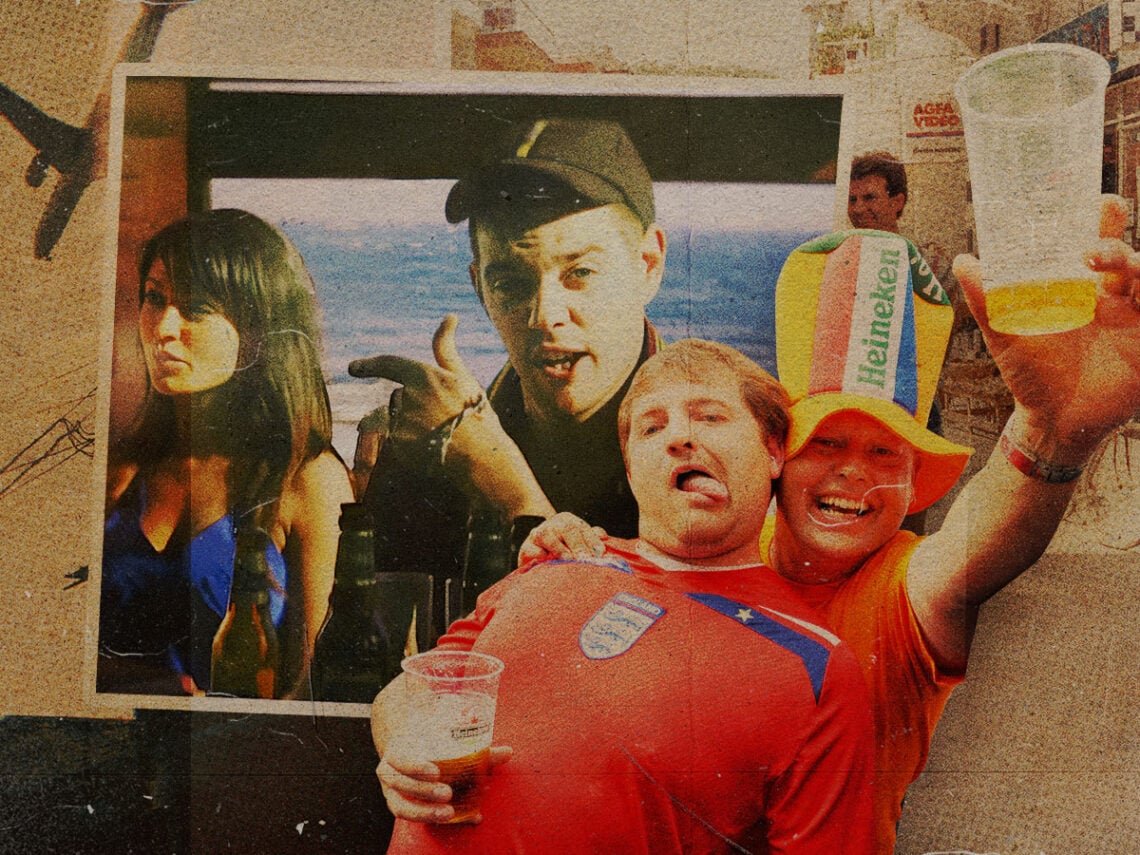
There are a few issues with being a British tourist, it seems. As alluded to above, it is easy to spot a British tourist a mile off, regardless of their age. Wandering around the canals of Amsterdam, one cannot help but shudder at the sight of five or so young English men, top to toe in sportswear, stumbling out of The Bulldog coffee shop with utter disdain for anyone’s privacy or the fact that the Dutch city is home, yes home, to several other people. It is not merely ‘Paradise City’ as the old, ridiculous song might suggest.
It is those same people who likely lose their cool when foreign tourists visiting Britain stand on the wrong side of the escalator or grow impatient when they fumble with their change when paying for the bus or for a coffee. But perhaps those very same people are those who are primarily responsible for creating that pervading sense of shame when we, fellow Brits, catch a glimpse of them stumbling through an old Czech square, pissed up and letting everyone in earshot know about it.
The second problem is the fact that English is the language that most people in the world speak as a second tongue. The result of that is that whenever British tourists visit other parts of the world, they feel only too obliged to talk in English rather than make even a feeble attempt at the odd phrase in Spanish, Italian, or whatever. Nothing is more grating that an English person walking into a café in a foreign country and saying something along the lines of, “Two of them, please, mate”. Even worse, “two birra, por favour,” with a giggle and a smirk.
And you can sure as hell see the disdain, no, disgust on the faces of the ever-patient waiting staff at said café, restaurant, or bar. The entire ordeal is really rather infuriating, not only for the locals of a given country but for us British onlookers who hide our heads in menus for the rest of the evening and talk in hushed tones.
That constant sense of embarrassment seems to be imperative to the very nature of the more culturally inclined British tourists. In Richard Ayoade’s travel program Travel Man, he and his guest, in a given episode, take up the best that a particular location has to offer. Often, Ayoade and chum are found zooming through the city in some kind of contemporary transport, say, a minuscule electric car or, even worse, the dreaded Segway. The very fact that one spots a gang of tourists on a Segway tour and cringes to the nth degree reveals much to us about how we ought to conduct ourselves abroad.
Visiting Vienna or Rome or anywhere else with cultural vitality, one wants to soak themselves in the ways of locals, enjoying a calm espresso beside the river, for example. Certainly not blasting through town on a gyroscopic vehicle in a helmet looking like a complete tit. Then again, there is the admission that it all looks like tremendous fun.
If only one could free themselves from the shackles of shame and embarrassment, then they might be able to forget all about being a British tourist and throw themselves into just enjoying all that life and a holiday has to offer instead. But, surely that’s another half of being British anyway, being a bit miserable, too good for a Segway ride, a mere distraction from whatever other activity might take one’s interest that particular day.
Then again, there also ought to be the admission that that whole fear of being stereotypically British abroad is certainly not enough to scare the British tourists who reinforce it in the first place from further cementing it into the consciousness of both ourselves and the natives in whose countries we visit. So perhaps the real issue lies in the people who feel ashamed rather than those who bring about such shame. The stereotypical tourist certainly does not look to be ashamed at taking picture after picture in Trafalgar Square, nor do our American cousins have an inkling of self-consciousness when it comes time to perhaps lower the tone when frequenting a pub full of locals or a quiet and quaint restaurant.
There is evidently something about being British on holiday that embarrasses us, whether it be from merely looking British or our lazy insistence on speaking English rather than going some small way to learning a few basic phrases in our destination’s mother tongue. It seems that that phenomenon is unlikely to dissipate anytime soon, so the unfortunate remedy is likely to correct learn how to order coffee in a local dialect and simply wind one’s neck in.
