


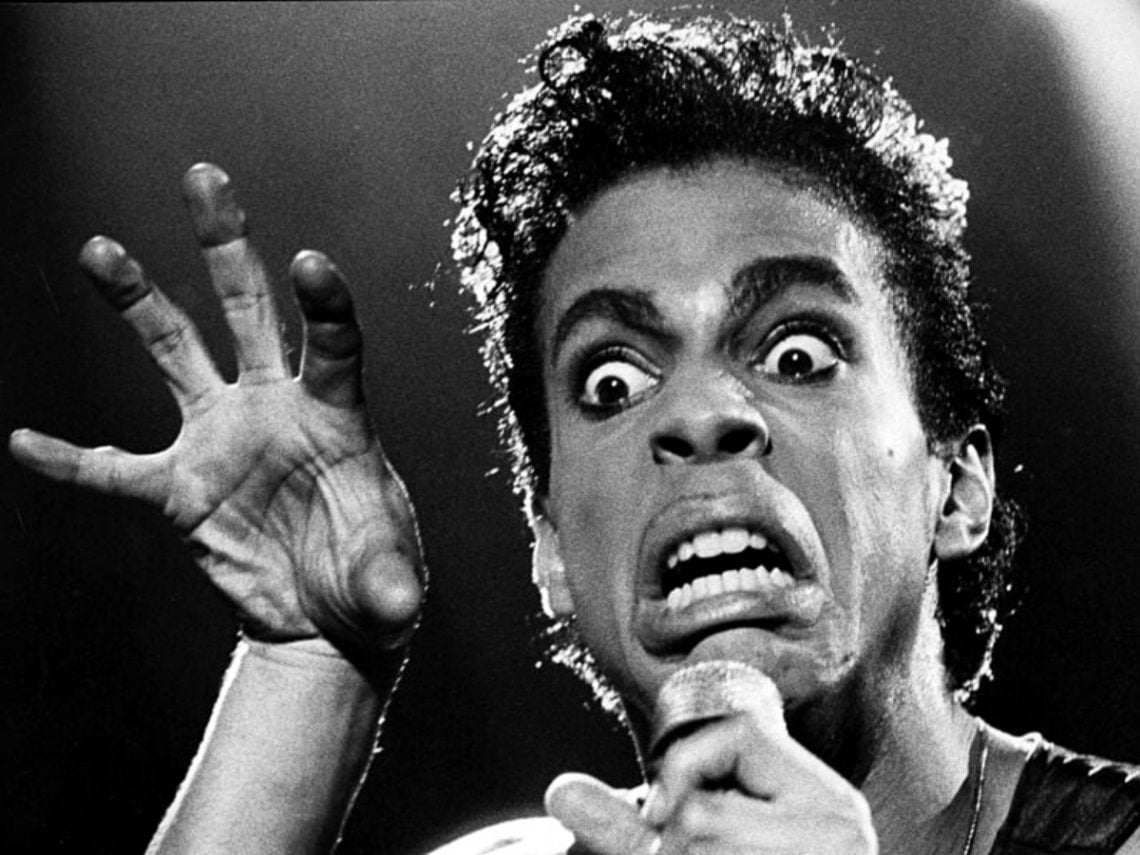
Prince and his difficult relationship with the internet

It’s hard to imagine the music industry and the world in general without the polarising force of the internet. In the modern day, while there may be a resurgence of vinyl sales among the most nostalgic and avid of music fans, we mostly consume our music via streaming platforms. As we know, the internet is a double-edged sword, and while it can help aspiring musicians access a wider audience, it has presented the industry with a blight of financial setbacks. At the end of the 20th century, David Bowie and Prince were among those to predict the rise of the internet.
“I don’t think we’ve even seen the tip of the iceberg,” Bowie famously said in a 1999 interview with Jeremy Paxman. “I think the potential of what the internet is going to do to society, both good and bad, is unimaginable. I think we’re actually on the cusp of something exhilarating and terrifying.”
“I’m talking about the actual context, and the state of content is going to be so different to anything that we can really envisage at the moment where the interplay between the user and the provider will be so in simpatico that it is going to crush our ideas of what mediums are all about,” he added.
In the same year, 1980s icon Prince echoed a similar warning during a speech at the Yahoo Online Music Awards as he presented Public Enemy with the “Online Pioneer” award. “One thing I wanted to say is, don’t be fooled by the internet,” Prince warned. “It’s cool to get on the computer, but don’t let the computer get on you. It’s cool to use the computer, don’t let the computer use you. Y’all saw The Matrix. There’s a war going on. The battlefield’s in the mind. And the prize is the soul. So just be careful. Be very careful. Thank you.”
Over a decade later, in 2010, Prince issued another, more direct and anguished warning in an interview with the British publication The Daily Mirror. “The internet’s completely over,” he asserted with venom. “I don’t see why I should give my new music to iTunes or anyone else. They won’t pay me an advance for it, and then they get angry when they can’t get it.”
Prince’s comments came at a time when MP3 downloads were still yet to submit to streaming platforms fully, but they foreshadowed the industry-wide inequality that has ensued over the past decade. To bolster his assertions about the internet, Prince demanded that his songs be removed from Spotify and instead gave his 35th studio album, 20Ten, away free with copies of the Daily Mirror and Daily Record as a protest.
“The internet’s like MTV. At one time, MTV was hip, and suddenly it became outdated. Anyway, all these computers and digital gadgets are no good. They just fill your head with numbers, and that can’t be good for you,” Prince added in his 2010 conversation with The Mirror.
In 2014, Prince seemed to relent in his ongoing anti-internet tirade as he opened up accounts on Facebook and Twitter, but these were both deleted shortly after, with very little activity on either. His second of very few tweets became one of his most popular among fans: “PRINCE’S SECOND TWEET.”
A new verified Twitter account for Prince eventually re-emerged, and one of his scarce tweets urged his fans to purchase physical copies of his music. “PLEASE SUPPORT UR LOCAL RECORD STORE 2DAY: (THROAT CLEARS 2 ATTRACT ATTENTION): ELECTRIC FETUS,” the tweet read.
Before his tragic death in April 2016, Prince seemed to rise above his differences with the internet as he signed with Tidal. At around this time, Prince also pointed out that the internet is useful in keeping artists busy and honest.
“See, everybody knows when somebody’s lazy, and now, with the internet, it’s impossible for a writer to be lazy because everybody will pick up on it,” he told The Guardian in 2015. “In the past, they said some stuff that was out of line, so I just didn’t have anything to do with them. Now it gets embarrassing to say something untrue, because you put it online, and everyone knows about it, so it’s better to tell the truth.”
