


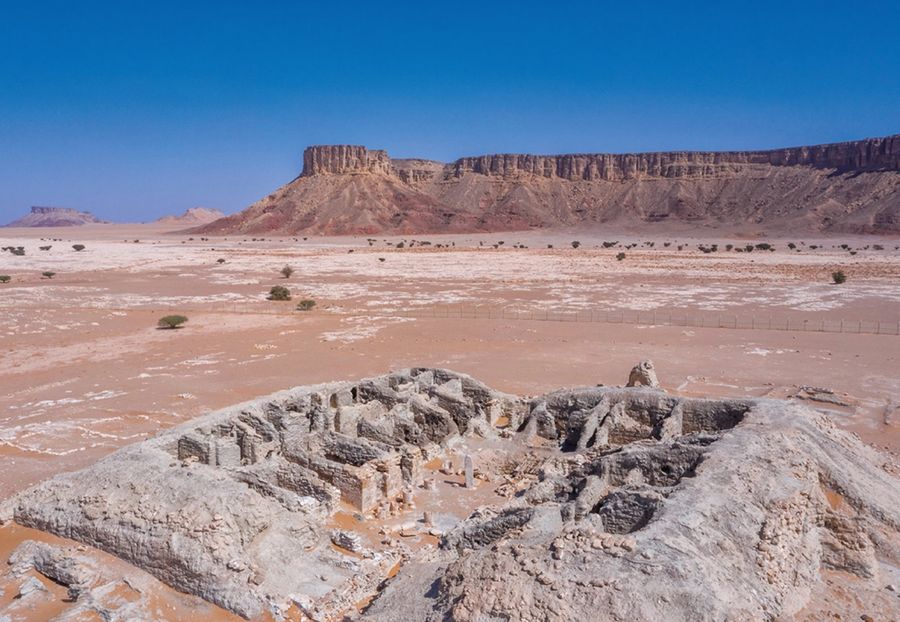
8,000-year-old prehistoric city uncovered in Saudi Arabia

Saudi and French archaeologists working on a site southwest of Riyadh, Saudi Arabia, have discovered an 8,000-year-old settlement. The team, led by the Saudi Heritage Commission, unearthed the Neolithic ruin using laser scanning, drones, aerial photography and a variety of other forms of surveying.
The settlement is located at Al-Faw, an archaeological site that has already revealed evidence of a steady trade network between the ancient city and the outside world. Working along the edge of Mount Tuwaiq, excavators found a stone temple and fragments of an alter. Archaeologists have said that these findings will allow for a deeper understanding of the religious practices going on in the prehistoric city.
Excavators also found 2,807 graves from different time periods. The ground itself is decorated with devotional rock inscriptions addressed to ancient gods such as Khaal. Other finds include the foundations of an open-air courtyard, four monumental buildings, and corner towers. All of these would have been connected to underground reservoirs used to store water for agricultural use.
There is also evidence of a sophisticated irrigation system featuring canals and cisterns. It’s thought that access to a continuous supply of water is what allowed the city to thrive in one of the driest climates on earth. Archaeologists also located rock drawings etched into the Tuwaig Mountains, which shed light on the daily activities of the city’s inhabitants, including depictions of hunting, fighting and travelling.
Fieldwork at Al-Faw has been going on for the last 40 years or so, but this discovery provides by far the most comprehensive overview of the city so far. In the past, archaeologists have turned up temples, markets, tombs and residential areas.
