


The portrayal of paranoia in Alan J. Pakula movie ‘Klute’

Alan J. Pakula’s Klute is one of the most severely underrated neo-noir thrillers from the 1970s. It formed part of the director’s ‘paranoid’ trilogy alongside The Parallax View and All the President’s Men, although Klute is unique in its exploration of delusion, which heavily focuses on its relationship with womanhood.
Although Klute is advertised as the story of a missing man – Tom Gruneman – whom Donald Sutherland’s John Klute is hired to find, it quickly morphs into an intense character study, predominantly focusing on Jane Fonda’s Bree Daniels. Her performance is magnificent, winning her an Oscar for ‘Best Actress’, and rightly so. Bree is a New York City call girl who appears to enjoy her lifestyle, where she is seemingly in control of the men she interacts with. However, scenes with her therapist reveal that Bree is actually empty inside, finding the constant sexual exchanges soul-destroying.
What’s more, Bree is being hounded by calls from an unknown source and keeps receiving shocking letters that connect her to the disappearance of Gruneman. Evidently, being an independent woman in the city doesn’t allow total freedom – unfortunately, it comes with fear and the paranoia of being followed and watched. For Bree, this fear is fully realised, constantly putting her on edge and enhancing her nervous state.
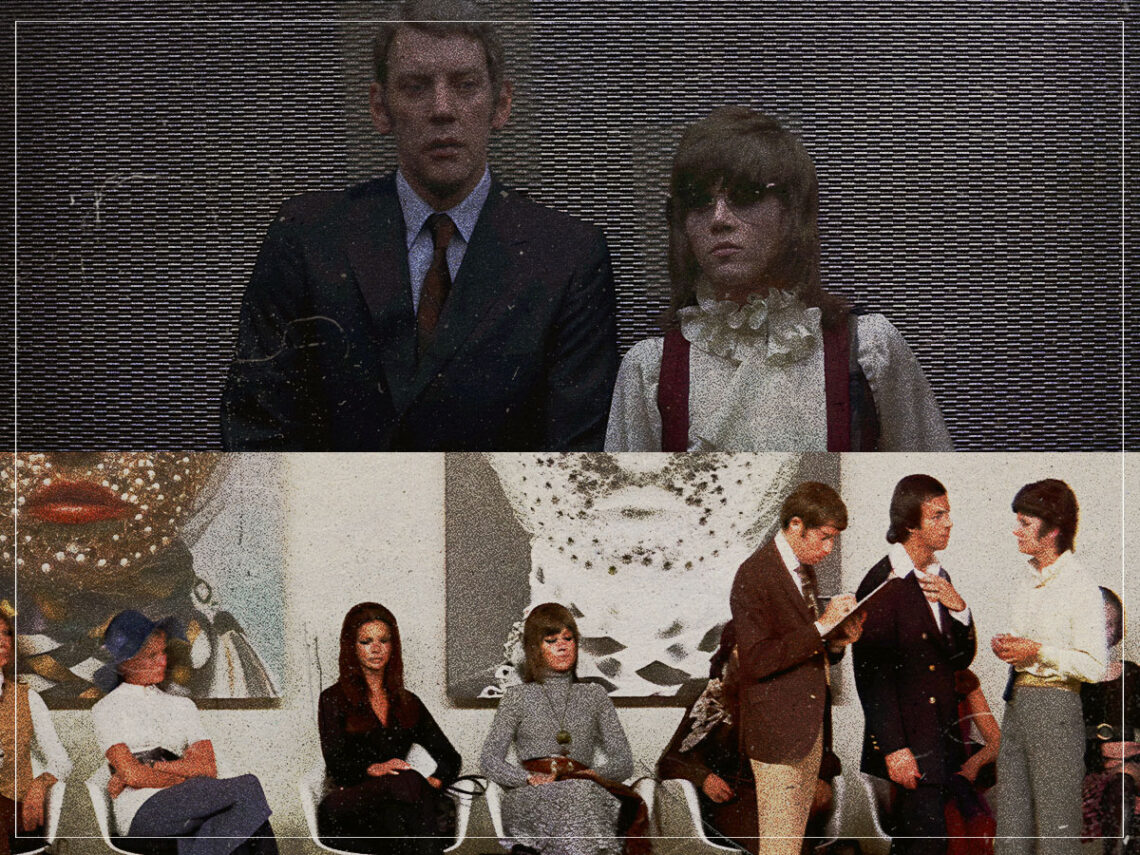
Bree attempts to quell her paranoia by performing, masking her fears with a fearless and headstrong attitude. This is also reflected literally by her dreams of becoming an actor, and we see her attend auditions, although she fails to find success. Speaking to her therapist about her job as a call girl, she reveals that “for an hour, I’m the best actress in the world”. The theme of acting reflects the need for women to perform a certain way under the constraints and demands of patriarchy, where gender roles are rigidly enforced. Bree’s whole life is dictated by performing, yet underneath it all, she is fearsome and hesitant to give herself entirely – in the emotional sense – to another person.
Fonda’s complex character, who has suffered abuse at the hands of her job, possesses a significant amount of paranoia around the idea of love. She cannot allow herself to love Klute despite the feelings the pair develop for each other as the investigation progresses. Sutherland’s character can’t help but find himself attracted to Fonda’s shaggy-haired protagonist, yet her troubled past leaves her scared to indulge in his offerings, paranoid that allowing tenderness into her life will only cause more harm than good.
At the end of the film, after the killer is revealed to be Klute’s associate, Peter Cable (who soon plummets to his death), Bree decides to leave New York and her job, choosing not to engage in a relationship with Klute. Pakula allows Bree to remain autonomous, free from the constraints of serving men – something that has deeply affected her mental state. She moves away from the paranoia of the city, which is, with its towering phallic skyscrapers, a representation of masculinity. Still, that would be too easy. The patriarchy’s grasp is much firmer than that. Through voiceover, Bree tells her therapist that she’ll probably be back the following week, knowing that she will most likely fail to simply live happily ever after.
So, while Klute reflects the political paranoia that was rife in the 1970s (Pakula would soon make All The President’s Men about the Watergate scandal), the movie is also a powerful character study of a woman struggling to make her way in the city. Bree is a multilayered character who, with her best efforts, tries to fight against the patriarchy’s subordinative impact, fed up with its ability to leave her feeling surveyed and on edge. While her experience of being stalked and used for sexual transactions allows the movie to explore the theme of female oppression more literally, Klute demonstrates how countless women must perform to survive, hoping that this will quell the innate paranoia that comes with the female experience.
