


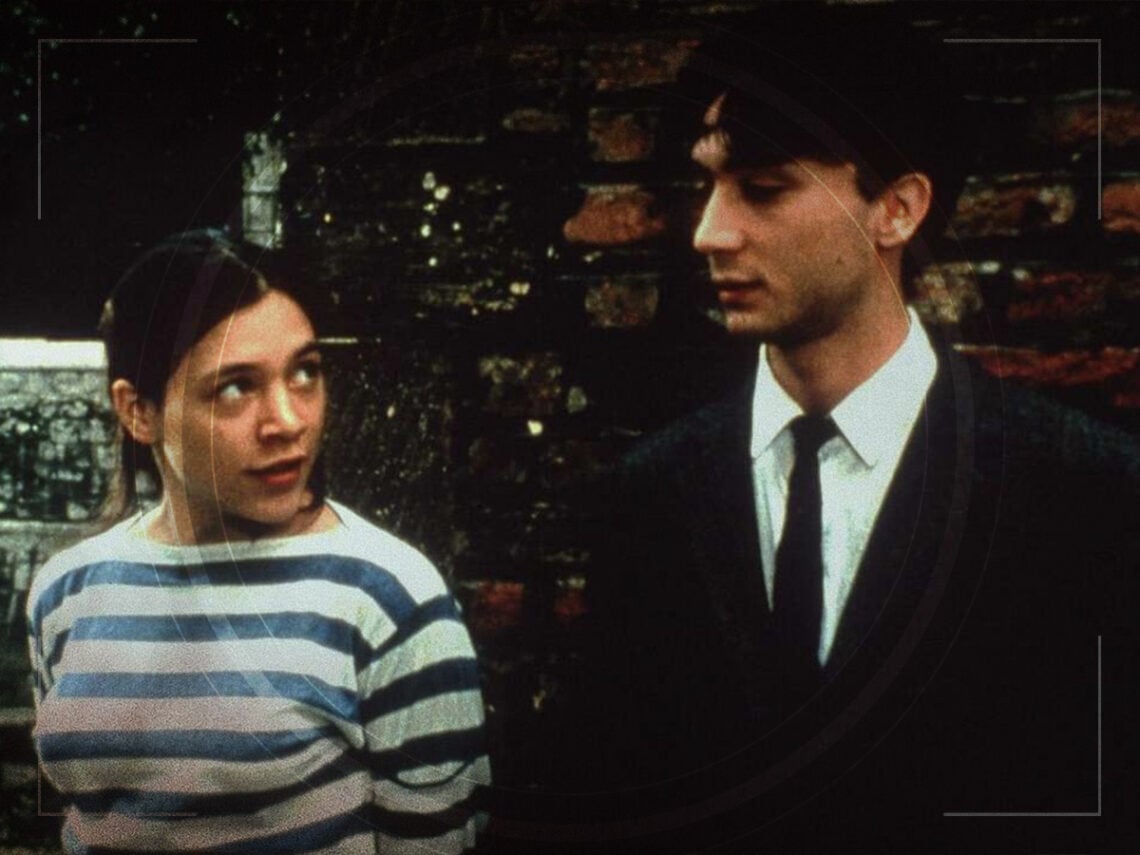
‘Portrait of a Young Girl at the End of the 60s in Brussels’: Chantal Akerman’s understated work of genius

Best known for helming revolutionary feminist masterworks, such as Jeanne Dielman, 23 quai du Commerce, 1080 Bruxelles, Chantal Akerman was a true cinematic genius. As a radical filmmaker who defied convention, she made various films, from fiction to documentaries and semi-autobiographical tales, over her career, and one of them is the underrated Portrait of a Young Girl at the End of the 60s in Brussels.
At just an hour in length, the film was made as part of the series Tous les garcons et les filles de leur âge, commissioned by Arte, and saw Akerman try her hand at a coming-of-age story. There is a Rohmer-esque quality to the film, with the director allowing her protagonist, Michelle, to wander the streets of Paris talking about life and love, although Akerman’s unmistakable style is hardly absent.
The filmmaker’s notable interest in time is present here—a running theme in her oeuvre—with the film playing out over one evening, akin to Agnes Varda’s Cleo from 5 to 7. While Cleo’s situation is much more serious (she is awaiting the results of medical tests), Michelle possesses a similar sense of aimlessness, dropping out of school only to find herself wandering around without much real purpose.
It seems as though she is driven by adult desires—the fantasy of coming of age—with Akerman purposefully setting the film during a transformative time in Paris’ history: 1968. To be precise, the film is set just a month before May 1968, signalling that Michelle is about to go through a dramatic change in her life. Made in 1993, the film uses memory as an active participant in the story, with Akerman hardly making an effort to give the movie an accurate 1960s look (for example, the record shop features CDs).
However, this isn’t lazy filmmaking; instead, the filmmaker incorporates a blend of past and present to tell Michelle’s story, highlighting the fact that this is a timeless tale of self-discovery, with Akerman’s storytelling actively shaped by her own growth since coming of age in the ‘60s herself.
With her best friend, Danielle, Michelle sits in cafés and makes out with boys, eventually sleeping with one of them. Yet, what Akerman slowly reveals to us is a smartly crafted study of intense yearning, seemingly hiding a strong sapphic desire bubbling beneath the surface. Michelle wants to kiss Paul so that she can make someone jealous, she says, and it soon becomes apparent that this person is Danielle. There is never anything explicitly sexual or romantic between the pair, but Michelle’s prolonged gazes, her desperate experimentation with boys, and her choice to dance with Danielle at a party all indicate her repressed feelings for her friend.
The way that Akerman paints a subtle and realistic portrait of a transformative moment in a teenager’s life is incredibly done, because it doesn’t feel like an earth-shattering event—it plays out like a normal day. As it often is. Like the many events in our lives, the ones that affect us most don’t always come with lots of intense drama; they just happen, and then we carry on.
Portrait of a Young Girl at the End of the 60s in Brussels is a tightly executed work of cinema from Akerman that emphasises her innate understanding of cinematic language. She tells us so much about Michelle by revealing very little, but through her rejection of male authority (lying about her father’s death) to her dancing to ‘It’s A Man’s Man’s Man’s World’ by James Brown, Akerman delicately pieces together a compelling story of adolescent confusion.
