


Who created the poem at the end of ‘The Shape of Water’?

Guillermo del Toro’s Oscar-winning romantic fantasy The Shape of Water was critically lauded upon its release in 2017. An unconventional love story develops between Sally Hawkins’ character Elisa, a mute cleaner, who becomes increasingly attracted to a humanoid amphibian creature kept in captivity known as ‘The Amphibian Man’.
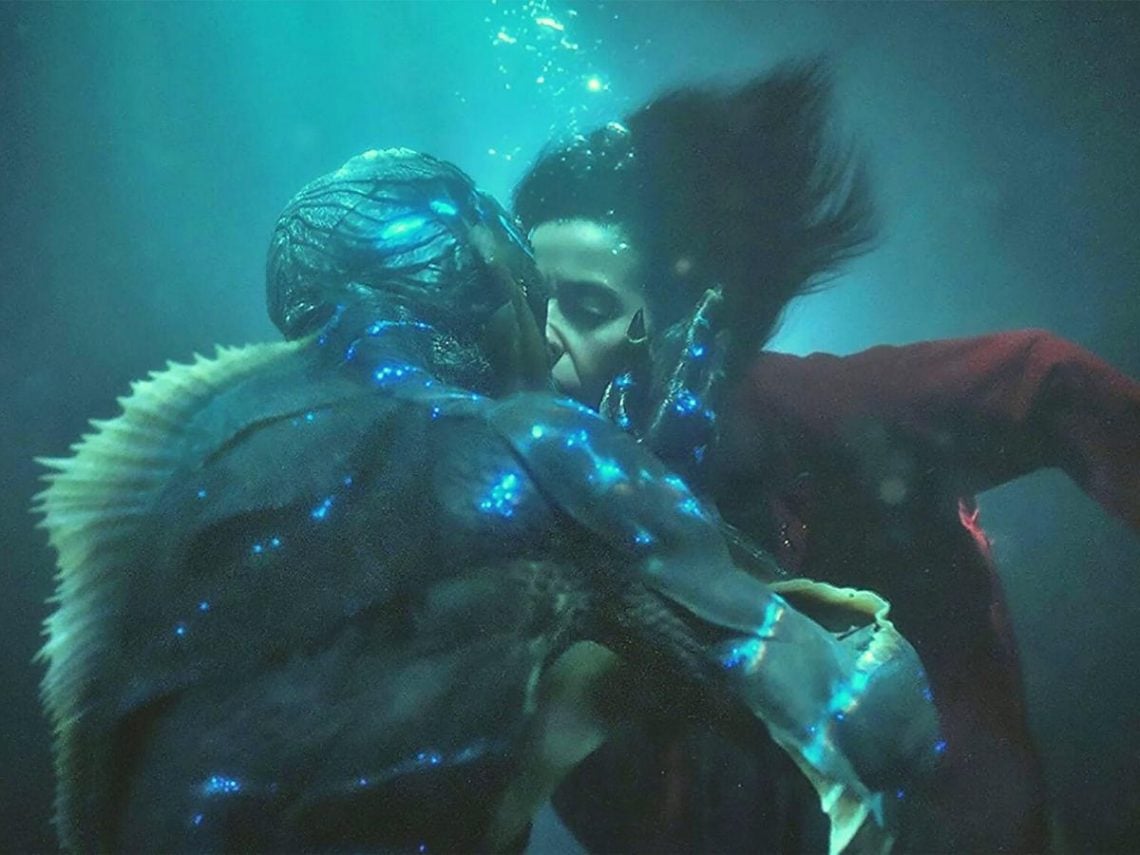
Del Toro brings his usual odd beauty to the film, creating a magnificently romantic relationship between two outsiders. The film ends with voice-over narration from Richard Jenkins, who plays Giles. As The Amphibian Man and Elisa embrace underwater, he says: “But when I think of her, of Elisa, the only thing that comes to mind is a poem whispered by someone in love hundreds of years ago.” He recites the poem: “Unable to perceive the shape of you, I find you all around me. Your presence fills my eyes with your love. It humbles my heart, for you are everywhere.”
According to the Library of Congress, many viewers have written to them, searching for the origins behind the lines read in the film. In fact, you can find Twitter threads and Reddit forums asking the same question – who wrote these beautiful words?
Many people online suggested that the Sufi poet Rumi was the author of the text. However, substantial evidence could not be found to support these claims. Others indicated that Byzantine monk Symeon the New Theologian penned the beautiful lines. The lack of answers led the Library of Congress to dig deeper, which led them to an interview with Jenkins. The actor claimed that del Toro said: “I found this poem in a bookstore today. It’s written by a man hundreds of years ago, which I say in the narration. He said it was his love letter to God, and we’re gonna use it. So that’s how that came to be.”
Furthermore, an interview with the director revealed: “I found this poem in a book about an illuminated poet talking about Allah, talking about God. I thought it was so magnificent. It moved me very much, and I bought the book. We got the credits in the movie—they’re there at the end, and it became the most beautiful closing I could have imagined for the movie.”
After much searching, the poem was falsely attributed to several potential sources – Rumi, a similar Islamic poet, or del Toro himself. According to Peter Armenti from the Library of Congress, “[del Toro could have] invented the story about discovering the poem in a book at a bookstore, perhaps as a way to add a layer of mystery, or mysteriousness, about the poem’s source.”
However, once Armenti published the blog post detailing his findings, commenters suggested that he and his colleague had missed a vital piece of information – a small credit at the end of the film that read: “Adapted works by Hakim Sanai.” Upon further investigation, it turned out that del Toro adapted the lines that appeared in The Shape of Water from a book translated by Priya Hemenway called The Book of Everything: Journey of the Heart’s Desire: Hakim Sanai’s Walled Garden of Truth.
An excerpt from the book reads: “Unable to discern the form of You, / I see your presence all around.” This appears to be what del Toro read and adapted into his screenplay. So, after a lengthy search, we can attribute the lines spoken by Jenkins at the end of The Shape of Water to an English translation of a poem by Hakim Sanai.
