


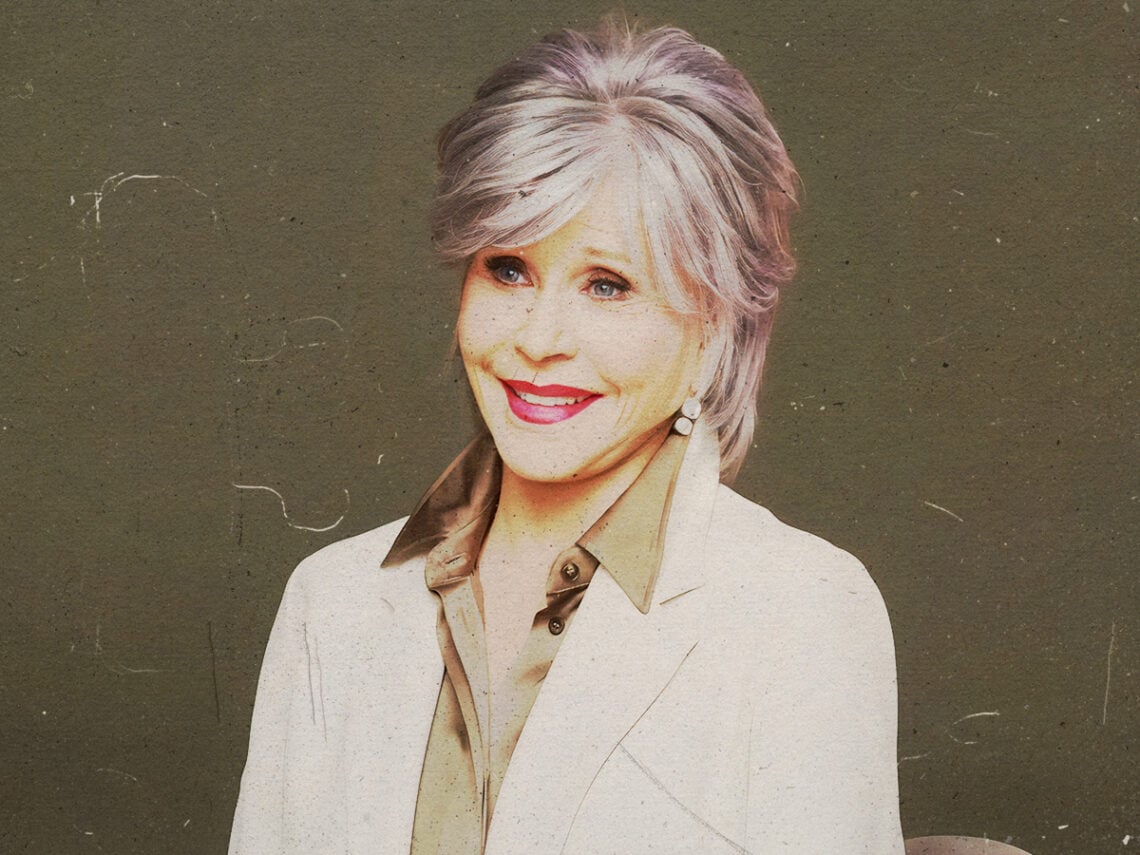
The classic play that caused Jane Fonda to “fully become a feminist”

Jane Fonda didn’t just become a Hollywood legend by chance. She put in the work, not only in terms of her acting ability but also in the discourse she sparked around feminism during a time when such conversations were still somewhat considered radical or taboo. Even today, Fonda rallies for change, a passion that has caused her to face the law on a handful of occasions.
Fonda’s journey to becoming one of the most era-defining figures of feminism is by no means linear and has been incredibly convoluted over the years, culminating in a journey even she has admitted to being a consistent learning experience. When Fonda first gained prominence as a movie star, it came at a pivotal moment for cinema, which saw the prudish traditionalism of Hollywood past subside in favour of a more liberal approach.
Being the daughter of movie icon Henry Fonda meant that Jane started out young, starring in movies that were considered highly controversial at the time, like the French film Circle of Love. As a result, she gained the label ‘sex symbol’, a reputation that had already burgeoned into something pretty robust by the time she took up her celebrated role in Barbarella.
However, in the years that followed, Fonda became inextricable from the feminist movement, making her one of the most politically active—and polarising—figures in the industry. In fact, Fonda was so societally switched on that she questioned everything that came her way, for better or worse. As she revealed in My Life So Far, “I’d begun to wonder if it wasn’t politically incorrect to play a call girl. Would a real feminist do that?”
Despite all of this, the actor once revealed that it actually took her decades to understand feminism, most importantly the complexities of contemporary feminism, including the fact that it often isn’t as simple as shunning traditional values or stereotypes. In fact, not only did she realise this naturally over time, but it was when she first saw The Vagina Monologues that she “fully became a feminist”.
As she explained during an interview with Elle, “I think it was when I saw Eve Ensler’s The Vagina Monologues play that I fully became a feminist. I laughed and cried in that play, but laughter takes you off guard and creeps into your consciousness when your guard is down.”
She added: “That was in the year 2000! So in terms of really understanding feminism and learning to love women, and to love the fact that I am a woman only happened to me 23 years ago. Before that, it was the ‘if I don’t have a strong man at my side, I don’t exist’ period of my life.”
Fonda’s evaluation of new-wave feminism is commendable not only because very few recognise the movement’s ever-evolving tides but also because she appears open and honest even when she feels she misses the mark. Beyond fighting for equality for all, the parameters of modern feminism aren’t linear, and Fonda is willing to hold her place at the fore, even if she’s still figuring it all out over 30 years later.
