


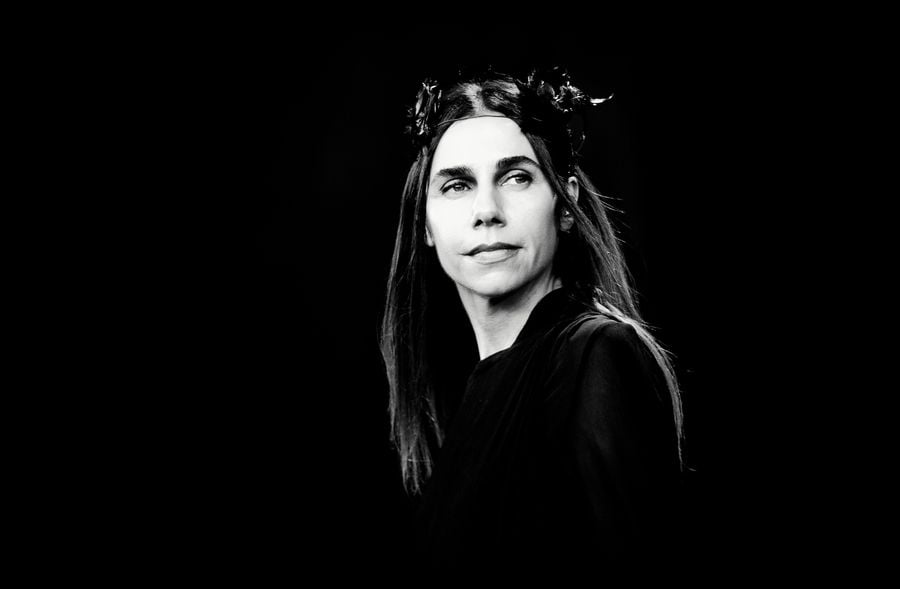
PJ Harvey’s favourite Bob Dylan album

Singer-songwriter PJ Harvey’s musical influences come from her parents. Growing up around folk and blues music, including Captain Beefheart and Bob Dylan, Harvey went on to write her own alternative folk-inspired rock, first with the band Automatic DIamini in the late 1980s and then with her eponymous trio PJ Harvey.
PJ Harvey took off in the early 1990s with the release of ‘Dress’ and follow-up studio album Dry. Since then, they’ve released a further nine albums, coming to be known as one of the biggest names in alternative music and collaborating with the likes of Radiohead’s Thom Yorke. Harvey has gained recognition from the Grammys, Mercury Prize, and the Brits alongside commercial success, selling over a million records.
Her sound encompasses bluesy alt-rock guitar paired with her soft, honest lyrics. It’s a style developed from her childhood listening patterns, and she has noted Dylan in particular as a big influence on her sound.
In 2001, PJ Harvey told The Guardian, “I am an enormous Bob Dylan fan. I once said that Desire was my favourite album, but it changes all the time. He has been a big influence on my work. I grew up on a diet of Dylan – my mum was a big fan – and now when I’m feeling lost or lacking in inspiration I listen to him.”
Desire was Dylan’s seventeenth studio album, released in 1976 and featuring a number of other musicians, from Eric Clapton’s guitar on ‘Romance In Durango’ to Emmylou Harris’ backing vocals. The most famous track from the release, protest song ‘Hurricane’, told the story of Rubin Carter, a boxer who was imprisoned for a murder he did not commit in 1966. Dylan also raised $100,000 for Carter.
Harvey continues to detail her love for Dylan, sharing “It’s not just his wonderful lyrics, it’s the mixture of everything, the words, the music, and his voice. If you have a voice without soul, it doesn’t move you. All the ingredients have to work together. But Dylan is beyond music and lyrics, he has something else. It’s that indefinable something else that makes him special.”
Dylan’s “indefinable something else” saw him inspire generations of artists alongside Harvey, from The Velvet Underground to Taylor Swift. But it also saw him inspire movements and political protest. Dylan often denied writing protest tracks, however. Performing at the March on Washington in 1963, he stated that ‘Blowin’ in the Wind’, one of his most politicised tracks, was not “a protest song or anything like that, ‘cause I don’t write protest songs… I’m just writing it as something to be said, for somebody, by somebody.”
Harvey has proclaimed a similar ambiguity to her songwriting, telling The Quietus in 2011 that it’s “important to get the balance right.” She continued, “I didn’t want the words to tip into becoming too dogmatic or self-important, and I wanted to leave them very open to interpretation… I was trying to find a voice that was not particularly of anything… just a voice, a narrator. To keep an ambiguity about the nature of the voice, to keep it very pure, and very simple.”
Like Dylan, though, Harvey’s music can often appear political and allows listeners to paste their own meanings onto it. Her 2011 album Let England Shake acts as a criticism of the country’s violent and cruel history. From her folky elements to her masterful lyricism to her vulnerable vocals, it’s clear that Harvey seeks to channel Dylan in her musicianship and has channeled that indefinable something that made him so special.

Never Miss A Tale
The Far Out Bob Dylan Newsletter
All the latest stories about Bob Dylan from the independent voice of culture.
Straight to your inbox.